

From UNESCO-listed Santiago de Compostela to the steep vineyards that pepper the lush canyon, Galicia, in the northwest of Spain, is where nature, history and extraordinary food and wine come together in one unforgettable journey.
Highlights
- More than the Camino: Beyond Galicia’s famous Camino de Santiago, the region is home to dramatic landscapes, Celtic heritage and historic monasteries.
- A food and wine lover’s dream: From riverside vineyard lunches in Ribeira Sacra to Michelin-starred dining, Galicia’s cuisine and local wines are as memorable as its scenery.
- Slow travel at its best: Walk sections of ancient pilgrimage routes, cruise river canyons and explore medieval villages.
Editor’s note: The writer was hosted.
Let us inspire your travels! Sign up for our newsletter now.
The Desire to Wander Through Wine Country
I arrived in Galicia for my seven-day exploration of the northwest corner of Spain expecting a scenic, wine-soaked escape.
I’m a frequent visitor to Spain and I know this part of the country is home to the Camino de Santiago, an extensive network of ancient pilgrim routes across Europe.
But before this trip, I hadn’t fully realized that the Camino pilgrimage is the region’s lifeblood. Whether the walkers are just beginning, mid-journey or arriving at the end in Santiago de Compostela, the Camino defines the rhythm of travel here.
This region of Spain is all about connection, slow travel, nature, and shared experience, usually accompanied by extraordinary food and wine.
SheBuysTravel Tip: Pack light! Really seeing Galicia requires changing hotels nightly so you can spend as much time as possible exploring rather than driving back to Santiago each night.
The Camino Pilgrimage
You have to start a trip to Galicia by appreciating the Camino.
During my stay, I met pilgrims who had been walking for five days, 10 days or even 30. Some were returning for their second or third journey; one couple was on their 10th, determined to complete every route.
There are, of course, easy ways to do it, including guided tours and transport support.
Or do what we did: Incorporate short walks along portions of the trails as your trip itinerary allows.
SheBuysTravel Tip: Do not attempt to walk The Winter Way unless you are a very fit and experienced walker. But, by all means, dip in and out, as I did.
7 Days in Galicia
Day 1: Santiago de Compostela: UNESCO World Heritage Site
Best Thing to Do: Enjoy the Atmosphere
Walking through Santiago, it struck me how little emphasis there is on consumerism. Instead, there is a sense of purpose and simplicity.
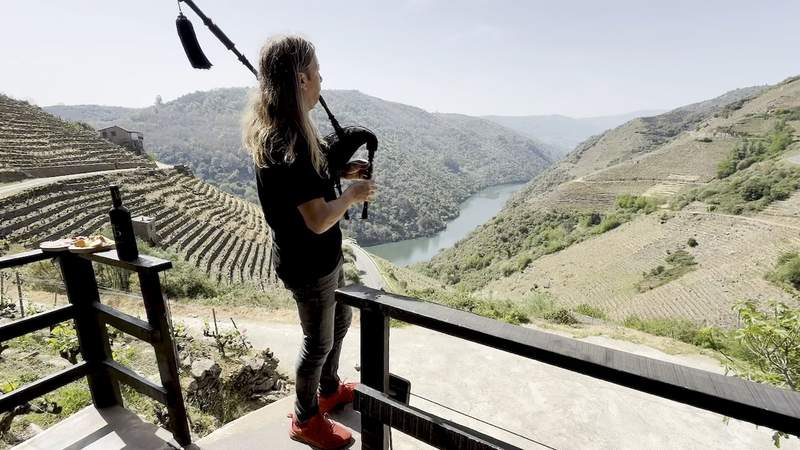
I enjoyed the simplest pleasures, such as sitting at a café enjoying a traditional Galician almond tart (tarte de Santiago) and a coffee while I listened to bagpipes echoing through the streets. It’s part of Galicia’s Celtic roots, one of the ways the region’s cultural identity feels distinct from the rest of Spain.
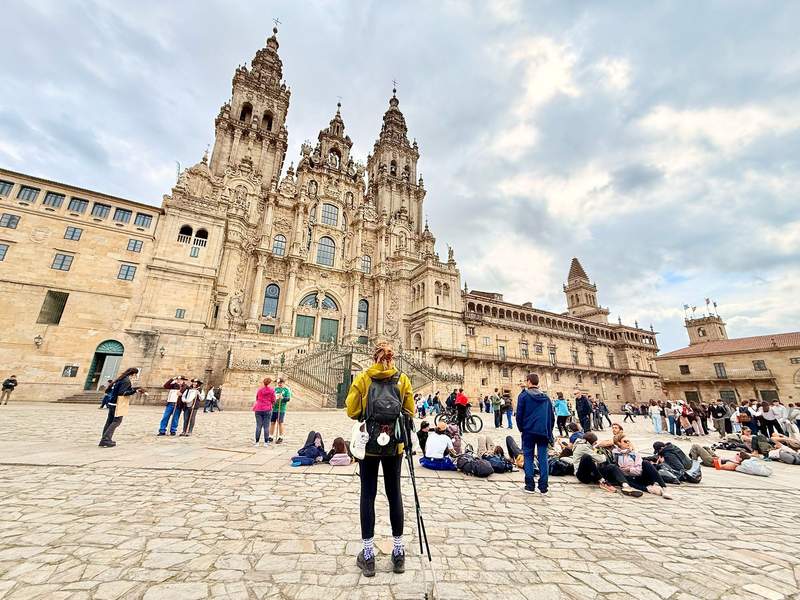
SheBuysTravel Tip: Give yourself plenty of time to enjoy Santiago, and settle into the rhythm of the city. Early mornings are especially magical, before the crowds gather outside the cathedral.
Where to Stay:
The Hotel
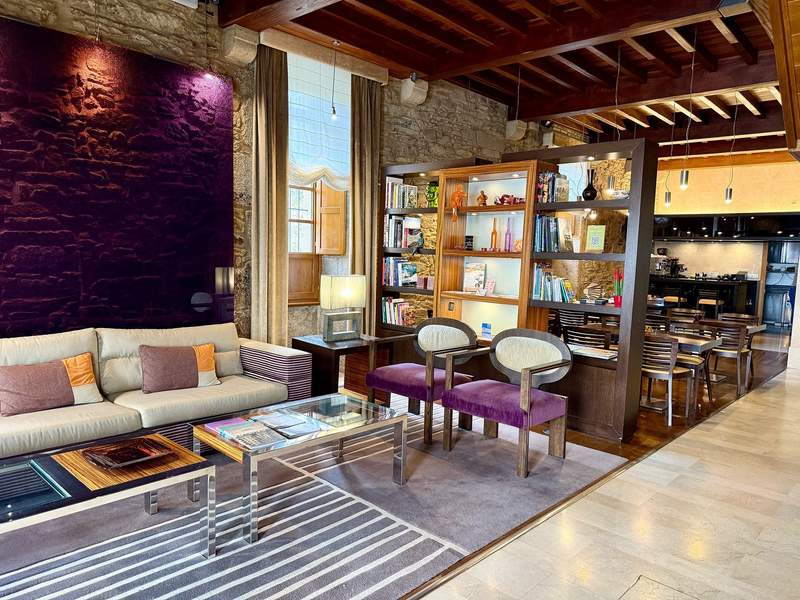
The small, centrally located boutique Altair Hotel , with just a handful of rooms, offered a first glimpse of the food culture of Galicia, with a fabulous breakfast, a Michelin-starred lunch and locally-sourced dinner:
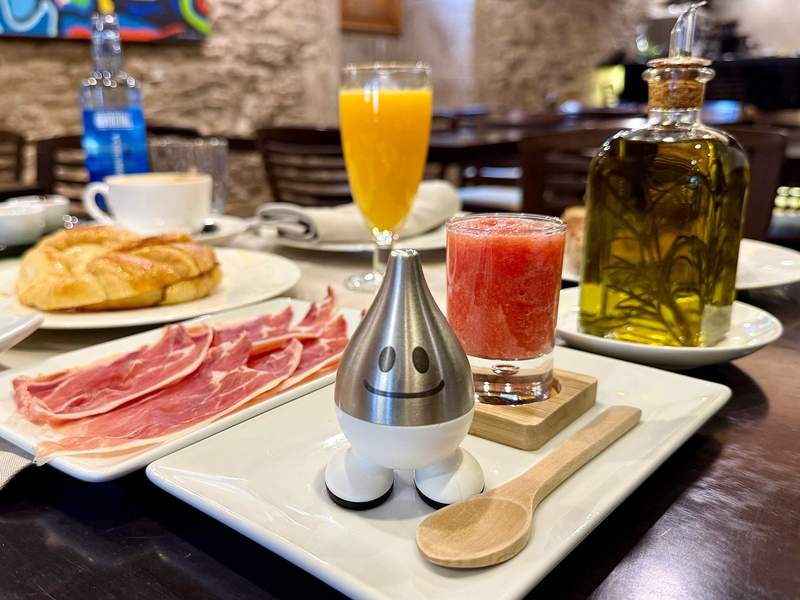
- Breakfast: The hotel breakfast was one of the best I’ve ever had: pressed orange juice, fresh tomatoes, cold-cured meats, delicate pastries and amusing salt-and-pepper shakers.
- Lunch: It arrived in an unassuming box. I almost dismissed it. Instead, it turned out to be the best sandwich I’ve ever eaten. Prepared by Michelin-starred and locally-born chef Lucía Freitas, it came from the restaurant across the road, A Tafona, and featured homemade bread, perfectly balanced roast pork, and an unforgettable, delectable combination of ingredients.
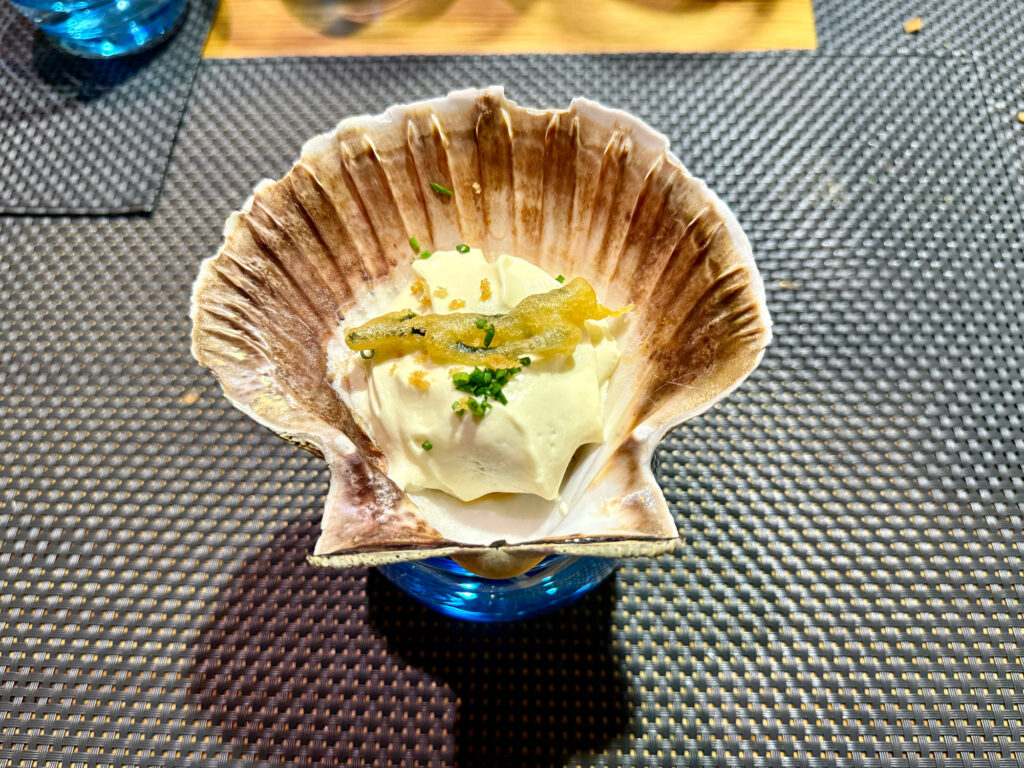
- Dinner: At the A Horta Do Obradoiro, try the featured local favorites such as scallops, clams, braised leeks, amazing desserts and wines from the region – a taste of Galicia and a hint of more delicious dishes to come.
Day 2: Ribeira Sacra: Vineyards and Stunning Views
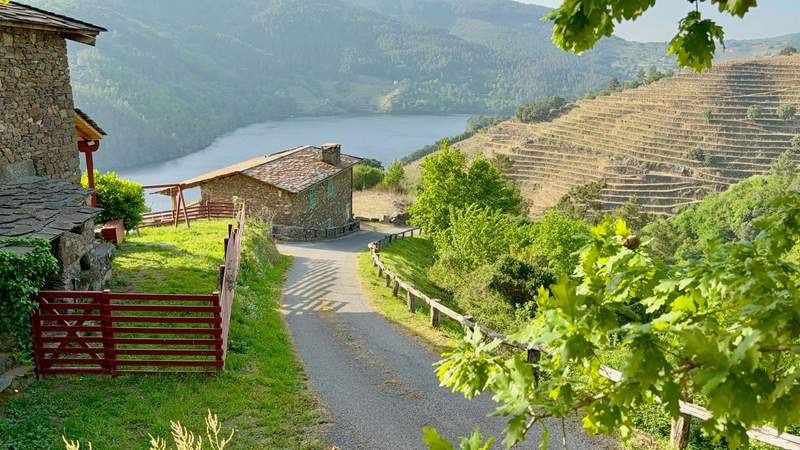
If Galicia’s first impression is defined by the Camino, its deeper layers reveal themselves in Ribeira Sacra, where wine, history and landscape collide in spectacular fashion.
This lesser-known Spanish region is defined by dramatic landscapes and ancient winemaking traditions.
This is the place to explore Romanesque churches (this region has the largest concentration of them in all of rural Europe). Particularly memorable is the pretty Romanesque church of Santo Estevo de Ribas de Miño, along the Miño River canyon.
Carve out time to see the area from remote viewpoints and walk sections of the Camino, including stretches of the challenging Winter Way.
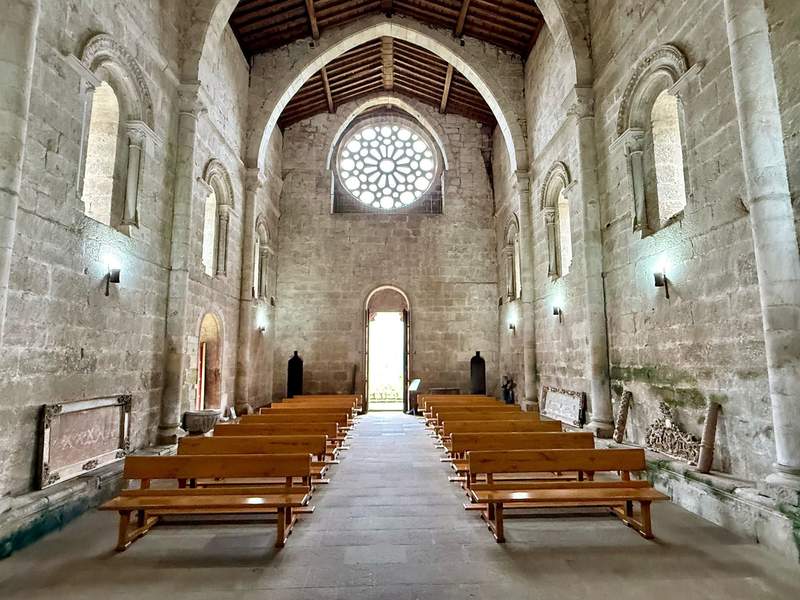
The scenery during my April visit was lush and green and evocative of the Pacific Northwest, but with a distinctly Galician character.
SheBuysTravel Tip: Bring layers and a rain jacket. The weather changes quickly in this part of Spain, and vineyard visits often move between sun, wind and rain in a single afternoon.
Lunch Amongst the Vines at Sacra Activa
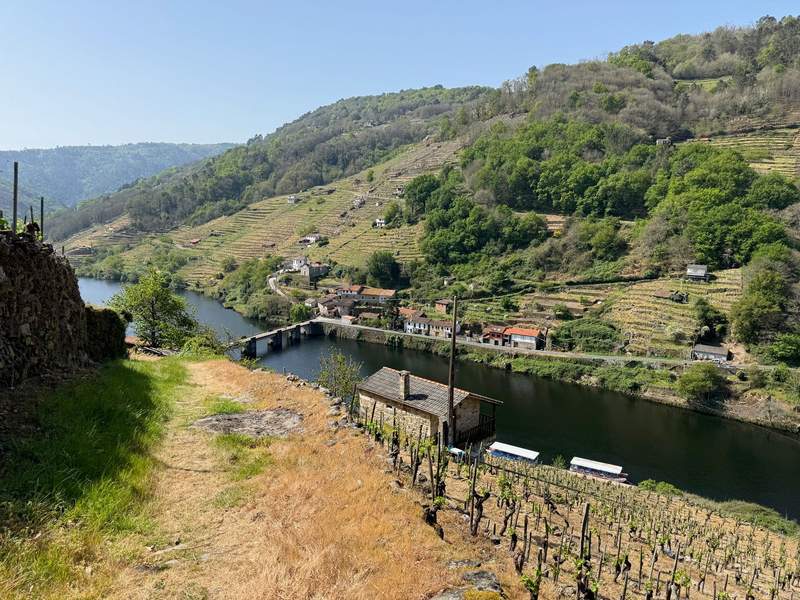
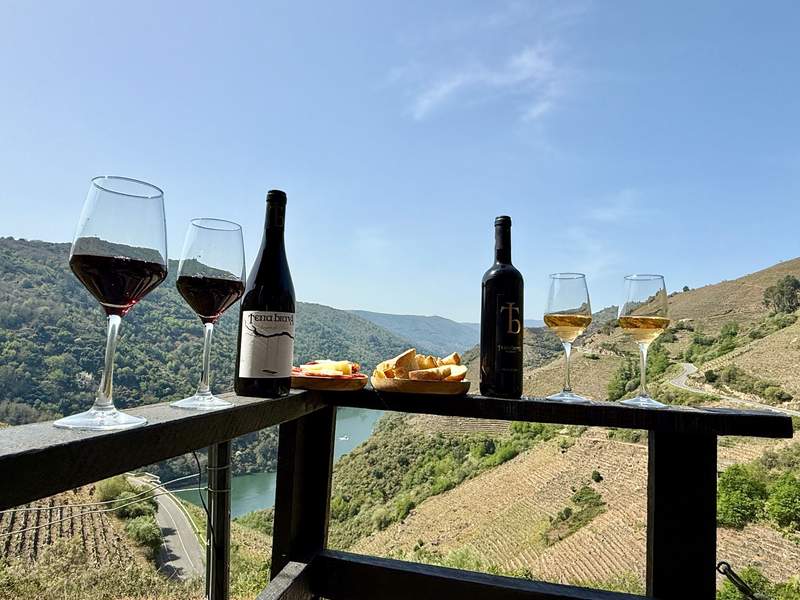
Head to the Sacra Activa vineyard. It’s reachable by boat, along the river canyon. I love being on the water, so for me, the entrance to the vineyard, from the boat dock to the terraces of vines, feels almost cinematic.
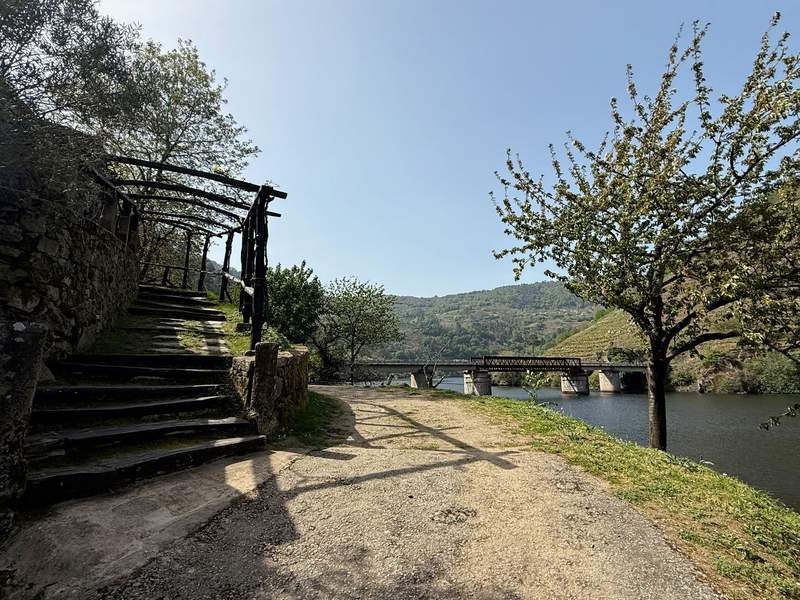
The vineyard is more than 300 years old, but was abandoned for 14 years. It’s now been fully restored by local artisan Fernando Ibarra, who welcomes guests for boat rides, wine tastings and tours of the cellars filled with groaning barrels of wine.
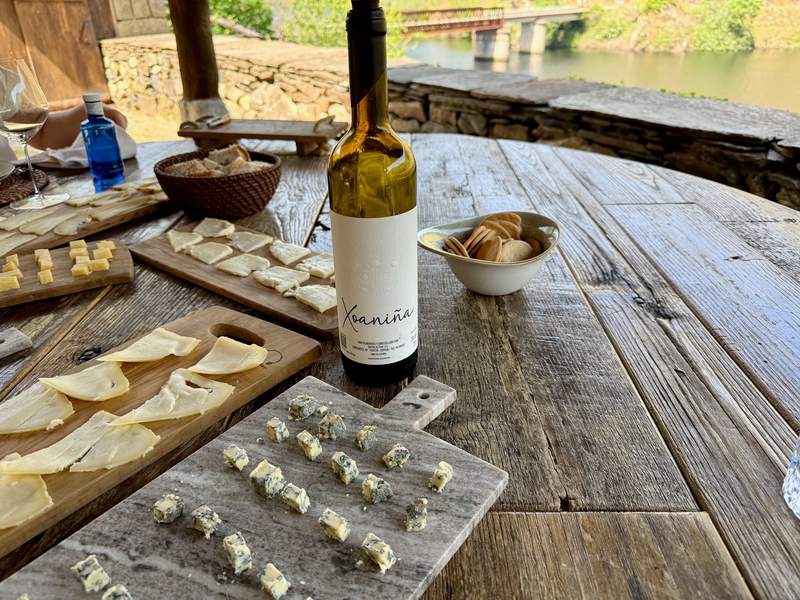
Have lunch served outdoors. Ours was perfect: fresh bread, giant sliced tomatoes, local cheeses and cured meats. And, of course, wine that perfectly reflected the landscape.
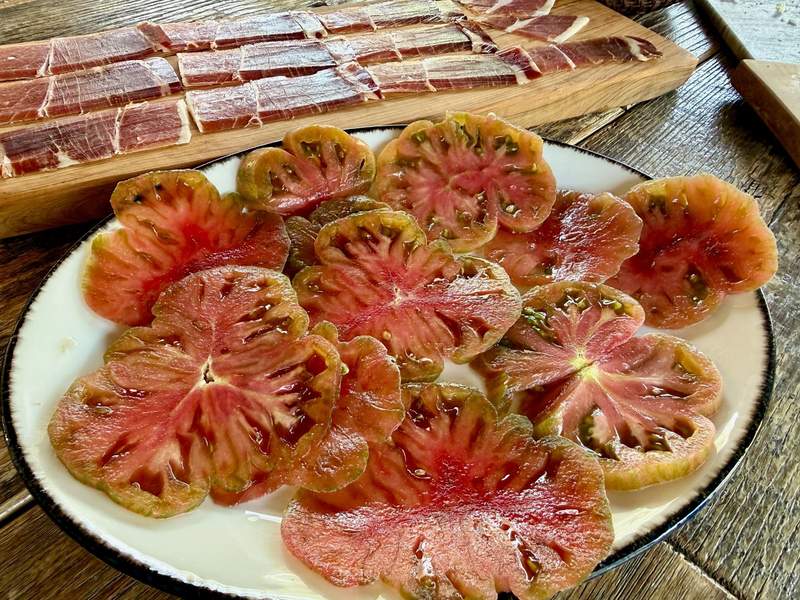
Galicia’s cuisine is rooted in the sea. Scallops (of course), octopus and prawns are served everywhere. The wines, too, were a revelation, particularly the whites, including Toto and Xoaniña (meaning ladybug in Galician), which were crisp and exceptional.
It was here that something shifted for me. The food was simple, but deeply satisfying, making me want to return to basics, to cook more, appreciate ingredients and slow down.
There is time for one more vineyard. We headed to the Finca Míllara winery. Here, I noticed that because of the way the sun rises and falls, one side of the canyon is vineyards and the other is forest.
The wine, including the vineyard’s Lagariza red, is truly spectacular.
Where to Stay: Iberik Augas Santas Spa
My lodging for the night was the Iberik Augas Santas Spa, a quiet and comfortable hotel that was the perfect pit stop if you’re in need of a good meal, a massage (or if you’re a pilgrim, a foot rub) or even a round of golf before lunch.
Day 3: Gundivós: Exploring Art and History
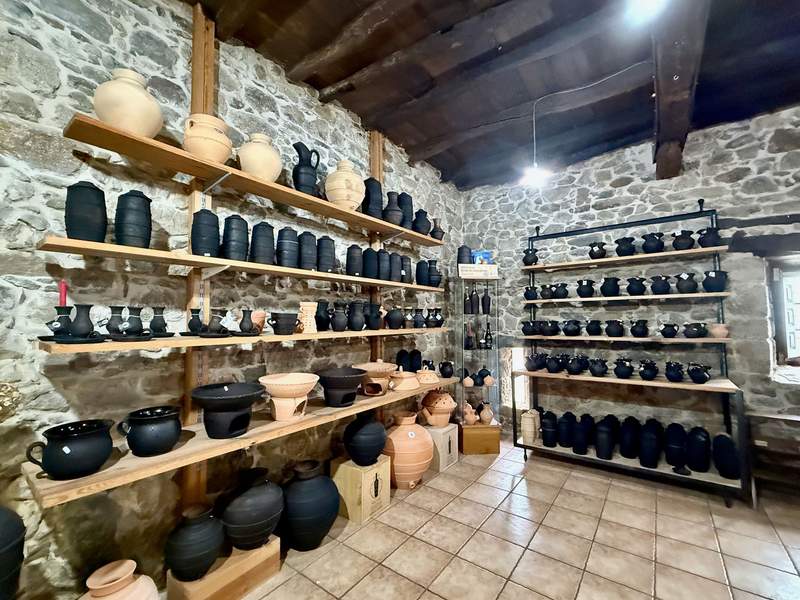
Best Thing to Do: Buy Pottery from Local Merchants
The next morning, drive to the village of Gundivós, the capital of pottery in the Ribeira Sacra, to tour the Rectoral de Gundivós. The restored rectory is now home to a renowned ceramics workshop, where traditional black pottery is still made using age-old techniques.
The building has been painstakingly restored, a reminder of the region’s commitment to preserving its heritage.
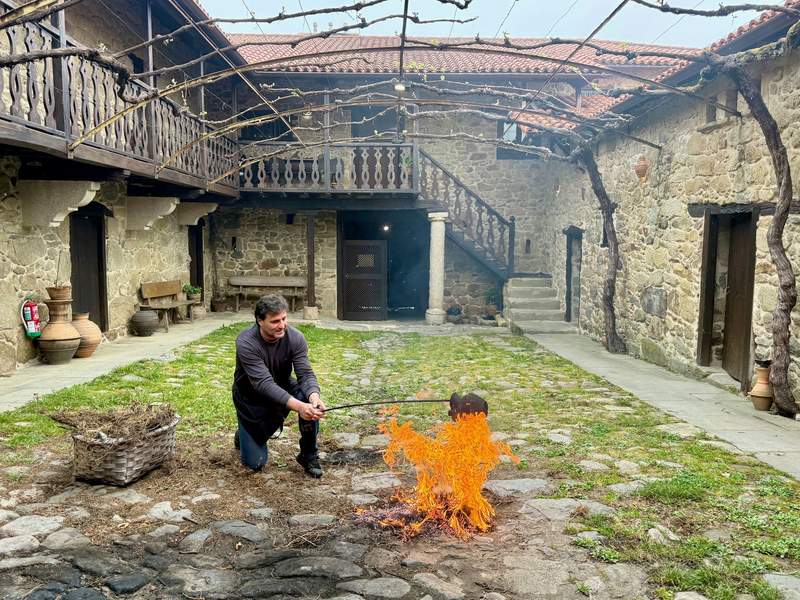
The owner, Elias Gonzalez, is an artist who has made preserving the rectory his life’s work. I watched in awe as he worked his magic and left with pieces of black pottery from the gift shop.
SheBuysTravel Tip: Look out for small, independent workshops. Galicia is full of craft traditions that rarely appear in mainstream shops or tourist routes.
Second Best Thing For Your Inner-Archeologist
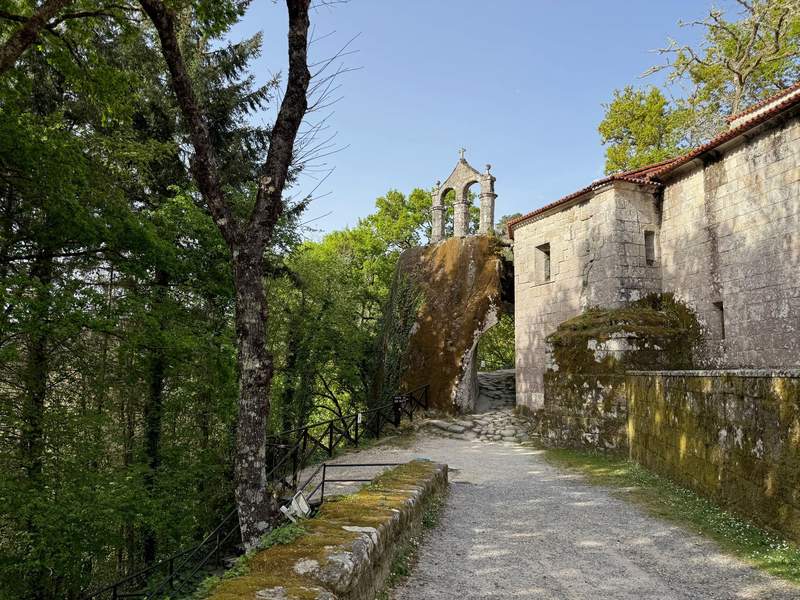
There’s a tradition in Galicia that you can ‘dig your own grave’, so we paid a brief visit to San Vítor de Barxacova, which is essentially a series of burial sites.
It’s a little morbid, but if you’re into archaeology, don’t miss this excavation of a necropolis dated between the 9th and 10th centuries.
Not to be Missed Wine and Food Stops
Before lunch, make a quick stop at the Cadeiras viewpoint and sanctuary, an 18th-century building and a pilgrimage destination.
Next, it’s time for wine.
There are two wineries worth your time:
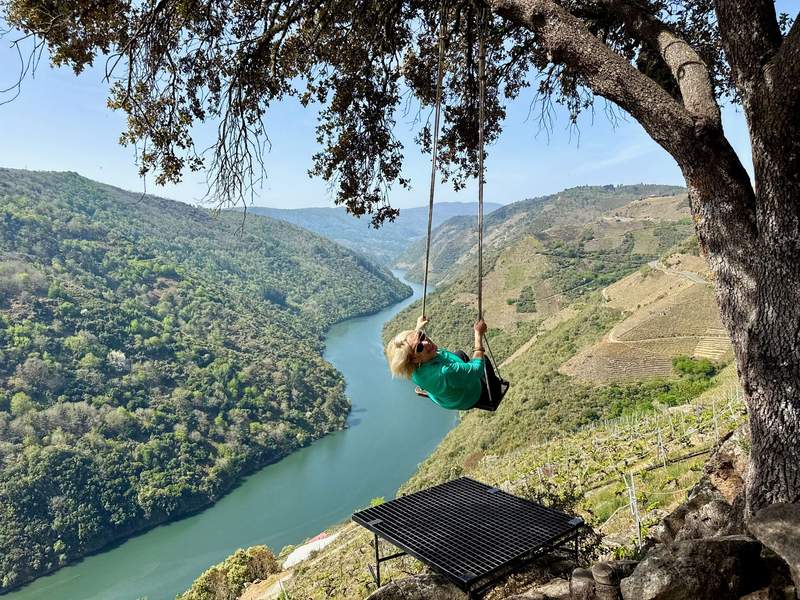
- Adega Terra Brava, a boutique organic winery located in the ironically-named town of Sober. There’s a large wine press and a swing that offers social-media-friendly shots over the Sil River.
- Regina Viarum winery, which oozes classic old Galician money and prestige and is host to many wedding parties.
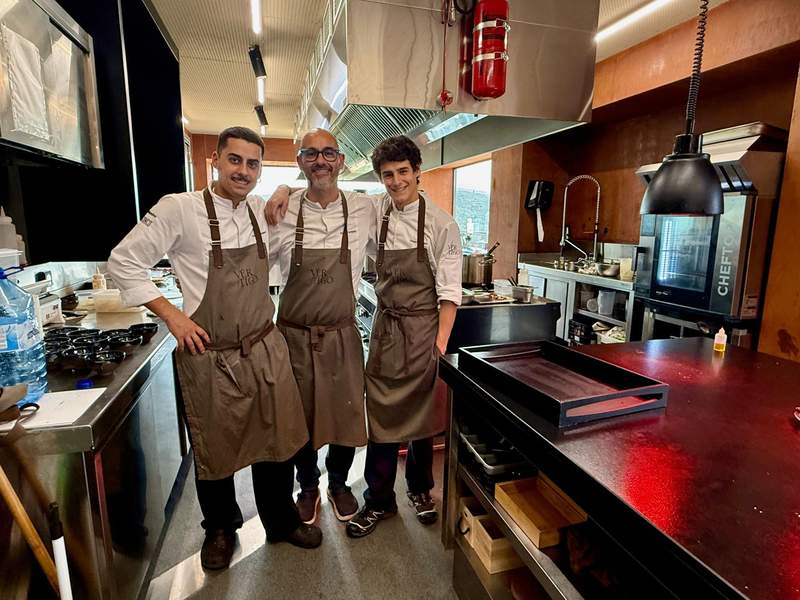
Finally, it’s time for lunch. We ate at the spectacularly positioned Vértigo Restaurante, a Michelin-starred restaurant on the top of one of the hilly peaks, where chef Rafa Centeno works alongside his sons, Guillermo and Diego.
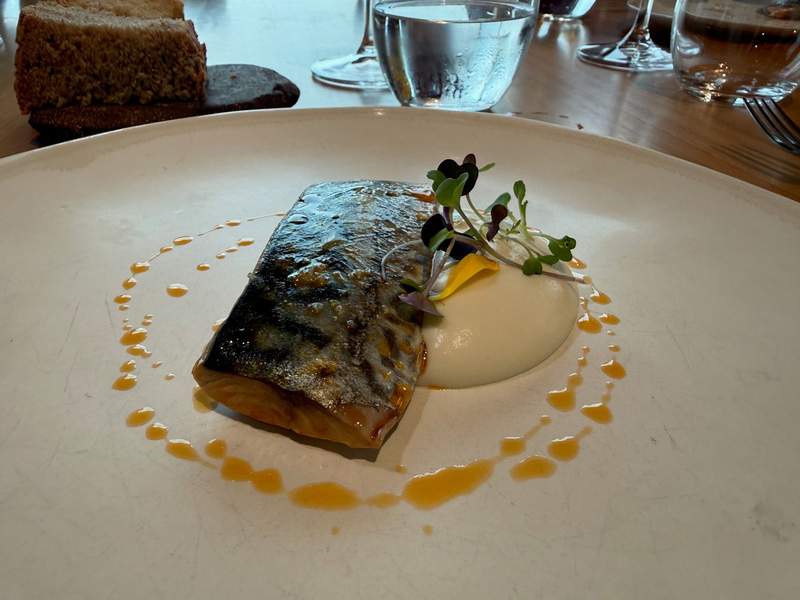
The food is as precise and expressive as you’d expect. Standout dishes include turbot and beef cheek, and a dessert of raspberry, goat’s cheese and white chocolate that lingered long after the meal ended.
SheBuysTravel Tip: Book vineyard lunches in advance or join a guided tour; many of Galicia’s best food experiences are small-scale and fill quickly.
Where to Stay: Parador de Santo Estevo de Ribas de Sil
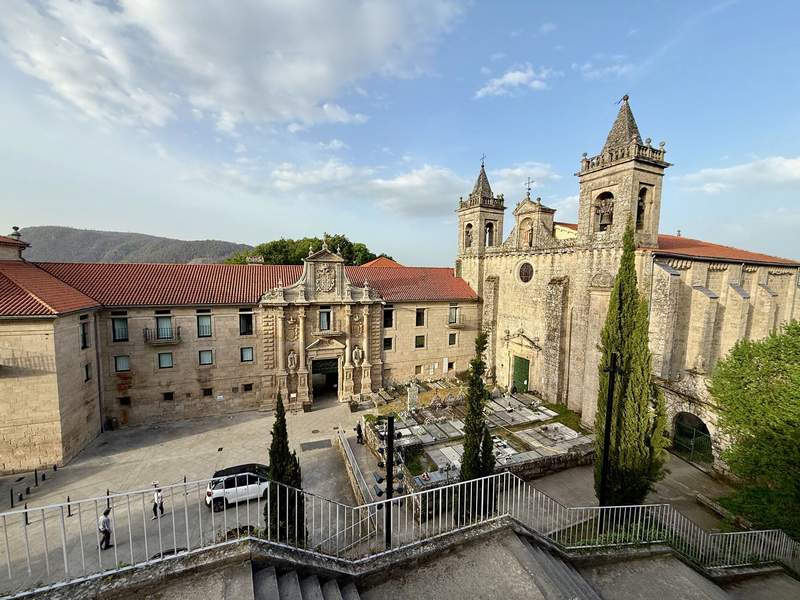
I don’t think I’ve ever felt more connected to the history of a venue as I did spending the night at the Parador de Santo Estevo de Ribas de Sil, located in the imposing monastery of the same name.
The view over the Sil River is one you can’t afford to miss. The rooms are comfortable, and the grounds, gardens and architecture, including the seals and the arches, are breathtaking.
Day 4: Parada de Sil and Ourense
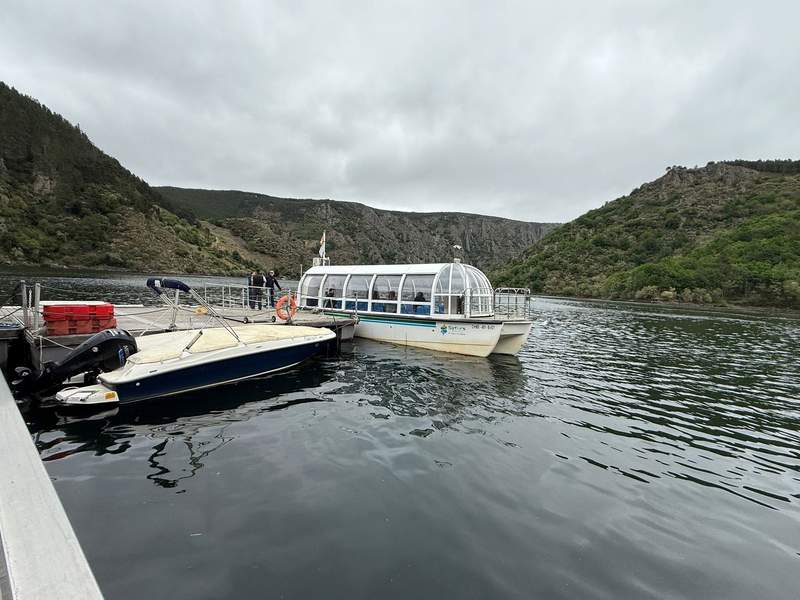
Best Thing to Do: Iconic Views of Waterfalls, Vineyards and Monasteries
Start the day with a catamaran ride that reveals waterfalls, dense greenery and steep vineyard terraces dropping into the river.
One particularly striking stop on our boat ride was the Monastery of Santa Cristina de Ribas de Sil. Tucked within a chestnut forest, this 12th-century monastery felt almost hidden from the world.
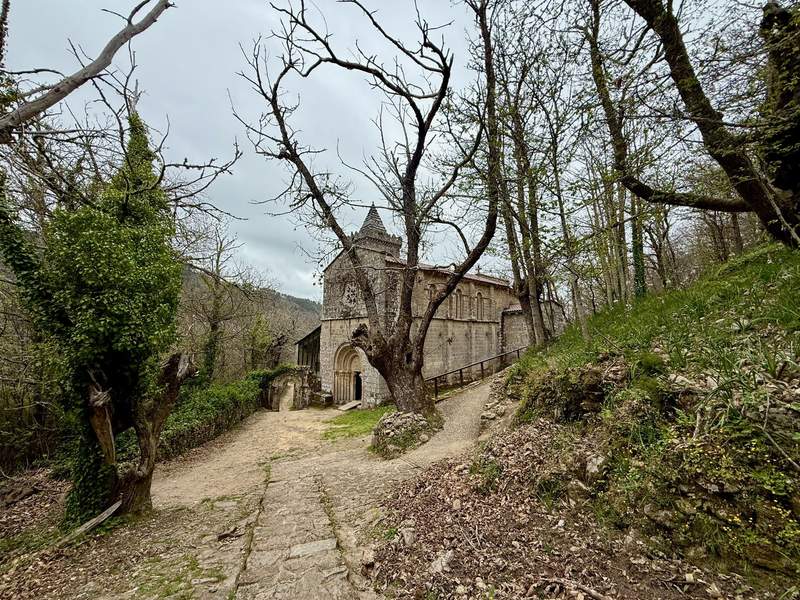
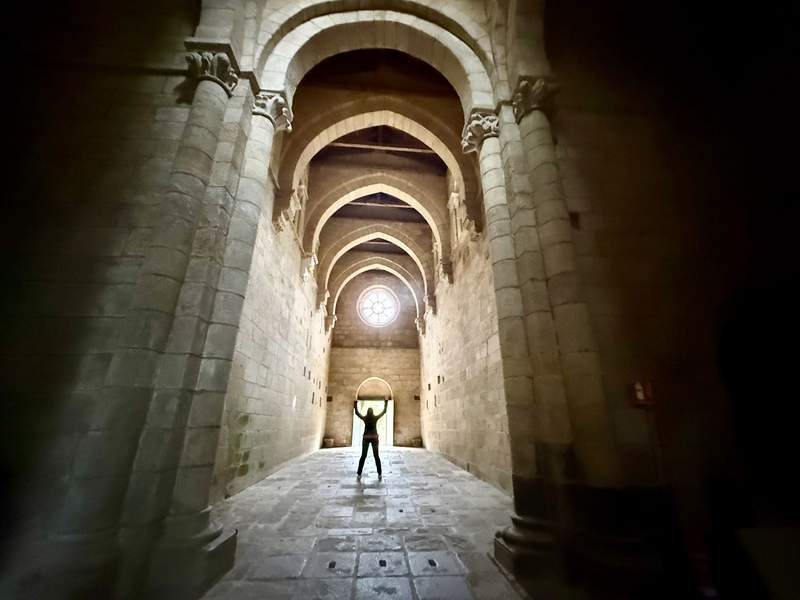
Inside, light streamed through ancient stone in a way that stopped me completely. It was one of those rare travel moments that was silent, still and deeply affecting.
Lite Lunch and a Steep Hike
Have a light lunch of scallops at the restaurant O Balcón da Ribeira, in the village of Parada de Sil, before heading to the hilltop fortress of Castelo de Castro Caldelas, which offers sweeping views across the valley.
The climb up its steep, uneven steps is punishing, but the reward is worth every aching muscle. This location for me was worth the journey and the walking. I may not have completed The Winter Way, but I made it to the top of all the hills, and that was good enough for me.
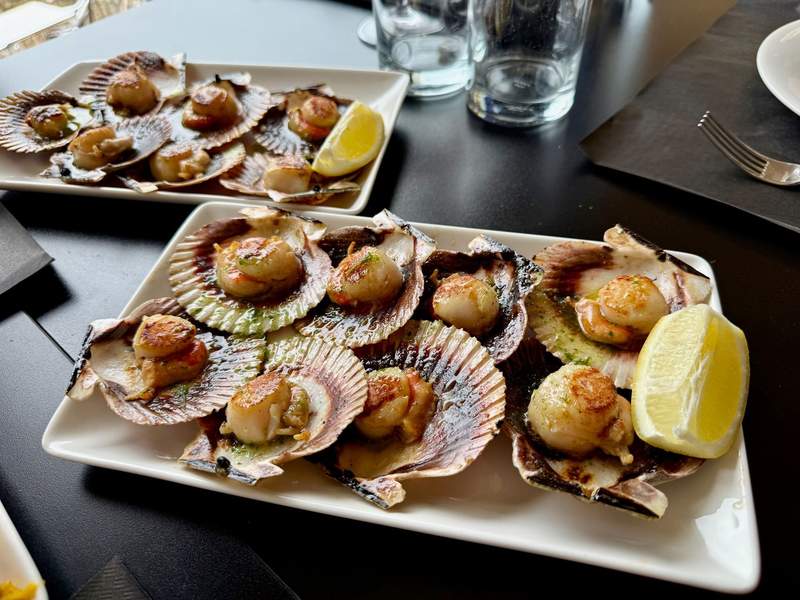
SheBuysTravel Tip: Bring a camera, but don’t rely on it. Some of Galicia’s best moments are the ones you simply sit and absorb.
Where to Stay in Ourense: Barceló Ourense Hotel
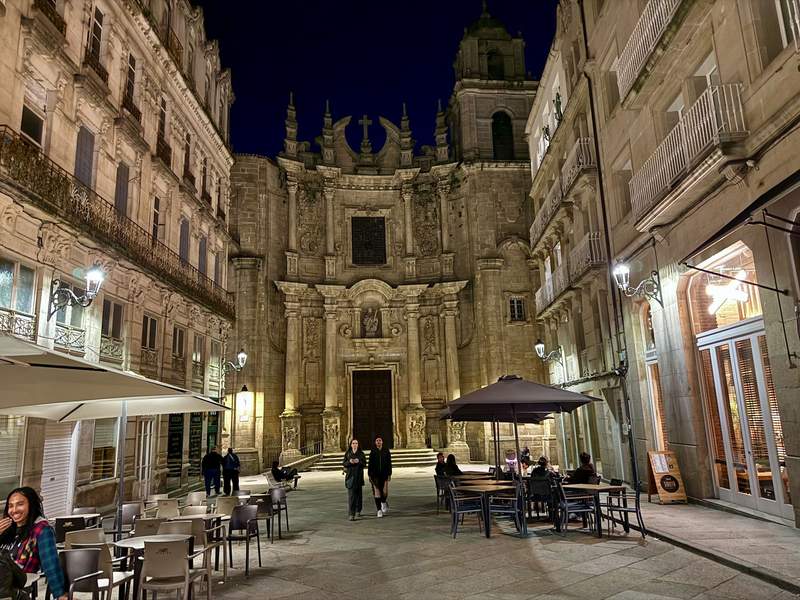
That night, we checked into the Barceló Ourense Hotel. I truly loved the city of Ourense for its beautiful architecture, tiny streets and quiet café culture.
It’s also home to the famous As Burgas hot springs, where naturally heated water flows at over 60°C (140°F), a tradition dating back to Roman times.
Spend the evening wandering around the elegant plazas where locals gather to catch up on the day’s events. The city feels both ancient and alive; stone buildings lit warmly against the night, and animated conversations continuing into the night.
We ate tapas-style, sampling different dishes at different restaurants, and enjoyed some local Eduardo Peña wine.
Day 5: Cea and Ponte Maceira
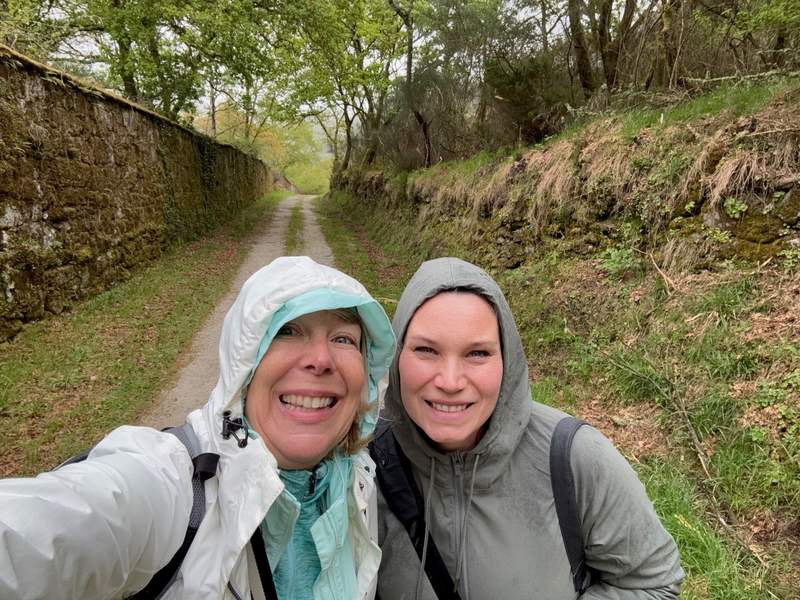
Best Thing to Do: Don’t Be the Tourist
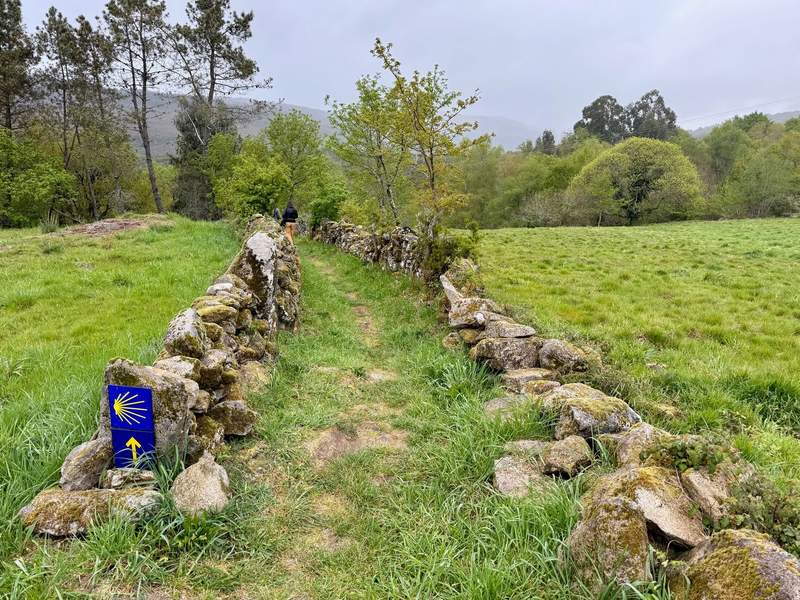
We started our day with a remote two-hour walk in the rain along the Camino de Santiago ‘Vía de la Plata’ toward the town of Cea.
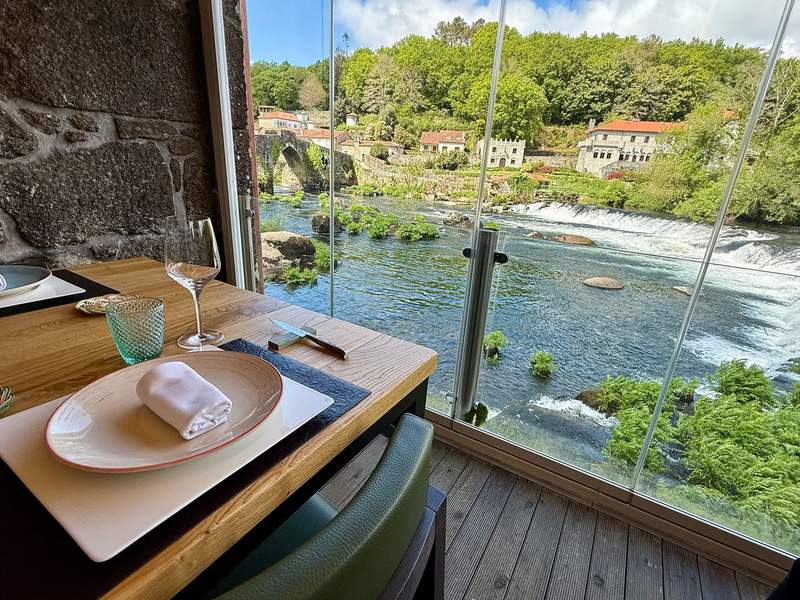
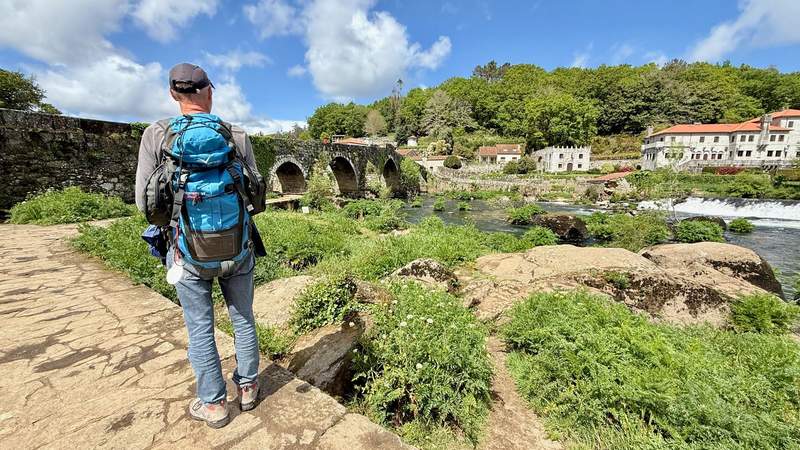
Perhaps the most enchanting place of all of Galicia is Ponte Maceira. It’s no surprise that this quaint town ranks as one of the most beautiful villages in Spain.
Stone bridges, flowing water, and perfectly preserved buildings create a setting that feels almost unreal.
There’s a quiet resistance to tourism here; you can visit, eat (we enjoyed a meal at the Restaurante Ponte Maceira), and explore, but you can’t stay overnight.
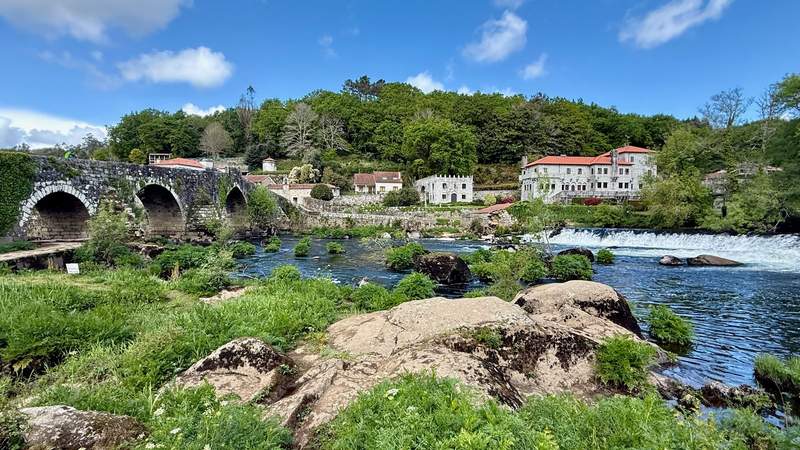
There are no hotels, no Airbnbs.
It remains, deliberately, a place to pass through, unless you know somebody who lives here.
SheBuysTravel Tip: Say yes to the simplest-looking dishes in Galicia. They’re often the ones that surprise you most.
Day 6: Monastery of Oseira
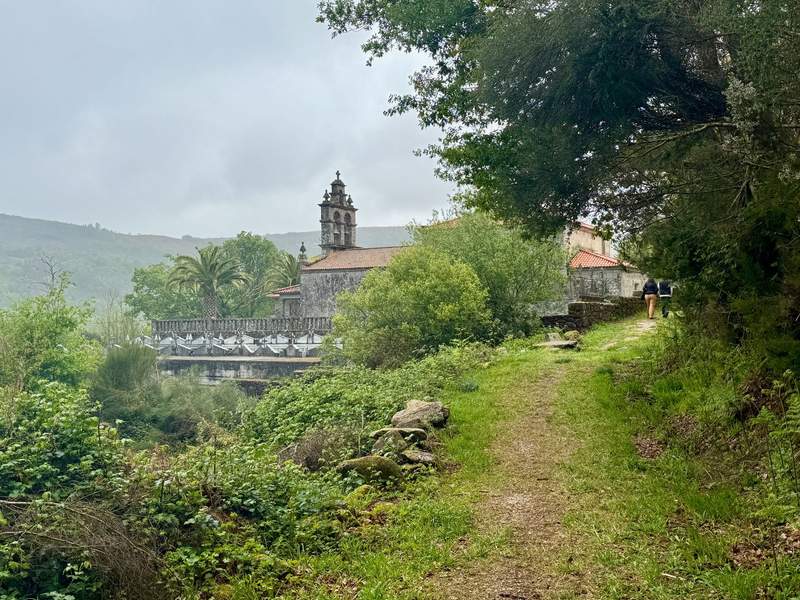
Galicia’s most memorable meals are often the simplest. In a tiny, unassuming spot near the monastery, at a restaurant called A Cassina d’Avoa, I found a gem, as a couple quietly prepared empanadas and rustic dishes, for pilgrims and passers-by. There was no ceremony, no performance, just honest food and warmth.
I wish we’d lingered longer here and would love to return one day with my husband and son.
Nearby, the Monastery of Oseira is a sight to behold. Sometimes called the Galician Escorial, it was built in the 12th century and is extremely grand. Its vast interiors, intricate ceilings and layered architecture speak to centuries of devotion and craftsmanship.
Day 7: Return to Santiago
Coming to the end of this magnificent few days, return to Santiago de Compostela, with time to view the avant-garde architectural wonder that is the Cidade da Cultura de Galicia.
Designed by the American architect Peter Eisenman, it also houses the Archive of Galicia and the Museo Centro Gaiás.
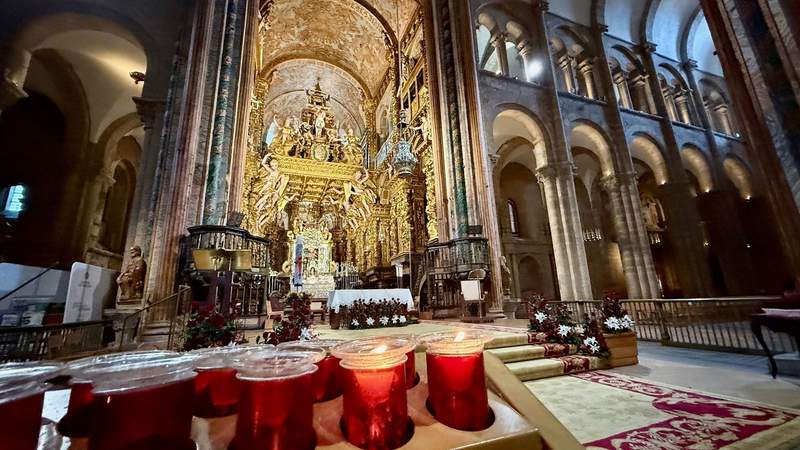
Before dinner, wander through the Cathedral of Santiago de Compostela, where pilgrims gather at the end of their long walks. Inside, the scale and significance are undeniable. In the crypt, visitors leave letters, photographs and personal tokens; small acts of hope and remembrance.
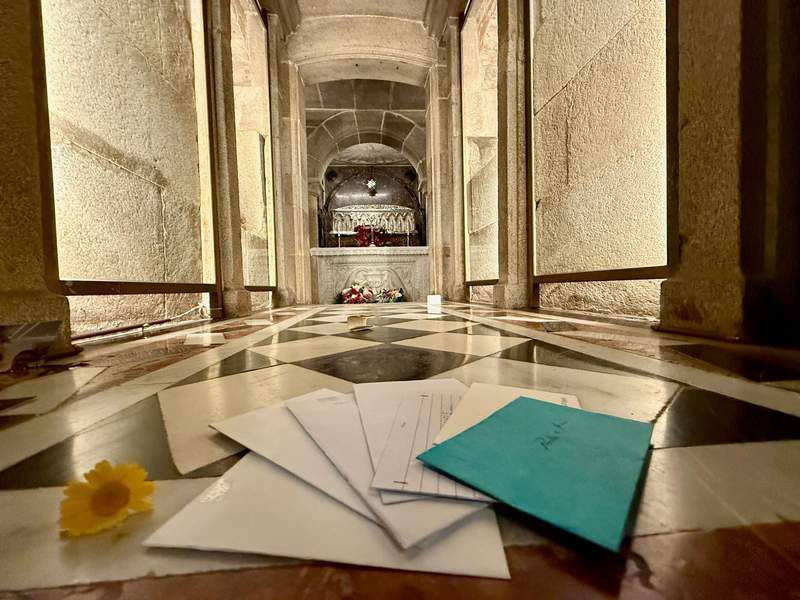
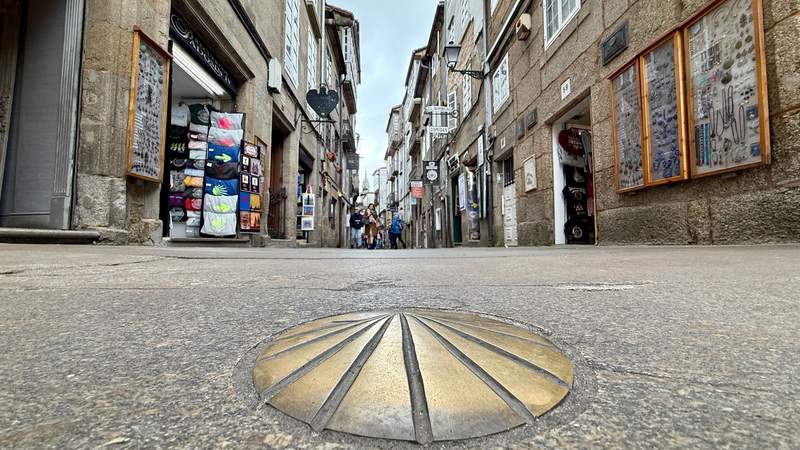
Again, I couldn’t help but notice the distinctive scallop shell marking the signposts and the floors, poetically tying the entire Galician experience together.
My bed for the night was at the Hotel Spa Relais & Châteaux A Quinta da Auga, which is set in beautiful grounds (my room was a very calming blue), while nearby, the restaurant La Garita is popular with locals and tourists alike.
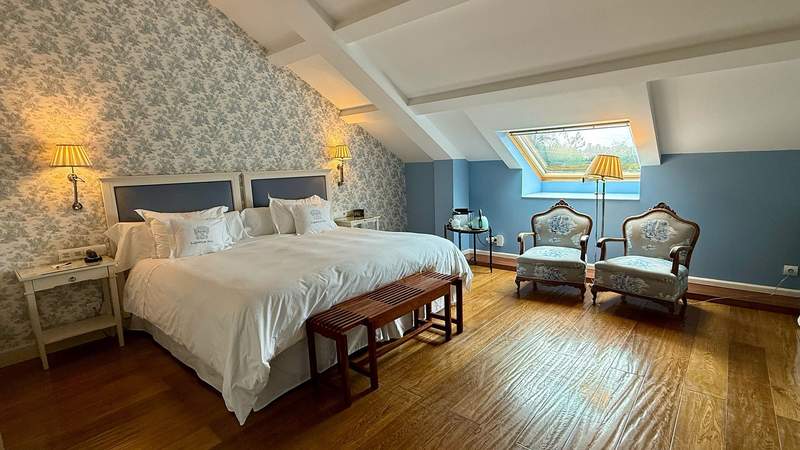
SheBuysTravel Tip: Spend time inside the cathedral – it’s one of the most beautiful and quiet spaces in the city.
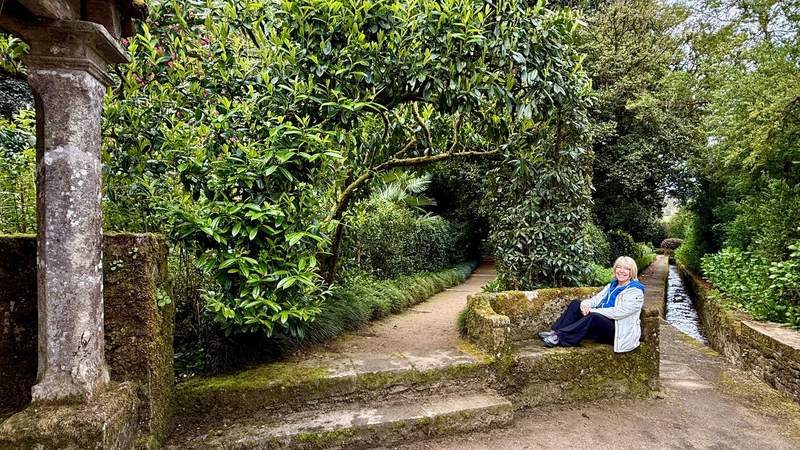
Ending on a quiet note, we toured the city’s most beautiful gardens, once home to noblemen and feudal lords. There are more than 900 manor houses (known as ‘pazos’) in the area.
I was most impressed by the Pazo de Oca, and its Versailles-style gardens. I skipped by the river and met a duck and some geese (which made me smile as my dad’s nickname for me was ‘Goose’).
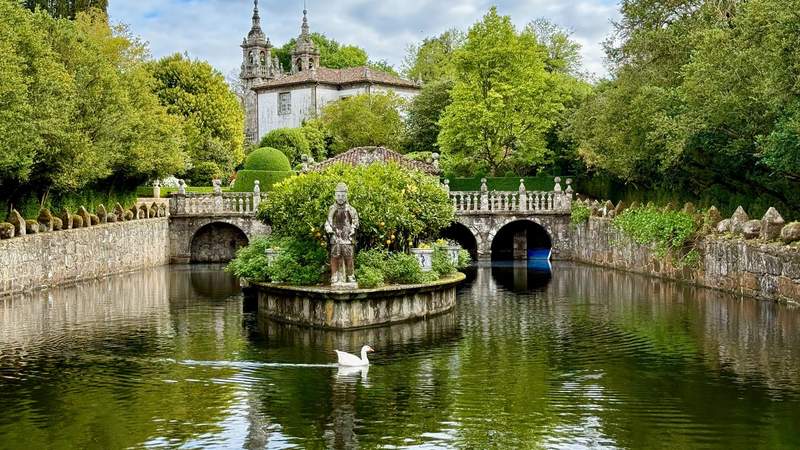
Don’t miss the Pazo of Santa Cruz de Ribadulla. I think it was at this point that I realized I needed to spend more time in beautiful gardens when I got home.
Stop for lunch at Anoisea, which became an immediate favorite of ours thanks to its spectacular clam, mussels and rice dish.
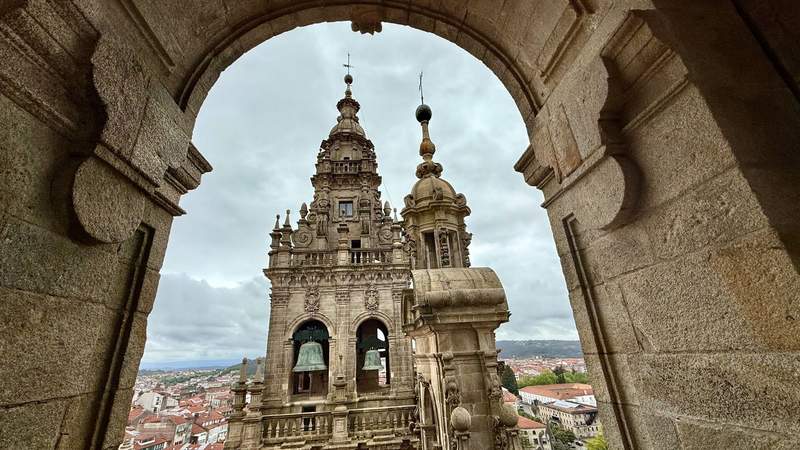
Spend a final couple of hours wandering around the Cathedral of Santiago, where we were led up to the rooftop to enjoy the views of the city and the clock tower.
Barely able to squeeze in another calorie, dinner was at the hotel restaurant, La Filigrana, before falling into a deep sleep ahead of the long journey home.
FAQ:
April through September are all good times to visit. The busy season is July and August, offering a festive atmosphere.
I found Galicia to be a more reasonably priced region of Spain than other regions I’ve visited, especially compared to popular areas such as Madrid, Barcelona, and coastal/island cities.
It’s very easy to get around Santiago without a car, but the outlying areas are more rural and you will need a car. Many of the roads are quite narrow, and I personally would suggest booking a tour or a driver and leave the driving to a local pro.
Yes, definitely. There’s food, wine, history and nature to be enjoyed at every turn.
Seafood is king in Galicia. Local white wines are extraordinary, especially in the Rias Baixas region. Also, the Spanish are known for eating dinner very late!

Leave a Reply