

Straddling two continents, Tũrkiye is where East meets West in a dazzling fusion of cultures, history and flavour.
Once home to ancient civilisations like the Greeks, Romans and Ottomans, it’s a land steeped in myth and empire – and I was keen to explore.
From the ruins of Ephesus to the gleaming mosques of Istanbul, every stone tells a story. But beyond its monuments, Tũrkiye’s charm lies in its people and pace – the unhurried rhythm of tea-drinking, the warm greeting of “Hoş geldiniz” (which means ‘welcome’), hearty breakfasts that say “stay a while”, and the heady scent of spices drifting through the bazaars.
Wide-eyed visitors like myself, who yearn to get under the skin of a country, can expect spectacular contrasts. From the white travertine pools in Pamukkale, the olive groves in the Aegean hills, sun-drenched beaches in Çeşme, and the haunting beauty of Cappadocia’s rock valleys, it’s a country that rewards curiosity.
Are you ready to explore off the beaten path? Let us inspire you!
Tũrkiye Travel Tips:
- Best time to visit: Spring (April–June) or autumn (September–November) for less scorching temperatures and fewer crowds.
- Currency: Turkish Lira (TL). Credit cards are widely accepted, but carry cash for smaller towns and smaller transactions.
- Dress code: Cover up when visiting churches and mosques.
- In Tũrkiye, if you’re invited to tea, it’s to connect; if you’re invited to coffee, it’s to discuss a problem. Whichever it is, don’t pass on the invite.
- Türkiye is a popular destination for cultural/history, spa and medical tourism, particularly for hair transplants and cosmetic surgeries.
The Aegean Awakening
This is my first adventure without my husband or son in years, and it’s a heady mix of excitement and anxiety. When my plane dips through the clouds and I spot the blue shimmer of the Aegean Sea, it’s a welcome sight. After a night in Istanbul, I finally arrive at Adnan Menderes Airport in Izmir, heady from a delicious mix of jet lag and excitement that only travel can bring.
One short transfer later and I check into my hotel, greeted by the scent of citrus in the lobby.
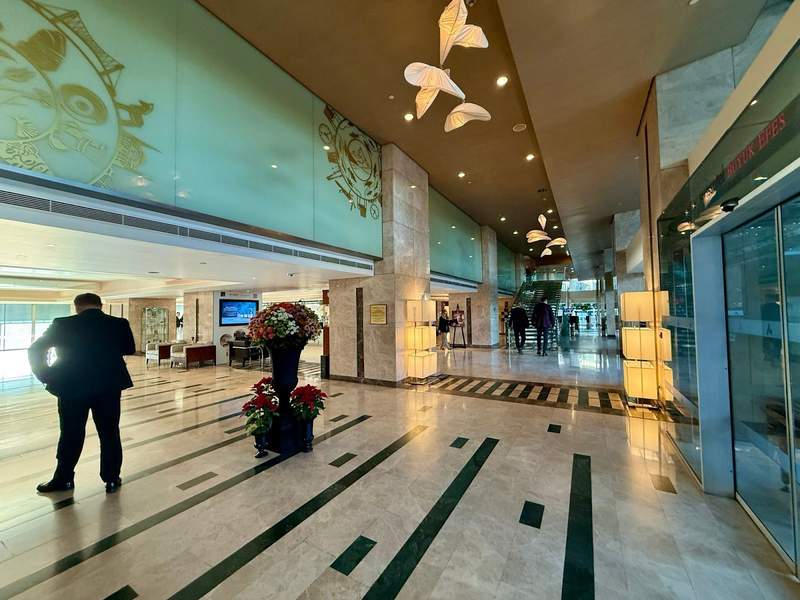
Set within landscaped gardens, the Swiss Hotel Izmir features a striking collection of contemporary art and elegant interiors. My room is spacious and elegant, and while I don’t have time to unwind at their award-winning Pürovel Spa, I enjoy a brief dip in their pool.
I end the day with a long walk along the bustling seaside promenade before falling asleep to the rhythm of a Mediterranean city winding down.
Çeşme, Alaçatı & a Taste of the Aegean
On my first full day in Izmir, I join a group with a guide and we drive to the town of Çeşme, which is located on the westernmost tip of Tũrkiye. I relax as I take in the Aegean coastline, which unfurls in silvery blues and greens, dotted with windmills and olive groves.
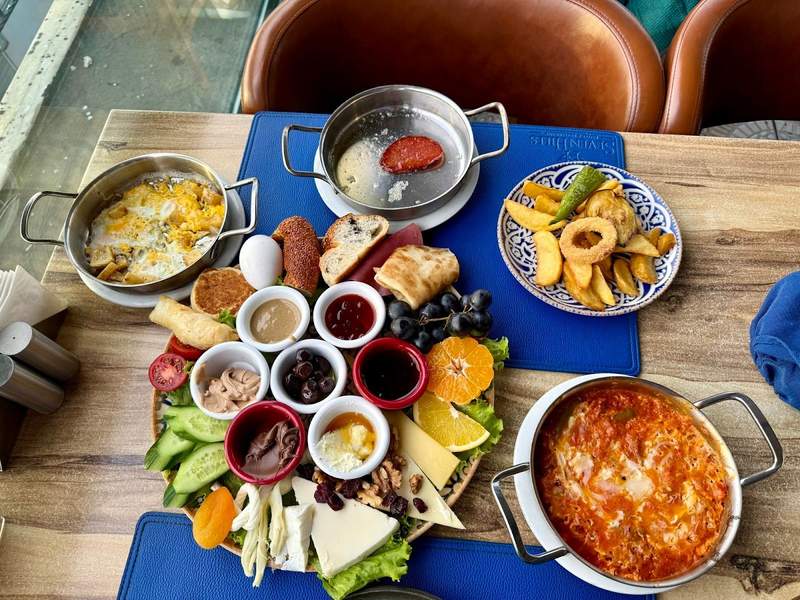
Once there, I sample a traditional breakfast, and it’s no small affair as plates appear endlessly; there’s fresh honeycomb, a dozen cheeses, ripe tomatoes and pide, a delicious oval flatbread. We dine at Cesme Koy, which serves fine, locally sourced ingredients with an intimate, bohemian vibe. It’s a little off the beaten path and well worth the detour. Turkish tea flows freely, and a local cat pops in for a visit.
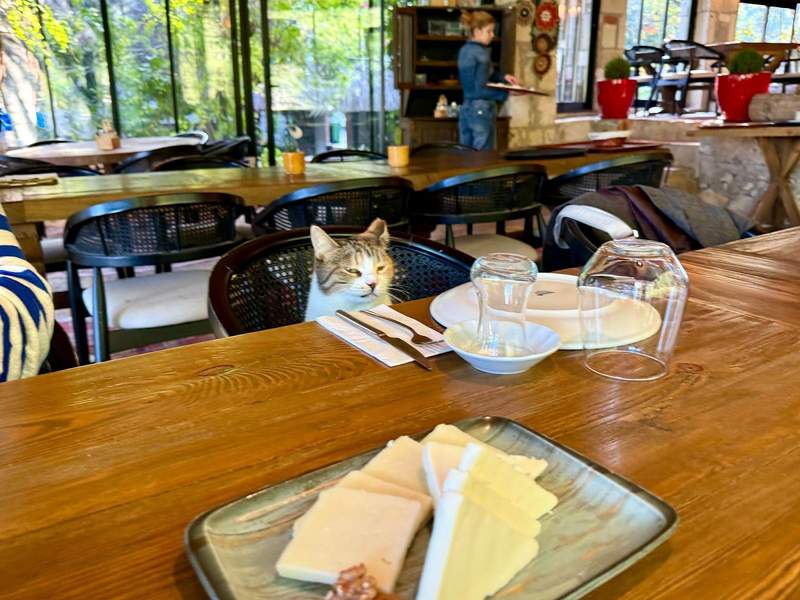
SheBuysTravel Tip: Don’t miss: Turkish breakfast, olive oil tastings and a stroll through the lively street markets
Cats seem to be a culturally integrated part of daily life in Turkey, coexisting with people in homes, streets and public spaces, making them a familiar and welcomed presence. In some parts of Turkey, cats are seen as symbols of luck and peace.
Next, it’s time to explore Çeşme Harbor, which we first do with a short boat trip. The waters are gentle and protected, and the docks are filled with small fishing boats, pleasure crafts and charter boats. There is a bevy of seaside restaurants all around.
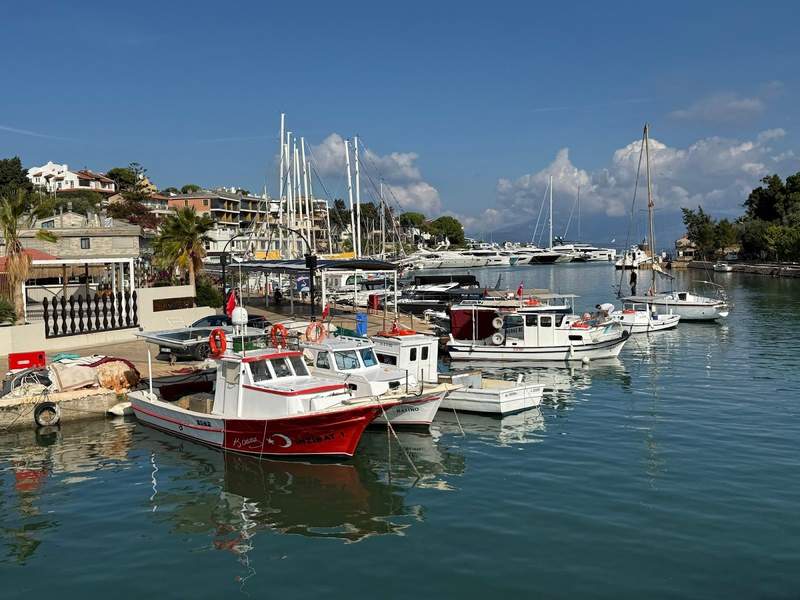
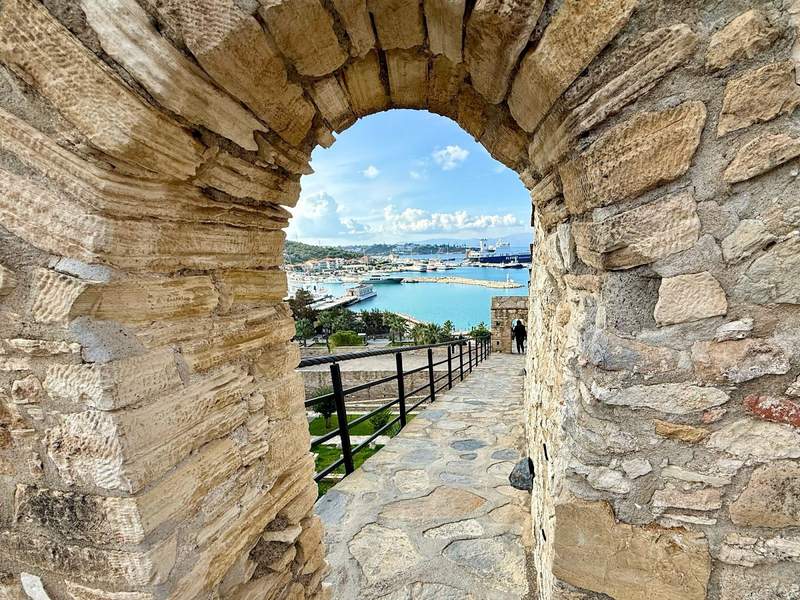
In the seaside town, I climb the ramparts of Çeşme Castle, built in the 15th century. It’s an impressive fortress and it houses a naval museum featuring a collection of relics from the short war between the Ottoman Empire and Russia in 1770.
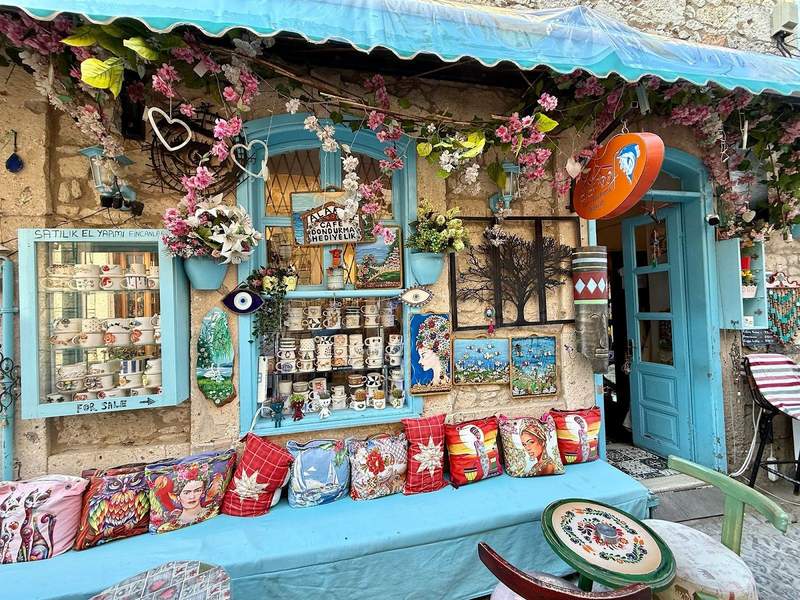
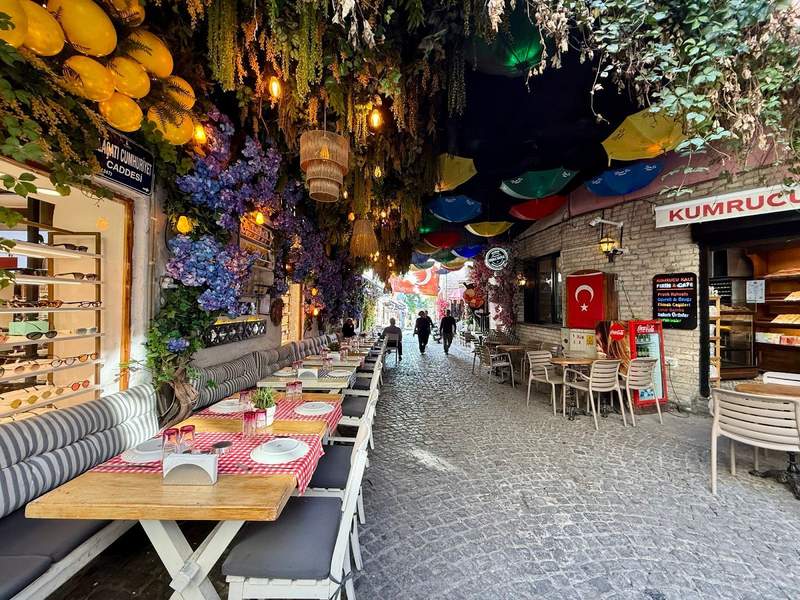
Next stop is nearby Alaçatı, a postcard-perfect town of narrow, flower-filled lanes and pastel shutters that is known for its wine-making and olive groves. Here, I sip strong, cardamom-laced Turkish coffee in a shaded café and watch the world drift by. In addition to many colorfully decorated shops and cafes, I again appreciated a warm welcome and cuddle from many of the local cats and dogs.
The town is home to a bevy of artistic souls, and I don’t have nearly enough time to take in all the unique splendours it offers. I vow to return to this quaint and charming corner of the world.
SheBuysTravel Tip: Bargaining is culturally expected in many shops when items aren’t clearly priced; be prepared to go a few rounds.
In the afternoon, we stop at the Köstem Olive Oil Museum, a love letter to Tũrkiye’s olive-growing heritage. Among ancient presses and gleaming ceramic jars, I savor the taste of this liquid gold poured over warm, crusty bread.
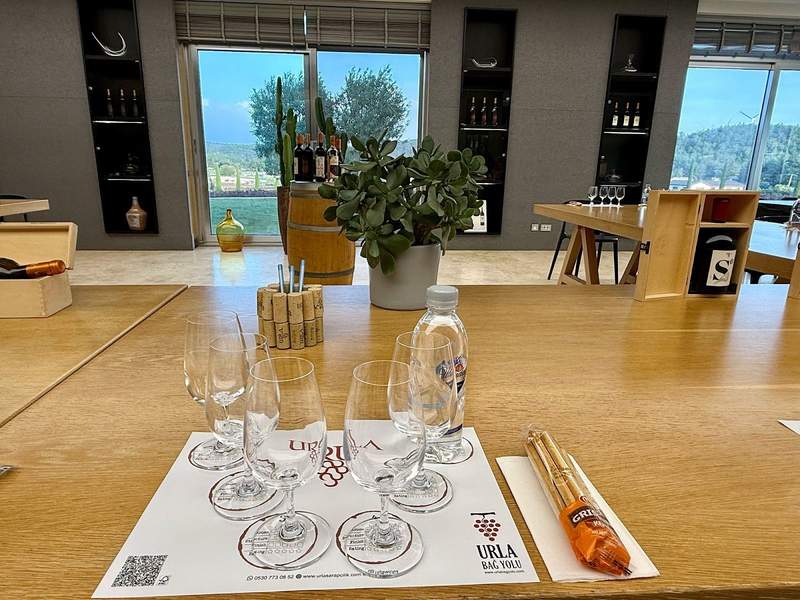
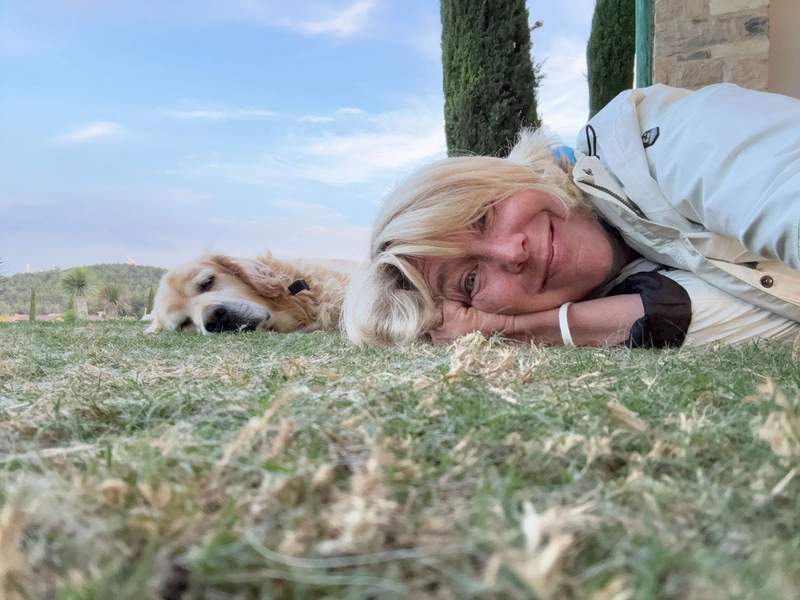
As the sun prepares to set in the Urla wine region, we visit Urla winery for a wine tasting, and I’m enamoured with a 2024 Urla Beyaz Sek Sarap Chardonnay. I also fall in love with a resident dog with similar hair coloring and a lovely, lazy disposition.
Dinner is at the Michelin-starred Aslinda Meyhane, and I feast on lamb shank with orzo pilaf and meze plates including artichoke carpaccio, fava bean spread, and a delightfully colorful salad and local wines. The meal and ambience is ten-star creative. It’s impossible not to fall in love with the Aegean’s slow magic and delectable tastes. I’m hooked.
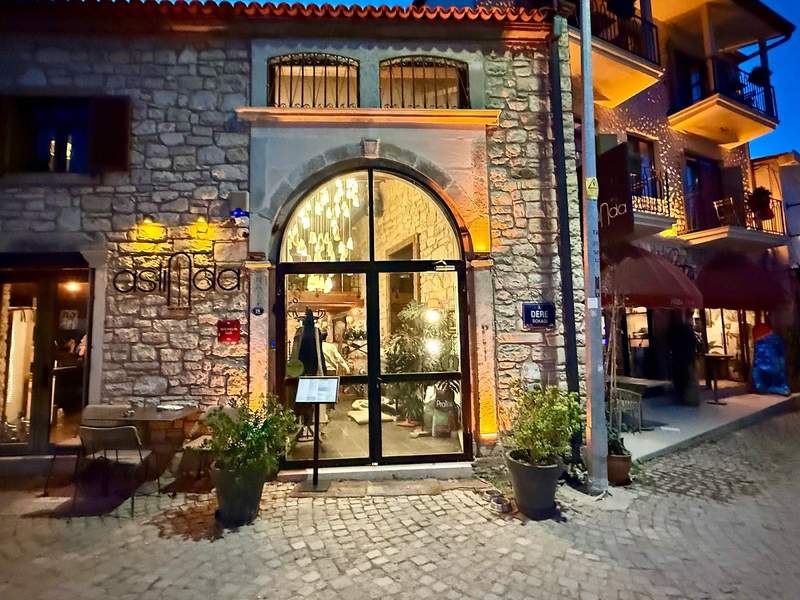
Izmir’s Heartbeat: Culture, Coffee & Clock Towers
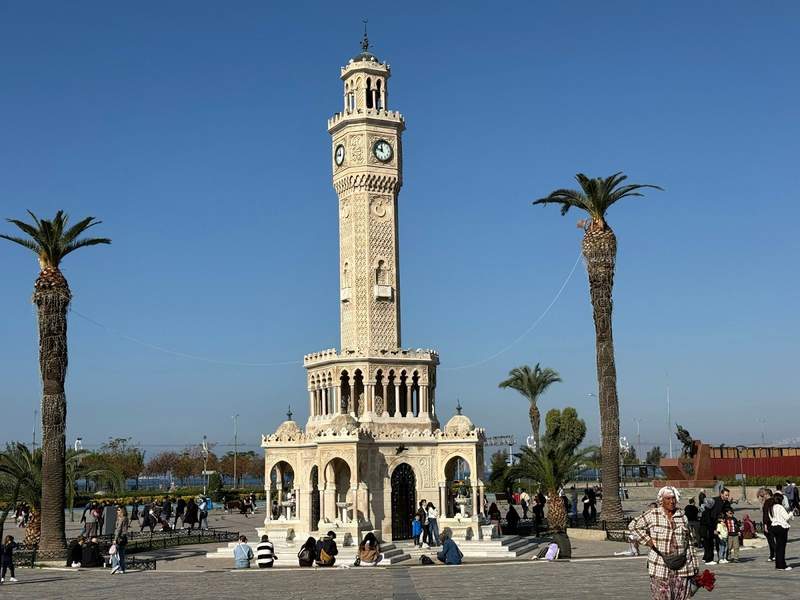
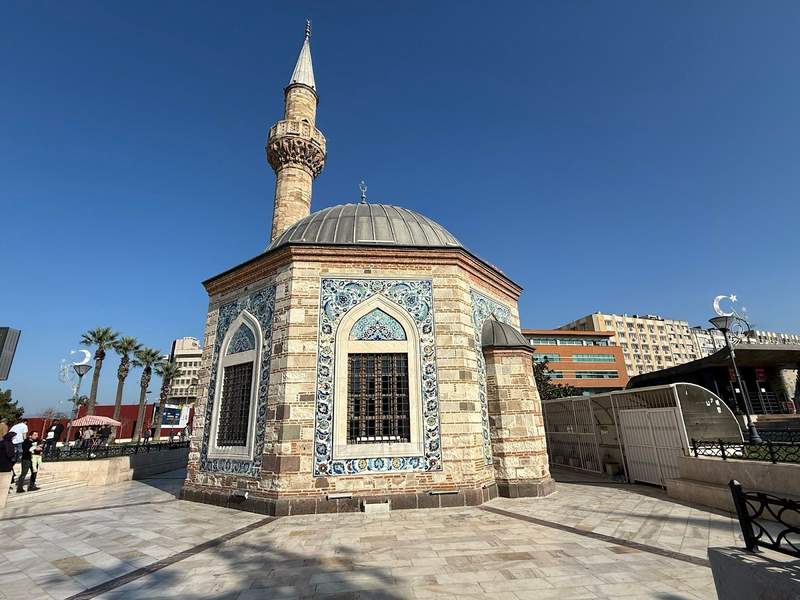
A walking tour is the best way to explore the center of Izmir, which includes a visit to the Moorish-style iconic clock tower on Konak Square. One of Tũrkiye’s most memorable landmarks, French architect Raymond Charles Père built the tower in 1901 to commemorate the 25th anniversary of Abdülhamid II’s accession to the throne. The clock itself was a gift from German Emperor Wilhelm II.
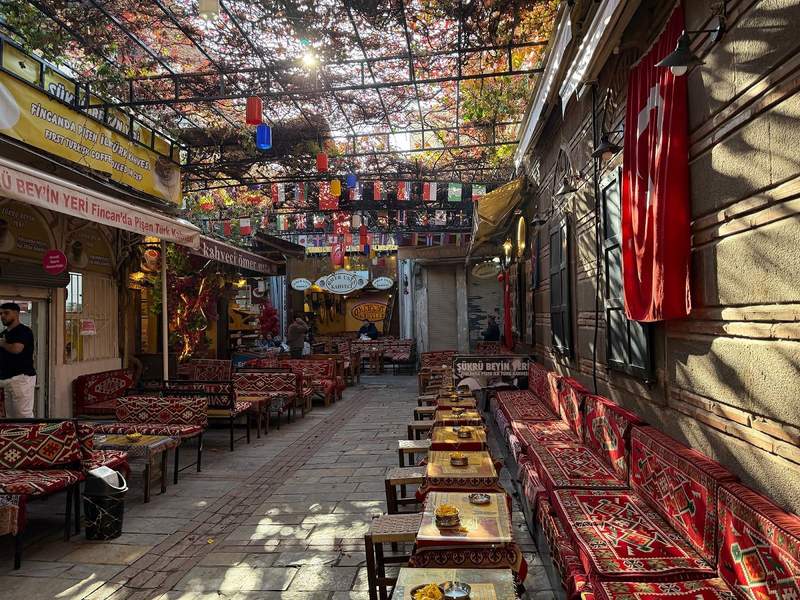
Then it was time to fully appreciate the bustle of a street food tour, snaking through the vibrant labyrinth of the Kemeralti bazaar. I stopped to try flaky boyoz pastries (introduced by Sephardic Jews escaping Spain in the late 15th century), kazandibi (a creamy milk pudding with a burnt bottom) and sweet almond butter Şambali from a 5th-generation son who left his legal practice to carry on his family’s tradition.
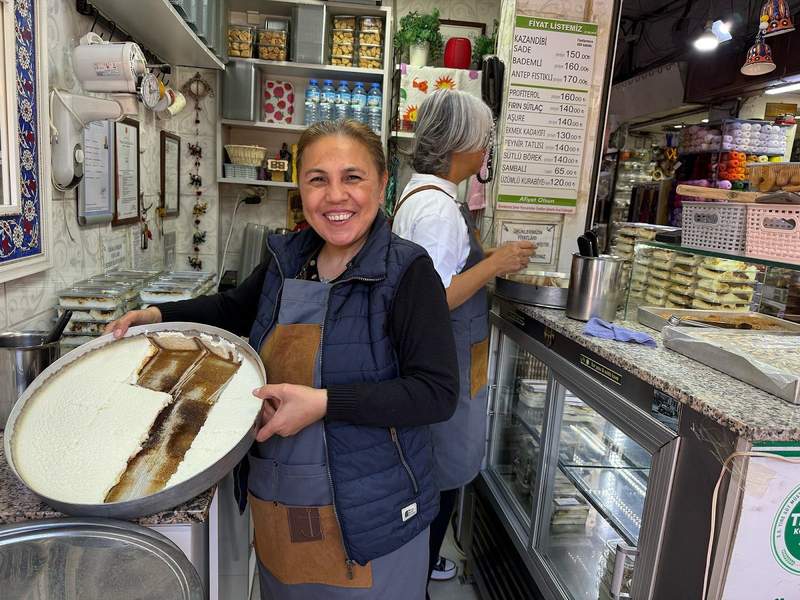
And of course, another coffee. Turkish coffee is so thick it can hold your spoon upright (and keep you awake for hours), and after a few sips, I almost skip through the bazaar, where spice shops perfume the air. Bellies full, we head off to Smyrna Ancient City.
Among the ruins here, you can trace the grid of streets that once defined the city’s Roman heart. Founded around the 11th century BC, it flourished as a trading hub but was subsequently destroyed and rebuilt several times. It’s one of the earliest seats of Christianity; in the agora, a public space, I toured the largest Roman basilica in antiquity, famously, one of the seven churches mentioned in the Book of Revelation.
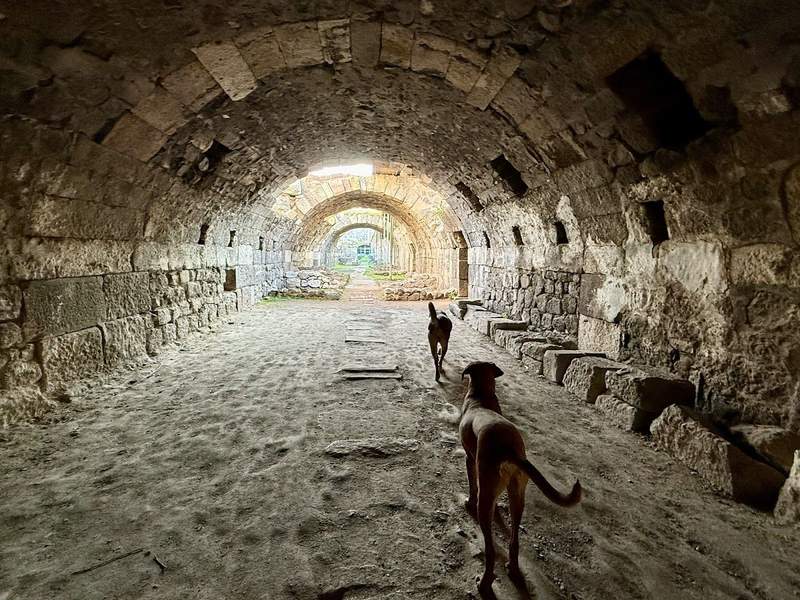
Like Los Angeles, Smyrna is built on a grid system, something you can see very clearly as you wander around. It’s also the birthplace of Homer – no, not the yellow, donut-eater, but the author of the Odyssey and the Iliad.
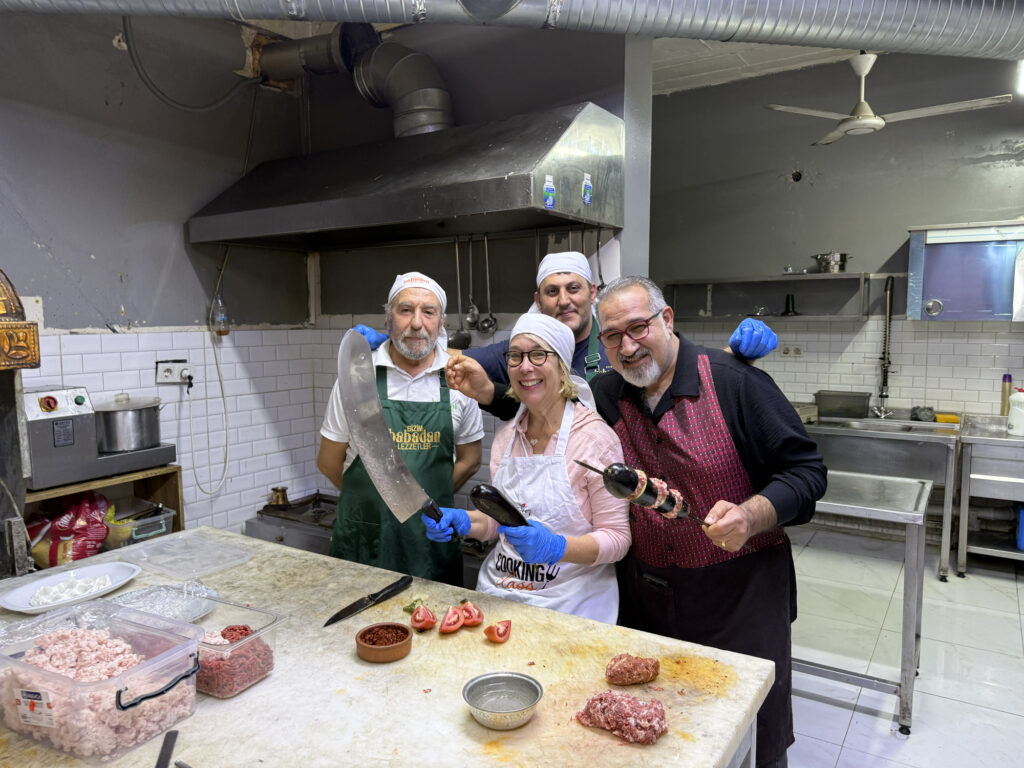
Lunch is both a learning experience as well as a feast at Babadan Lezzetler Usta İşleri̇, which is a traditional kabab restaurant that also offers cooking lessons. I learn how to make both meat and eggplant kababs, as well as handle the largest cleaver I’ve ever seen.
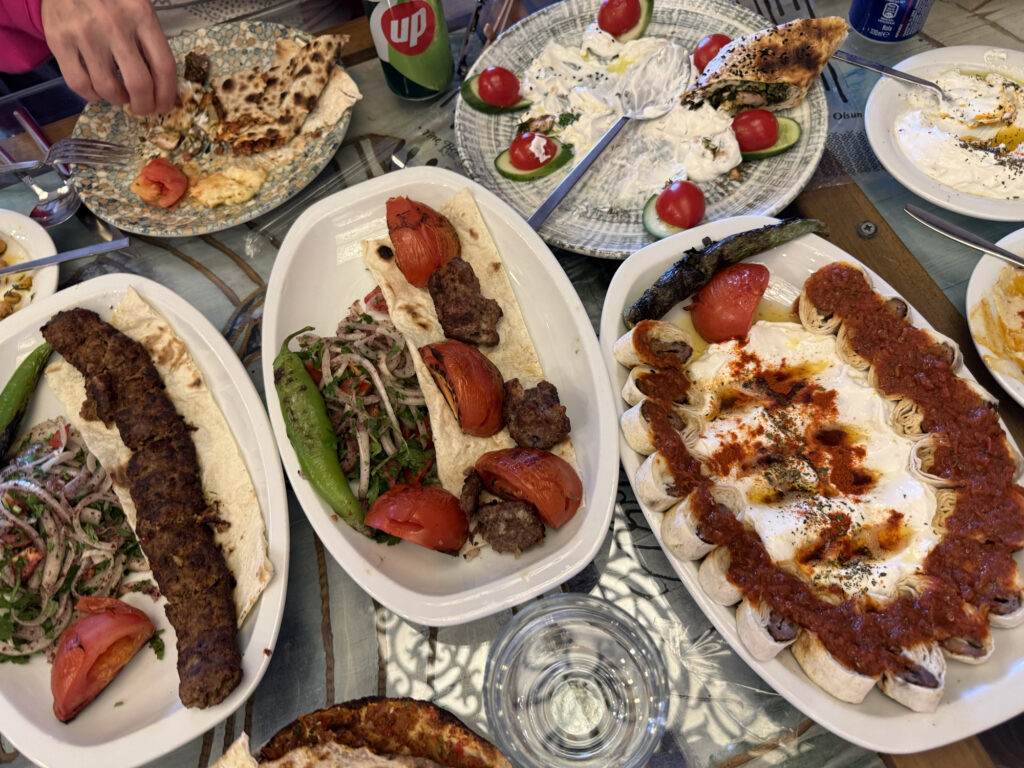
Kababs include Döner Kebab, made from meat cooked on a vertical rotisserie; Sis Kebab, grilled skewers of marinated meat; Adana Kebab, spicy, hand-minced meat on a skewer; and Urfa Kebab, a milder version of Adana kebab made with minced meat and spices. All kebabs are presented in a variety of ways, adding much excitement to the table. The owner serenades us with two traditional songs while we devour our dishes.
From Şirince to Ephesus: Sacred Stones & Village Charm
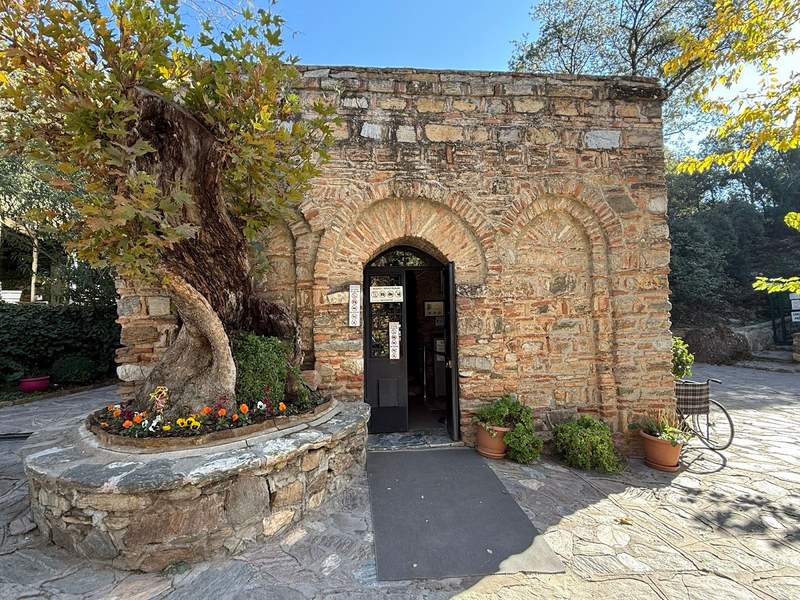
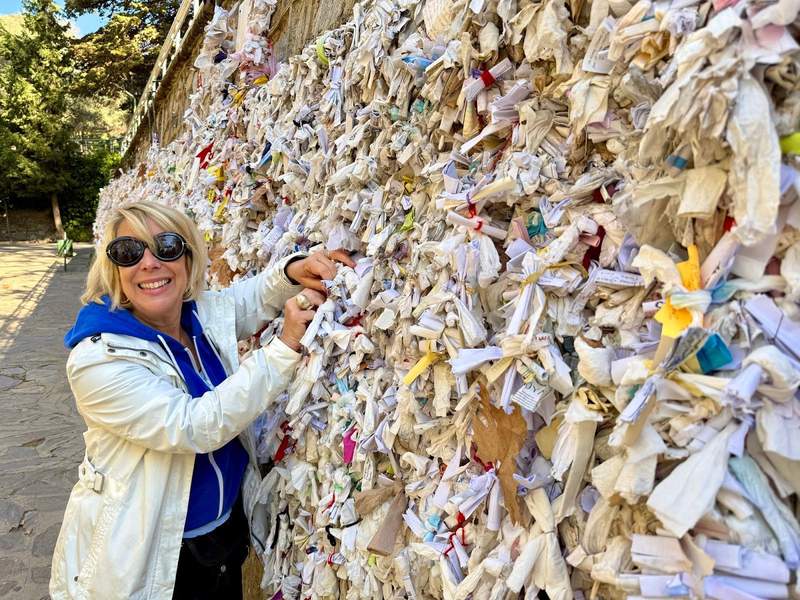
Stopping briefly at St. Jean Church, we enter the House of the Virgin Mary, a serene stone dwelling said to be her final home. Visitors to this sacred spot light candles and leave wishes tucked into crevices in the wall behind it. I am touched by the small size of Mary’s home and the magnitude of the wishing wall.
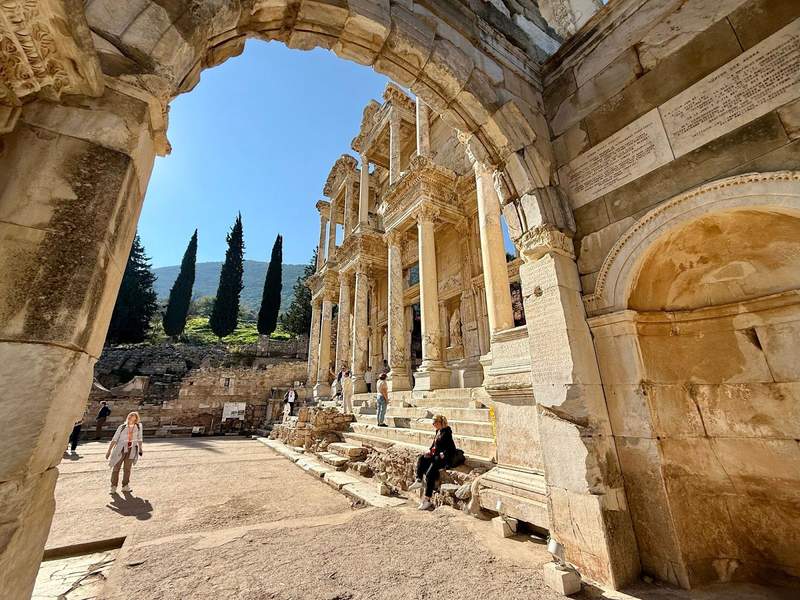
After lunch, we reach Ephesus, another Turkish gem and one of the world’s best-preserved ancient cities. Book lovers will adore the Library of Celsus, which once held 12,000 scrolls but was destroyed in 262.
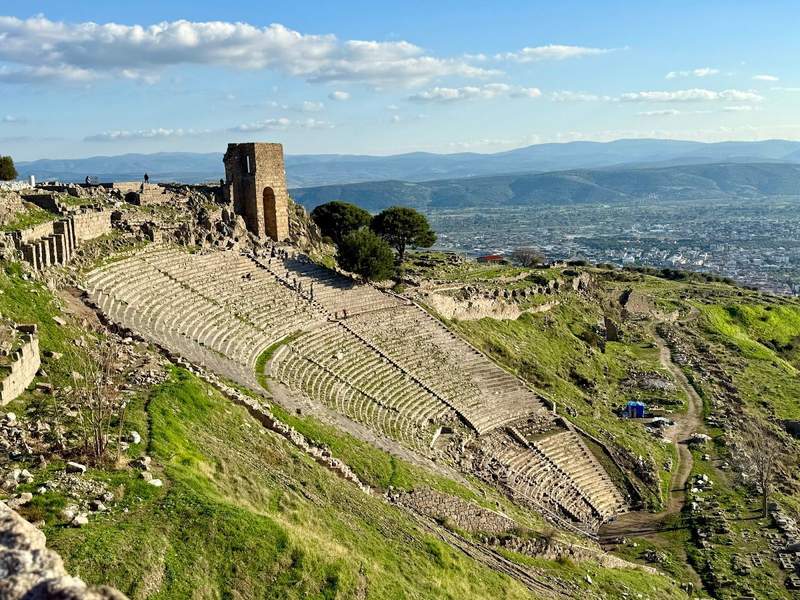
Once a thriving city of 250,000, Ephesus now hums with quiet awe, but if you visit the Great Theater, you’ll get a sense of its past; Emperor Claudius loved it so much he kept adding to its size, and by 54AD it held 24,000 spectators.
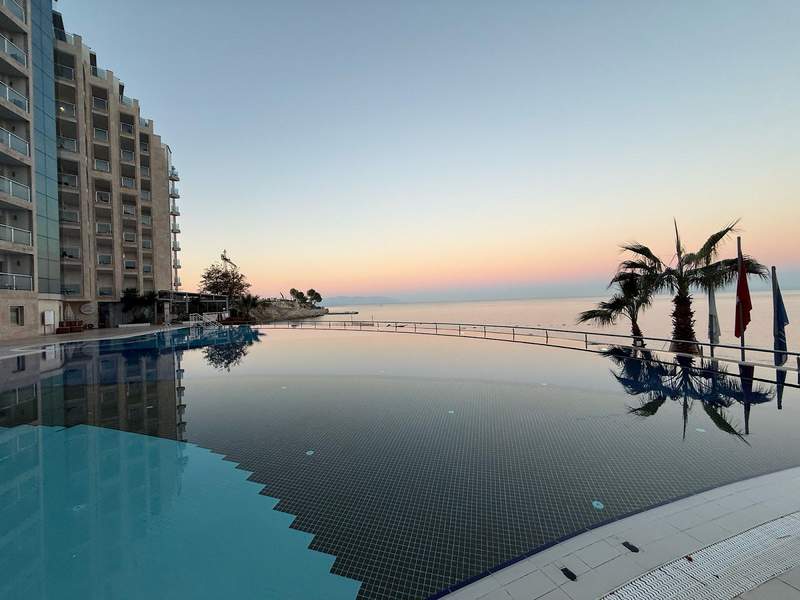
I spend the night perched dramatically above the turquoise Aegean, at the Charisma De Luxe Hotel, where guests can dive straight into the ocean from their private platform. Inside, marble floors and elegant décor create a sense of understated luxury. The spa offers indulgent Turkish baths and treatments, while the on-site restaurant serves fresh local seafood and Mediterranean specialities.
Dinner is an event that could best be described as food theatre. At the seaside Kazim Usta Restaurant, we feast on Salt-Baked Fish. The salt-encrusted fish, usually a Sea Bass, is completely encased in a thick layer of coarse salt and then baked until the crust becomes rock-hard. The salt seals in the moisture, steaming the fish in its own juices and the fish’s skin keeps the fish from becoming salty. The dish is famous for the moment the hardened salt crust is dramatically cracked open at the table by the waiter, revealing the succulent fish inside.
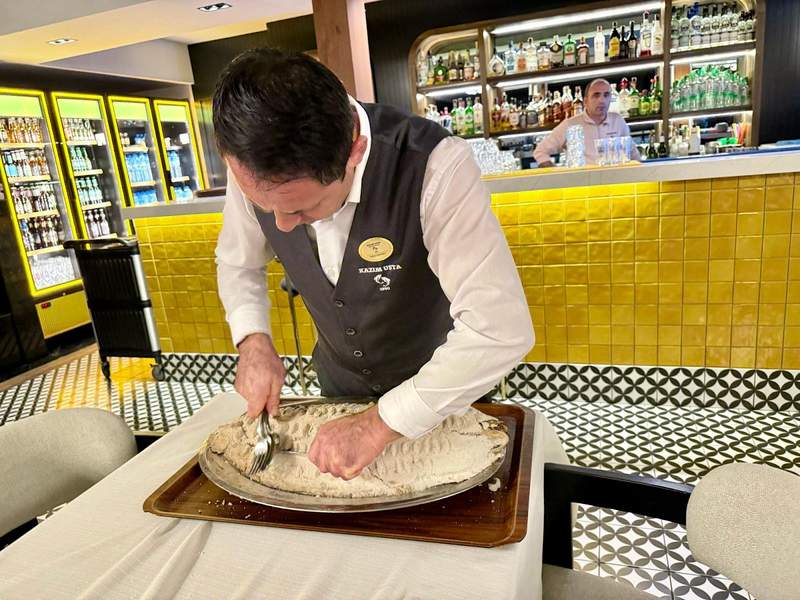
SheBuysTravel Tip: If you’re interested in ordering a Salt-Baked Fish, it’s best to plan and order ahead, as it’s usually quite large and feeds 3-6 people.
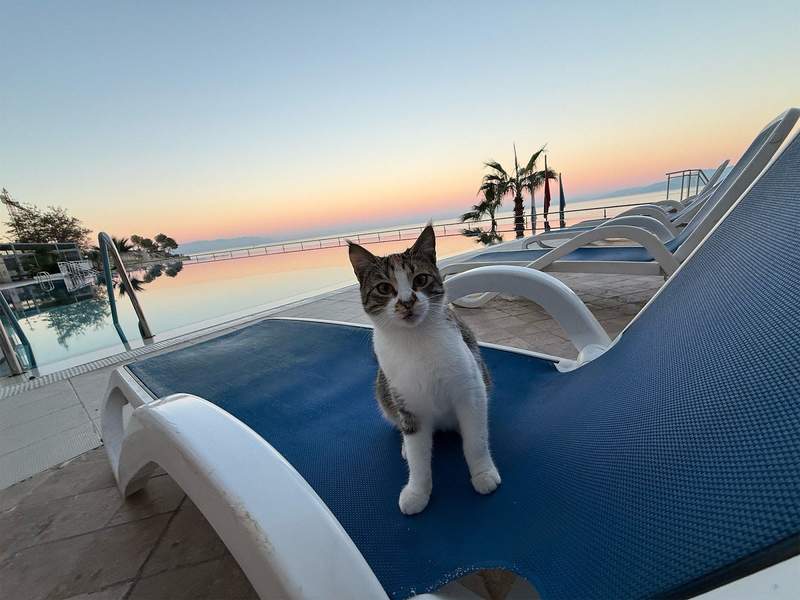
Before dawn, I rise to stroll by the sea and catch a picture-perfect sunrise. I wind up sharing my breakfast with a local kitten who poses for a close-up. I find myself wondering if I could sneak this little furry fellow through customs with me.
Pamukkale, Laodicea & Manisa: A Day of White and Gold
Next up – we head east, towards Pamukkale, a UNESCO World Heritage site, one of Tũrkiye’s natural wonders.
Lunch is my trip favorite at a place I can’t recommend highly enough, At Teras Mantı Evi, a local restaurant owned and operated by Nurshen, a single mom (rare to encounter female business owners in Tũrkiye) who cooks like the queen of grandmas. Every dish offers a hug of the heart, and pure delight for the taste buds. When visiting Pamukkale, this is the best choice to eat sensational, authentic Turkish food prepared with love. The place is petite, and reservations are suggested.
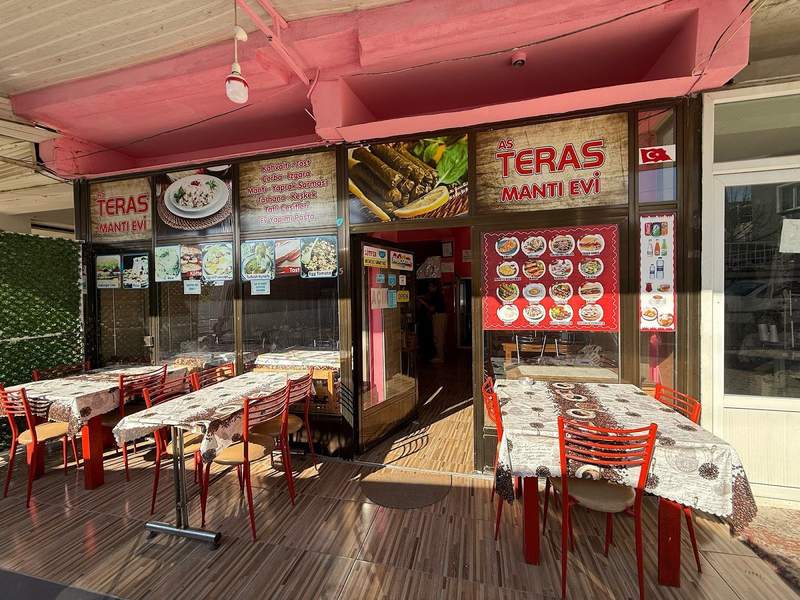
SheBuysTravel Tip: Eat in town before you head to the travertine terraces, there are a lot of visitors up there and little food.
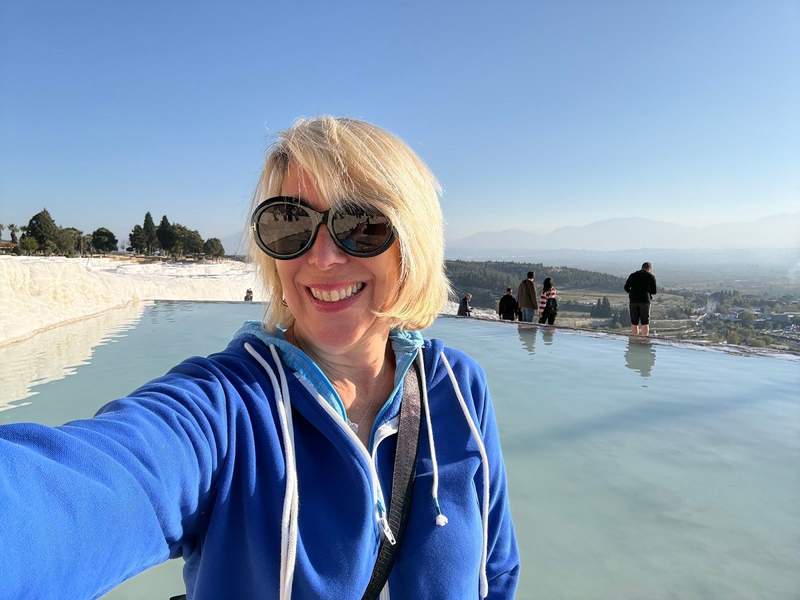
Once nourished, we head towards Pamukkale’s main attraction, the travertine terraces (Pamukkale roughly translates to “cotton castle” which aptly describes the site). These cascading travertine terraces, which are blinding white against the sky, spill down the hillside like a frozen waterfall. Warm mineral water flows through each terrace, shimmering in the light.
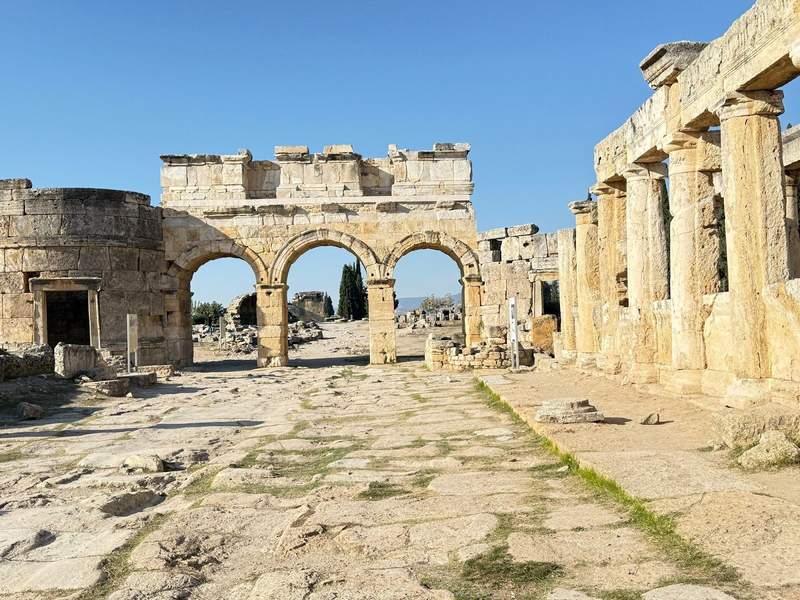
We then travel to Laodicea, an ancient city that once thrived at the crossroads of trade routes. Walking through its colonnaded streets, I can almost hear the rumble of chariots and the murmur of markets.
Later, with more history to absorb, we arrive at Manisa, which is known for its beautiful spring tulips, stopping at Sardis Ancient City, once the capital of the Lydian Kingdom. Dating back to the 7th century, it’s where the first gold and silver coins were minted; I looked around on the ground but couldn’t find any!
The remains of the Temple of Artemis stand tall against the afternoon sun. Nearby, the Philadelphia St. Jean Church, another of the Seven Churches of the Revelation, adds a layer of quiet reverence to my explorations.
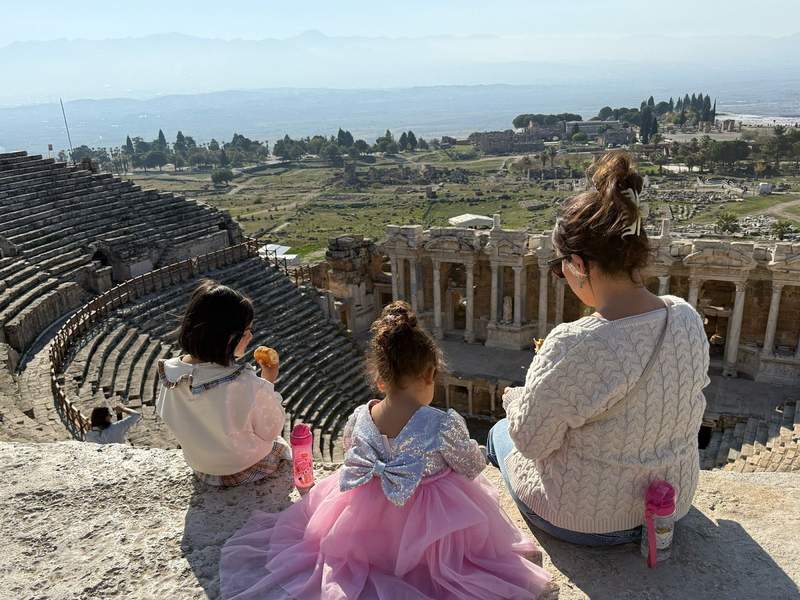
By the time I reach the DoubleTree by Hilton Manisa, sleep feels like both a reward and a gift. Rooms here are modern and well-equipped, and the hotel’s central location makes it easy to explore Manisa’s markets, mosques, and nearby vineyards.
Some Fun Facts
- The Turkish government started a rebranding campaign in 2021 to change its recognized official name to Tũrkiye (pronounced Tur-kee-yeah) to better represent the nation’s culture and identity and distinguish it from the bird and its negative English connotations. The UN and the US Government have all adopted this change.
- Türkiye welcomed over 52.6 million international tourists in 2024.
- The most visited destination was Istanbul, which is the only city to span two continents, but the capital is Ankara.
- The world’s oldest known temple, located in southern Tũrkiye, is the Göbekli Tepe. A Neolithic megalith complex with circular stone structures and elaborately carved pillars that dates to around 11,000 years old, older than Stonehenge by 1000s of years.
- Saint Nicholas, better known as Santa Claus, was born in Patara and became the bishop of nearby Myra, on Türkiye’s Mediterranean coast.
Olive Groves, Thyateira & Pergamon: The Essence of the Aegean
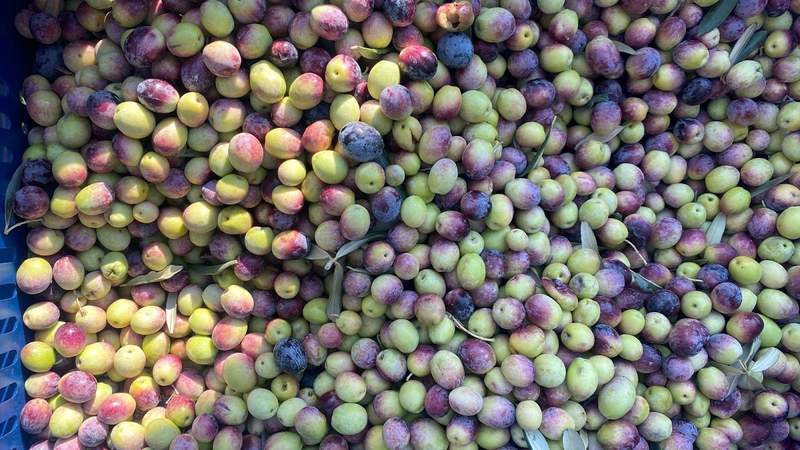
My final full day in Tũrkiye begins with a visit to Thyateira Ancient City, a wealthy commercial center in western Anatolia, notable for its trade in cloth, dyes, and agricultural goods.
I am truly looking forward to the tour of a local olive oil factory, where I watch the artisans work their magic as they press and separate the first glistening drops of oil. The taste of this nectar is out of this world; it felt to me as if they captured the essence of the Aegean in a bottle.
It was then onwards to Pergamon, which might be described as the Washington DC of the Roman Empire. This was once one of the great centers of learning and power in the ancient world, and home to a vast library rivalled only by Alexandria. It’s still very much of historical interest; in 2022, archaeologists announced the discovery of a 1,800-year-old geometric-patterned floor mosaic around the Red Basilica.
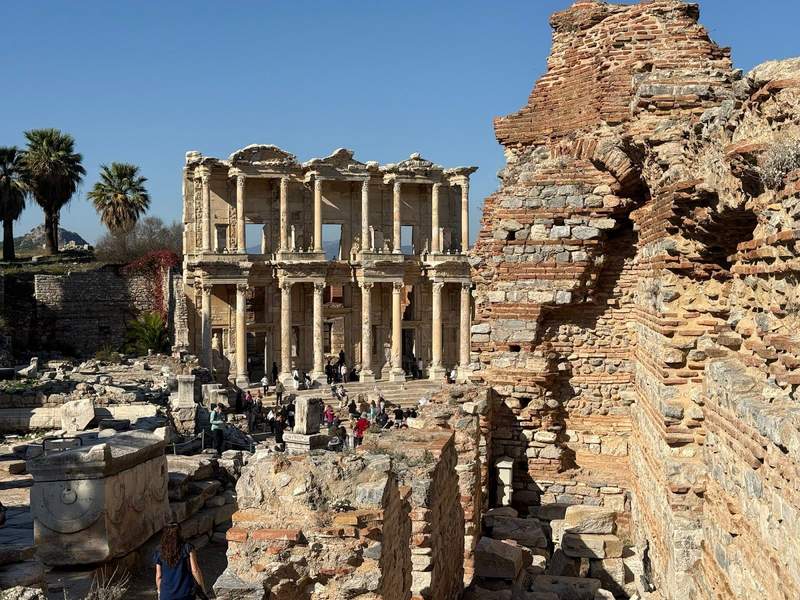
I don’t think I’ve ever felt more steeped in history than I do in Tũrkiye. There are so many high points, not least I feel more intelligent – and might even be useful at a quiz night one day! But from the first sip of coffee in Alaçatı, to the cool water of Pamukkale, and the grandeur of Ephesus, it’s truly memorable.
Tũrkiye has a way of surprising you. One moment you’re surrounded by ruins, the next you’re sipping tea in a coastal café, laughing with new friends.
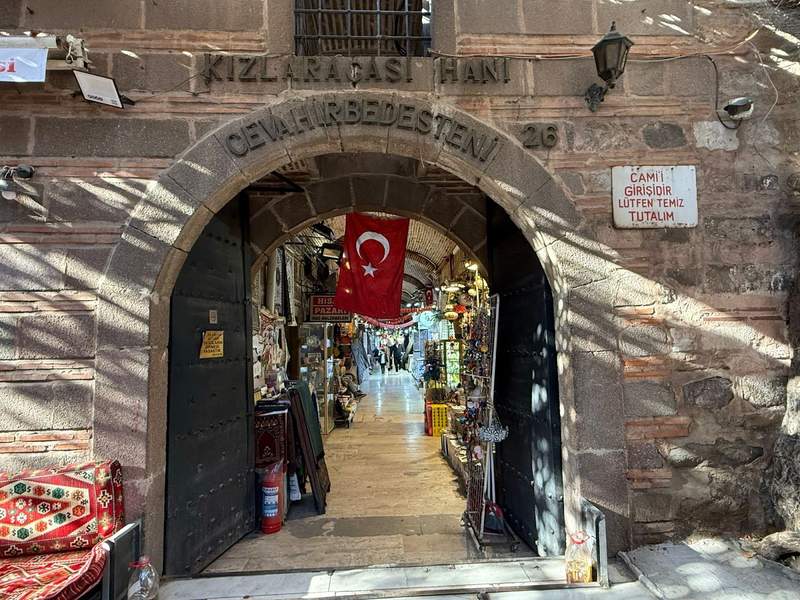
SheBuysTravel Tip: Always say yes to tea; it’s more than a drink, it’s an invitation to connect.
As a wife, mom and adventurer out for a rare solo journey, Tũrkiye was fresh and exciting. Mostly, I am reminded to slow down, appreciate the world and its incredible history, and enjoy the simple things, like the joy of sharing a meal with friends, the warmth of sunlight by the sea, and the purr of a visiting kitten.
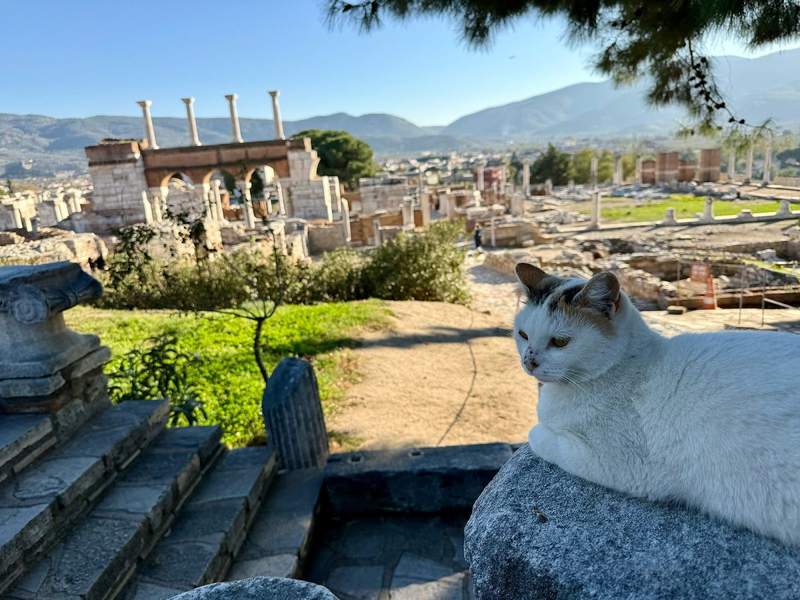
The magic of Tũrkiye isn’t just in its sights. It’s in the way it makes you feel. Steeped in history, yet demanding a sharp focus on the here and now. Tũrkiye is a continual feast for all the senses, and a location with so much to see, touch, taste and experience, it naturally begs a visitor to return.
Read More:
- Why Choose Celestyal Cruises for Your Greek Island (and Turkish) Adventure
- Mediterranean Princess Cruise: Sun & Fun on a Journey Through History (Including Turkey)
- Best Time to Go On a Cruise? Here’s How to Time Your Trip
- Connect to Your Past with Ancestral Tourism
- Is Priceline Legit? A Traveler’s Breakdown of Pros, Cons & How to Use It Wisely

Leave a Reply