

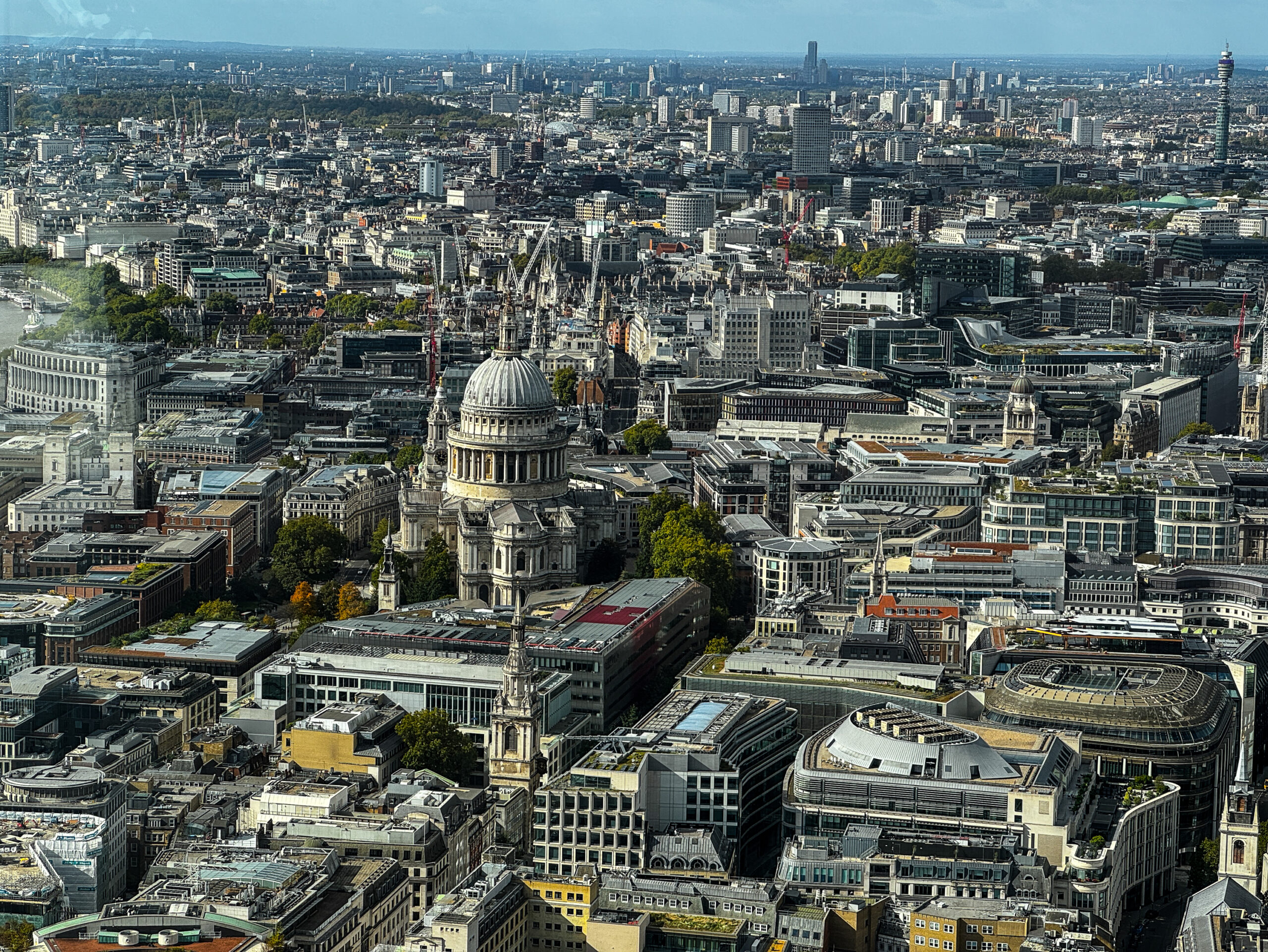
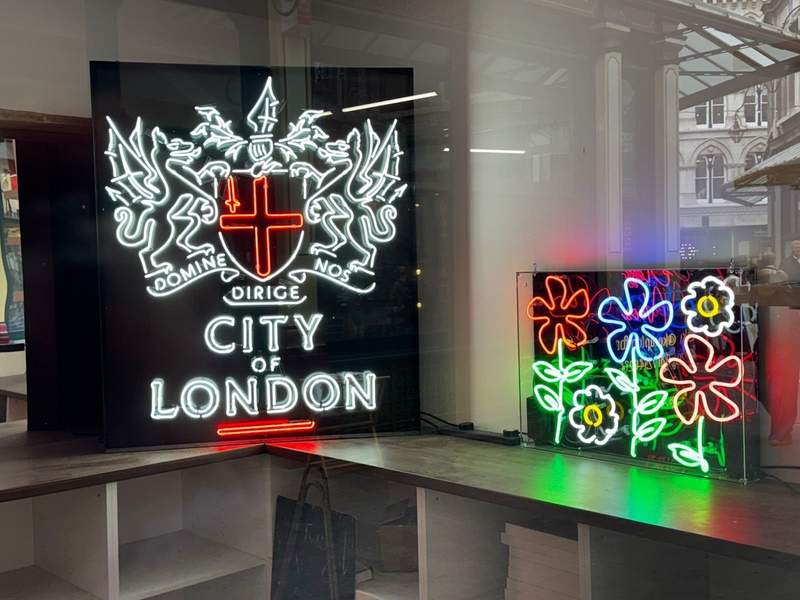
Welcome to the City of London, affectionately known as the Square Mile. It’s where history and modern London collide in brilliant fashion. In this compact patch of Greater London, Roman ruins peek out from beneath gleaming skyscrapers, and men in suits and bowler hats once ruled the roost—and still do. Wander these ancient streets to find iconic British treasures such as the Tower of London and the majestic St. Paul’s Cathedral, framed by skyscrapers nicknamed The Gherkin and The Walkie Talkie.
Head off main streets to discover alleys right out of novels by Jane Austen or Charles Dickens.
SheBuysTravelTip: Expect to pay almost $90 US for total admission for one adult to the three attractions below. Plan ahead to book a specific entry time, especially in the summer.
Explore The City’s Top Attraction: Tower of London
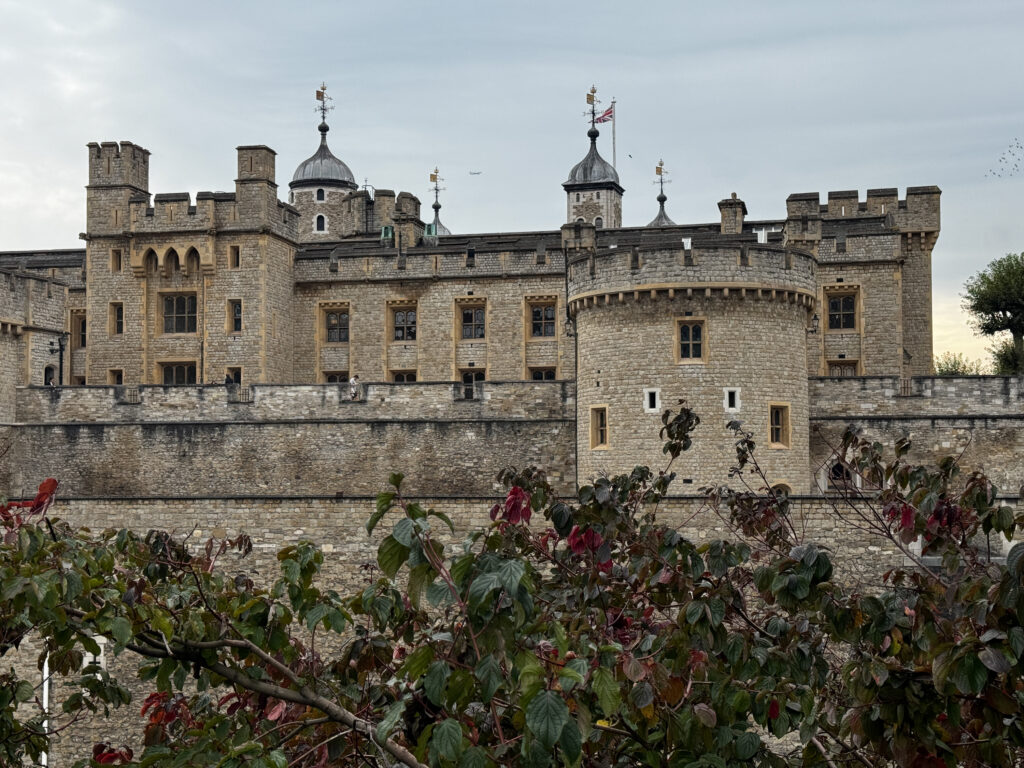
Along with Buckingham Palace, the Tower of London is the most popular London tourist attraction. Unlike the Palace, which is often closed for tours, almost every day of the year you can visit the Tower of London. Over the centuries since 1078, the Tower has served as a royal palace, infamous prison and is still today a repository of the Crown Jewels.
- Arrive early to watch the gates unlocked by the Yeoman Warders, the distinctive red and gold uniforms worn by the soldiers who are nicknamed “Beefeaters.”
- The Crown Jewels exhibit, glittering in their glass cases, features over 100 priceless objects, including the Imperial State Crown worn by King Charles III during his coronation procession. The display also includes Queen Camilla’s crown, the largest cut diamond in the world and the Coronation Spoon, the only piece surviving from the original medieval regalia.
- Explore the White Tower, the fortress’s 11th-century heart, with its impressive Royal Armories collection and the stunning Romanesque Chapel of St John, and hear tales of notorious prisoners and historic executions.
- At the Tower Green and Scaffold Site, visit the place where two of Henry VIII’s wives and Lady Jane Grey were executed.
- Keep an eye out for one of eight ravens (aka guardians of the tower), which are fed twice daily by the Ravenmaster.
SheBuysTravelTip: Upon arrival, it’s advisable to check the queue for the Crown Jewels because the wait can take more than an hour.
Walk Over London’s Most Famous Bridge: the Tower Bridge
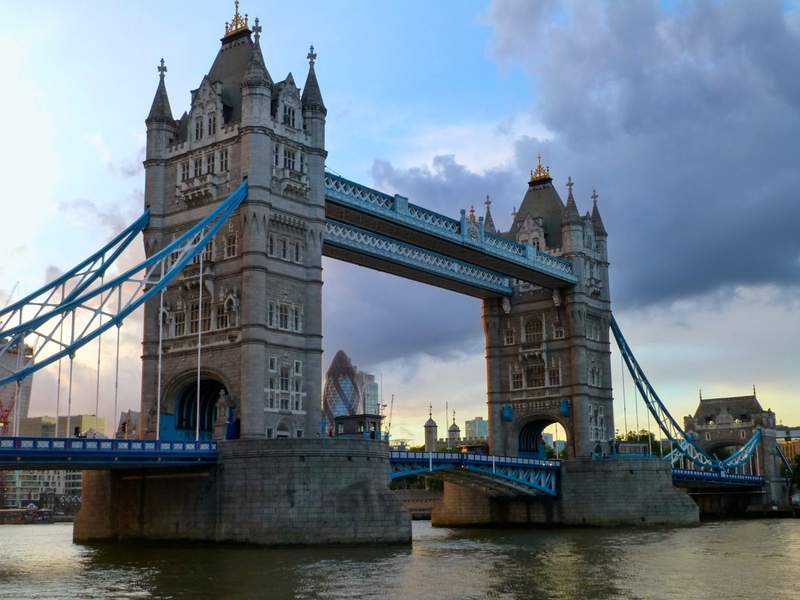
Looking over the Tower of London is the colorful Tower Bridge, the most widely photographed bridge in all of Europe. First-time visitors often call it London Bridge, which is farther west along the Thames River and not nearly as interesting.
- Above the traffic on the Tower Bridge’s main level, walk across the 137-foot-high Walkways, also known as the high-level pedestrian bridge. The highlight is the glass floor, installed in 2014, where you can look straight down to the bustling traffic and river life below.
- Inside the bridge’s towers are interactive exhibitions revealing the story of its construction. It took eight years to build and involved over 12,000 tons of steel, blending Victorian engineering with Gothic design.
- Don’t miss the atmospheric Victorian Engine Rooms, where original steam engines once powered the bascules—the two massive moveable sections of the bridge’s road—that still rise to allow ships to pass beneath.
SheBuysTravelTip: Walking across Tower Bridge at street level is free. However, there is admission to the Tower Bridge Walkways and exhibitions.
Revel at One of the World’s Iconic Churches: St. Paul’s Cathedral
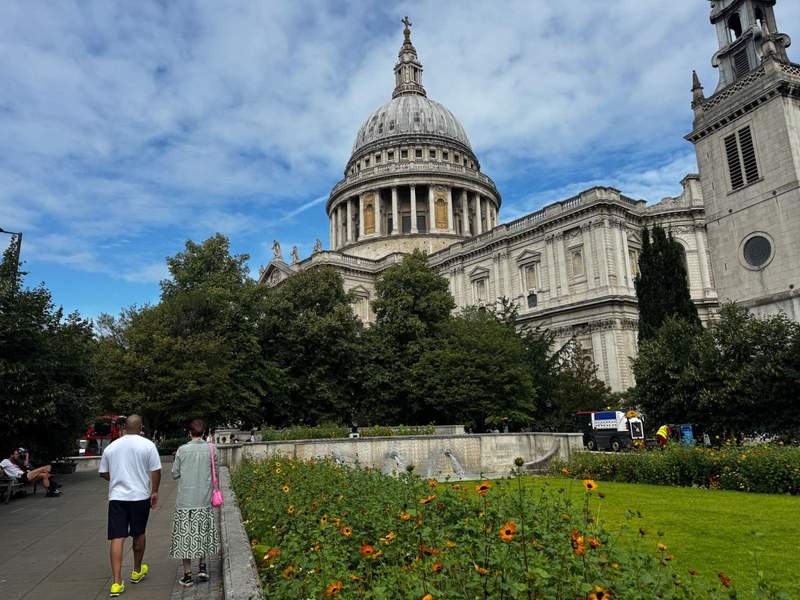
Designed by Sir Christopher Wren and completed in 1710, St. Paul’s Cathedral is an active place of worship. The church has hosted major events such as the royal wedding of Prince Charles and Lady Diana Spencer in 1981 and state funerals for Sir Winston Churchill and Margaret Thatcher, among others.
There is a substantial admission price for adults and children, although daily religious services are free. Admission includes guided and self-guided tours of the interior and the crypt where Lord Nelson and the Duke of Wellington are buried.
Climb to the interior of the dome to see the Whispering Gallery, the Stone Gallery and the Golden Gallery.
SheBuysTravelTip: On Sunday afternoons, there is discounted admission to explore the church’s dome.
Discover Fascinating Free Exhibits about London’s Roman History
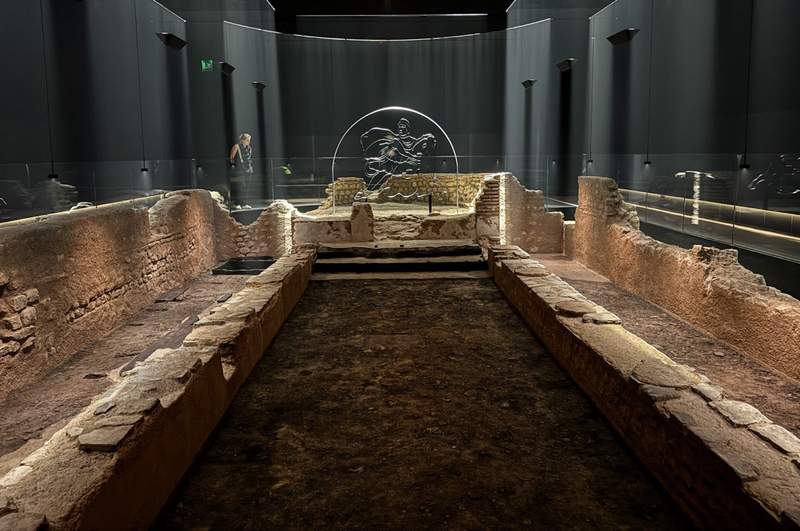
London’s origins lie in the Roman settlement of Londinium, established around AD 47 as a strategic trading hub on the River Thames. Remnants of the establishment of the city have been showcased at the two attractions below. A Roman London Walking Tour is available through GetYourGuide.
Rediscovered beneath Bloomberg’s modern European headquarters, the London Mithraeum exhibits the remains of an ancient Roman temple dedicated to the god Mithras. Visitors can explore a recreated sacred shrine space with artifacts and a six-minute immersive sound and light show offering a glimpse into spiritual life in Roman London. Entry is free.
Popularly known for its collection of Victorian 19th-century art, the Guildhall Art Gallery invites visitors to go several stories underground to see the remains of a Roman amphitheater dating back to AD 70. A clever visual display gives a sense of the arena where gladiators once fought and public spectacles were held. Entry is free.
See The City’s Most Esteemed Institutions
- All Hallows by the Tower is the oldest church in the City, dating back to AD 675. The church is rich in history and archaeology, including medieval wall paintings and ancient crypts. The church is also a memorial site connected to the Tower of London nearby.
- The Bank of England Museum is part of the massive Bank of England building. The free exhibit reveals the role of the Bank in the economy and historic banknotes.
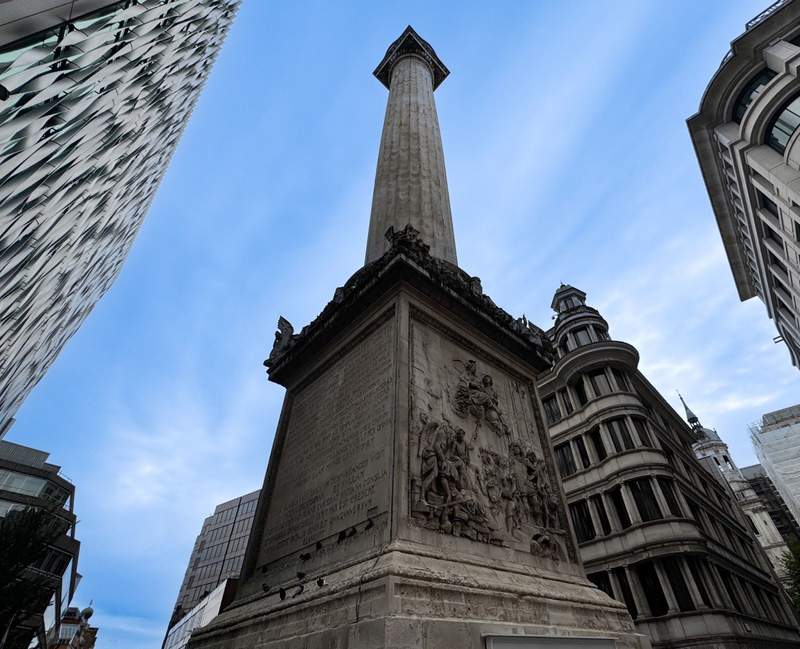
- The Monument to the Great Fire of London, erected to commemorate the Great Fire of 1666, is a popular meeting spot in the City. Visitors can climb a narrow, spiraling staircase of 311 steps inside the fluted Doric column. Although now shoe-horned by nearby modern skyscrapers, there are still some views of the River Thames.
- Mansion House, the official residence of the Lord Mayor of London, is a grand 18th-century Palladian mansion opposite the Bank of England. It includes beautiful interiors and a historic Egyptian Hall used for major civic functions and lavish banquets. Guided tours offer insight into the ceremonial and political life of the City of London and should be booked well in advance.
- Old Bailey, officially known as the Central Criminal Court, can be visited only in group tours or infrequently when public criminal trials are open to the public. The neo-Baroque building, dating from 1907, is topped by a gold leaf statue of a ‘lady of justice’ holding a sword in one hand and the scales of justice in the other.
- The Royal Courts of Justice, located on the Strand, is a grand Victorian Gothic Revival building that serves as the main center for civil and family law cases in England and Wales. The building remains one of London’s most architecturally impressive public buildings and a symbolic seat of legal authority. Tours are available but typically Tuesday through Friday and booked in advance.
Marvel at Futuristic Icons: The Inside-Out, The Gherkin and The Walkie-Talkie
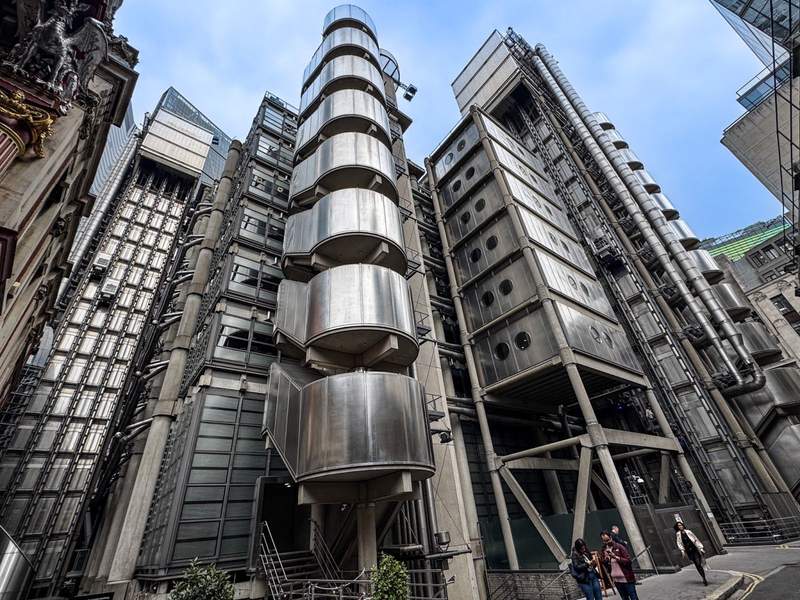
- Architect Richard Rogers’ Lloyd’s Building caused an uproar when it was built in 1986. Known as the “Inside-Out Building,” Lloyd’s is a striking example of high-tech architecture with its exposed elevator lifts, industrial piping and staircases on the exterior. Although its address is One Lime Street, it’s easier to find on Leadenhall Street or across from the Leadenhall Market.
- Sir Norman Foster’s The Gherkin at 30 St Mary Ave is an iconic, modern skyscraper renowned for its distinctive curved glass design and energy-efficient features. The nickname comes from its pickle-like shape. Like Lloyd’s, the building is sandwiched between nearby modern skyscrapers.
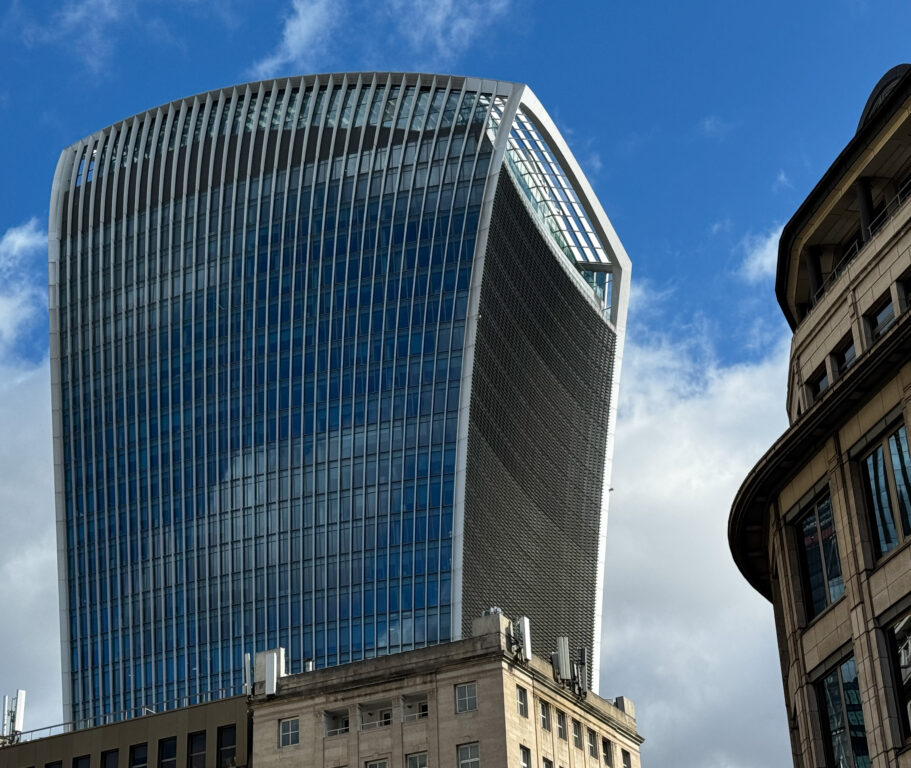
- Rafael Vinoly’s The Walkie-Talkie (20 Fenchurch Street) building stands out for its top-heavy design. It’s more prominently featured in the skyline than the other two buildings, especially looking from Bankside across the River Thames.
See Stunning Views Above the Skyline
Situated on the 50th floor of 8 Bishopsgate, The Lookout is the newest addition to London’s viewing platforms that provides spectacular, unobstructed 360-degree views of the City and beyond. Admission to The Lookout is free, though tickets must be booked in advance online due to visitor limits. Walk-ins are accepted only when capacity allows.
The Sky Garden, perched on the 35th to 37th floors of the Walkie-Talkie building, is a high-demand destination for its free tours. At the top, the garden is a lush, landscaped public space rich with over 2,000 drought-resistant plants and sweeping 360-degree views of London’s skyline. Visitors must secure tickets online in advance and may not be admitted if they are over capacity. Separately, on the top floor,s there are two bars and two high-demand restaurants that also require advanced booking.
Discover Curious Corners and Hidden Treasures at These Quirky Museums
- Sir John Soane’s Museum is a unique museum housed in the former home of the neoclassical architect Sir John Soane on Lincoln’s Inn Fields. It displays his extensive collections of architectural models, paintings, antiquities and curiosities arranged in carefully preserved period rooms. The museum offers a rare glimpse into 18th and 19th-century architecture and design.
- Hunterian Museum is located in the Royal College of Surgeons across Lincoln’s Inn Fields from Soane’s Museum. The Hunterian boasts Britain’s oldest collection of anatomical and surgical specimens, including medical instruments, rare pathological samples and historical surgical tools. With its unusual and sometimes graphic displays, the museum is not for the faint of heart.
- Dr. Johnson’s House was the home of Samuel Johnson, the famous 18th-century writer and compiler of the English dictionary. It’s a charming museum that showcases Johnson’s life, literary achievements and Georgian London life.
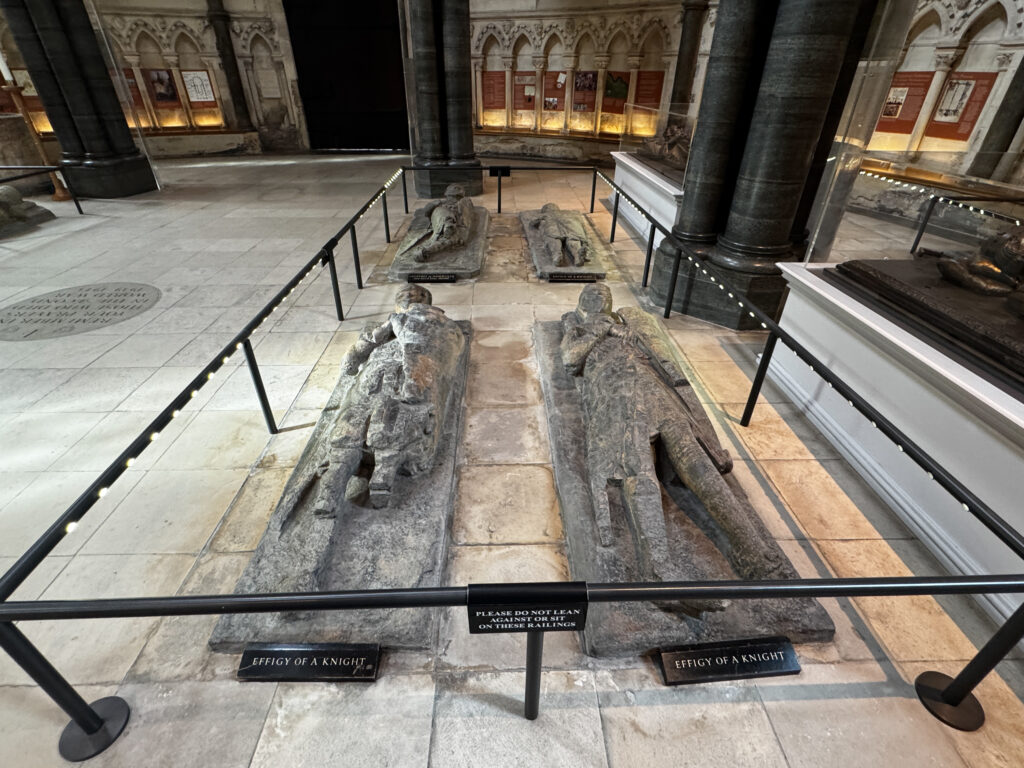
- Nestled within the historic Temple district of London, the Temple Church offers a captivating glimpse into the area’s rich legacy—a place once closely associated with the legendary Knights Templar. Originally serving as the Knights Templar’s English headquarters in the 12th century, the land they occupied gave rise to the iconic Temple Church, inspired by their holy site in Jerusalem. In popular culture, it was a key site in Dan Brown’s The Da Vinci Code.
Experience Historic Venues for Dining and Shopping
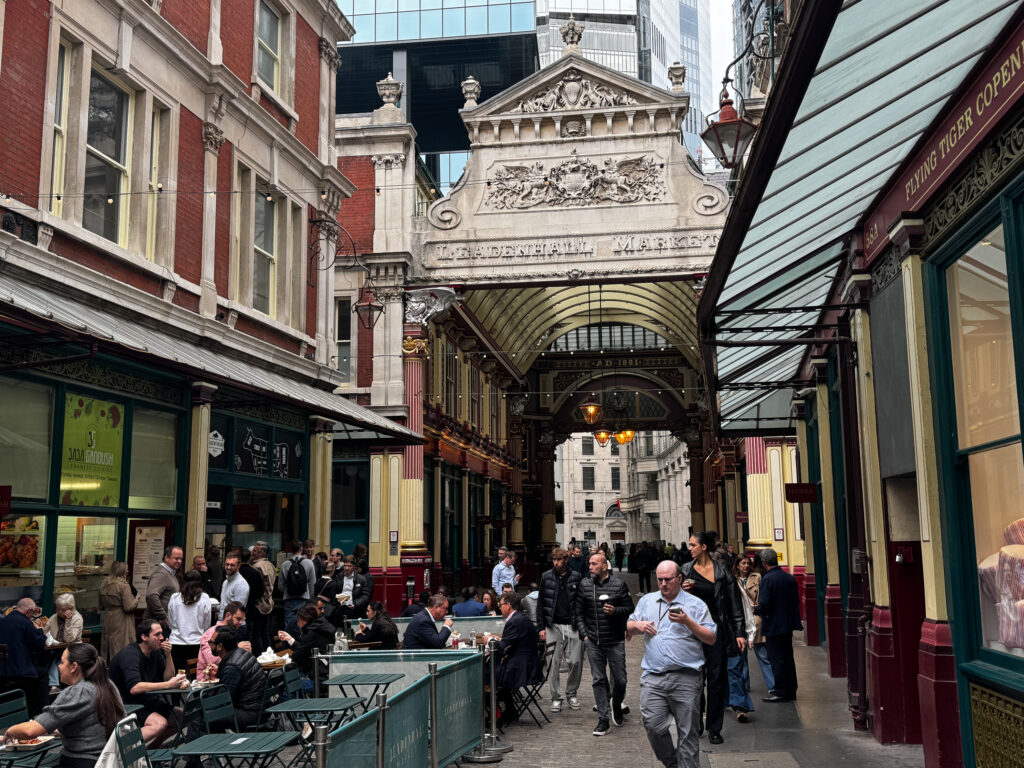
Leadenhall Market is a stunning Victorian market adorned with a wrought-iron and glass roof. With cobblestone streets and colorful storefronts, it evokes an old-world charm that was featured in several Harry Potter films. Over the centuries, the market transitioned from a hub for meat, poultry and game to a lively destination for boutique retail shops, artisanal food vendors, wine bars and a variety of restaurants, including traditional British pubs and modern eateries. At lunchtime, it seems that all those working in the Financial District stop for a beer.
Flanked by the Bank of England on one side and across the street from the Mansion House on the other, the Royal Exchange looks more like a monument than a place for dining and shopping. This 1844 structure features grand Corinthian columns, a striking portico and exquisite interior murals, embodying the elegance of Victorian architecture. Today, the Royal Exchange is a luxurious shopping destination, home to prestigious brands such as Asprey, Hermes and Penhaligon’s, alongside high-end restaurants.
Visit Adjacent London Neighborhoods
To the west of the City of London, you’ll find these popular neighborhoods for visitors:
- The West End and Theatreland area, with Covent Garden and Leicester Square attractions, is where people go for nightlife and famous museums. Want to learn more? Read our story here.
- The Royal London area, with Buckingham Palace and Westminster Abbey, is a popular area to explore England’s royal heritage. Read our story here.
Where to Stay in The City of London
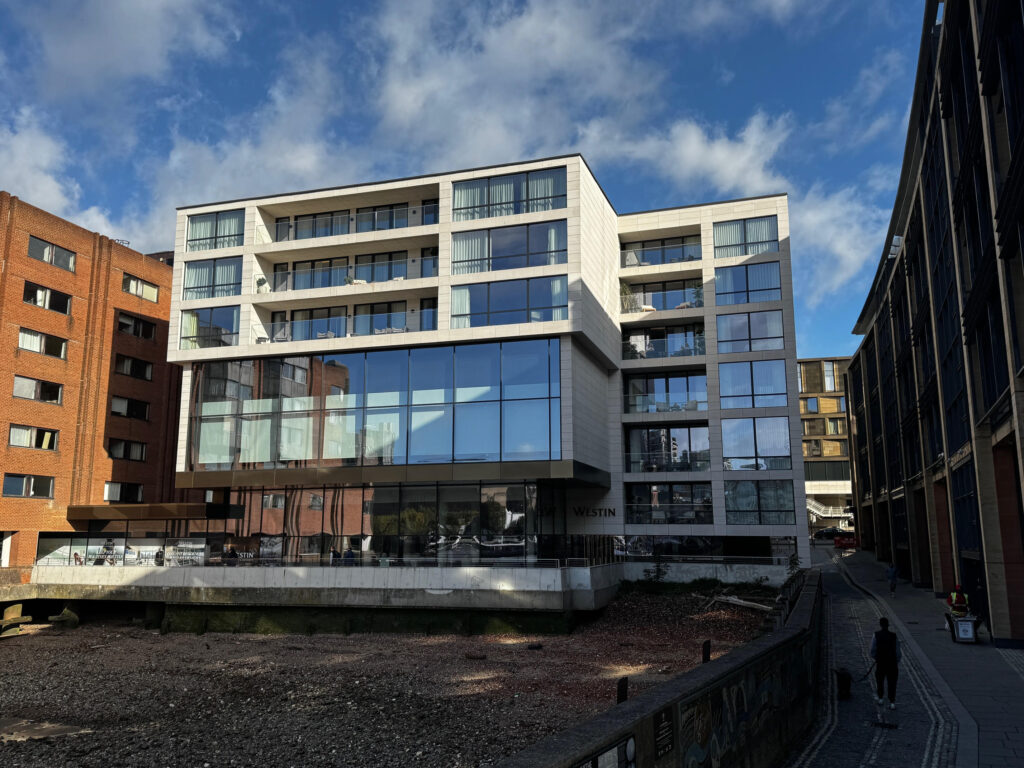
- For a luxurious stay with stunning riverside views, the Westin London City is a top choice. This 5-star hotel overlooks the historic Thames, Shakespeare’s Globe and Tate Modern, offering 222 rooms with the signature Westin Heavenly Bed and sleek amenities. Guests can enjoy the serene Heavenly Spa, an indoor pool and dining at Mosaic or Hithe + Seek bar with panoramic views.
- Close to St. Paul’s Cathedral, the Leonardo Royal London St. Paul’s combines contemporary comfort with historical surroundings. It features spacious rooms, a fitness center and modern dining options, ideal for both business and leisure travelers.
- Club Quarters Hotels provide convenient, affordable stays with two properties in The City, offering business-friendly facilities and comfortable rooms with a community-focused vibe.
- For visitors seeking budget-friendly options, the Premier Inn chain has several hotels scattered in The City, including locations near Aldgate, Tower Hill and Bank.

Leave a Reply