
A travel writer who has been cruising for 35 years says that exploring Alaska’s wilderness with The Boat Company is an unforgettable, transformative experience. Her intimate seven-day all-inclusive eco-tour with The Boat Company included daily wildlife sightings and wilderness adventures in Southeast Alaska’s Tongass National Forest.
Highlights:
- A Cruise with a Purpose: The Boat Company is the world’s only nonprofit cruise company, dedicated to protecting and preserving the Tongass National Forest.
- Access to Remote Wilderness: The Boat Company’s small ships reach secluded coves, islands and waterways inaccessible to large cruise vessels.
- Transformative Nature Immersion: From kayaking alongside whales and hiking old-growth forests to soaking in natural hot springs, it’s easy to feel connected with both nature and conservation.
Editor’s note: The writer was hosted.
Seeing Alaska in a Different Way
I’ve taken more cruises than I can count, and loved each one. But none can compare to the immersive Alaska cruise my daughter and I experienced during our Alaska expedition cruise with The Boat Company,
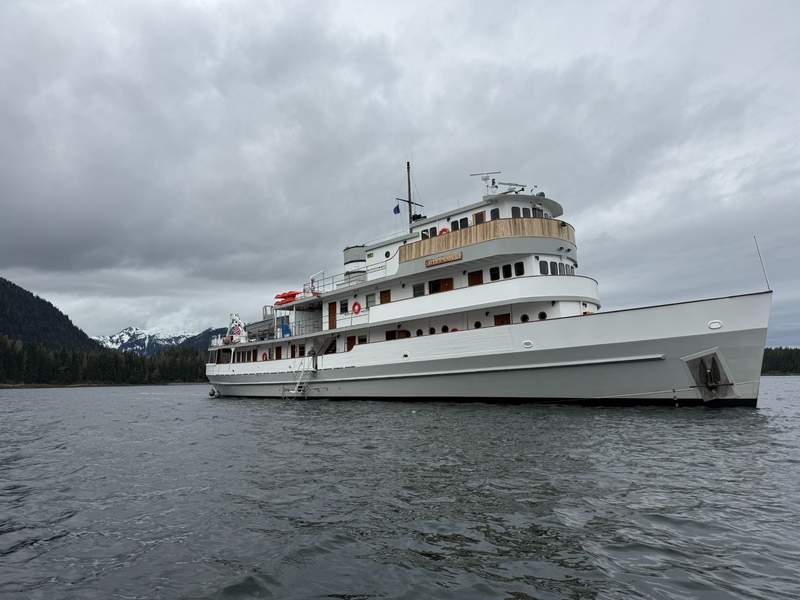
Over seven days sailing on the M/V Mist Cove, we saw an abundance of wildlife – bears, whales, bald eagles and harbor seals – while exploring the wilderness of the Tongass National Forest in Southeast Alaska. We hiked in old-growth forests, took a polar plunge in icy water and soaked in natural hot springs.
Plus, we felt good about all of it knowing that The Boat Company is the world’s only nonprofit cruise company. Its mission is to save the Tongass.
Here’s what it’s like to take an Alaskan eco cruise with The Boat Company.
Ready to explore the world? We can help.
A Small Ship Voyage With a Family Vibe
The Boat Company, founded in 1979 and established in 1980 by the late Michael McIntosh, Sr., runs expedition eco-cruises from mid-May to mid-September. It operates two ships:
- The 157-foot-long M/V Mist Cove, with 12 staterooms.
- The 145-foot M/V Liseron, a decommissioned U.S. Navy minesweeper, converted to house 10 staterooms.
The small ships go where bigger boats can’t. They sail Southeast Alaska’s Inside Passage in the remote waterways of the Tongass National Forest between Sitka and Juneau.
We cruised through fjords and forested islands, nosed up to waterfalls and bunked down in secluded coves at night
A Small Ship Experience
Megan and I were among just 20 passengers on our cruise. In such intimate quarters, it’s easy to bond quickly with fellow passengers and the friendly crew, who cook, clean, drive skiffs, manage boat operations and guide excursions on land and sea.
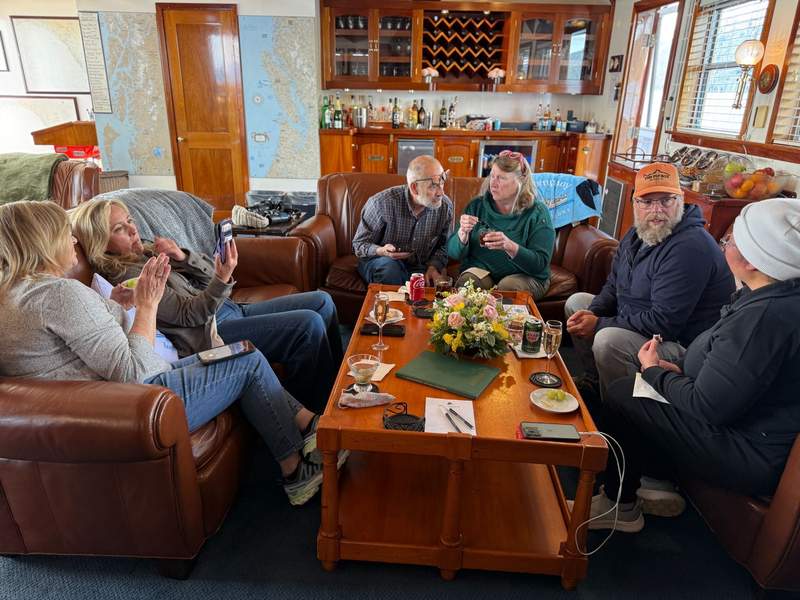
The cruise felt like sailing on a yacht with good friends. The crew even displayed a framed photo of our group in the salon (the main lounge).
No Two Trips Alike
On this small ship expedition cruise, you can expect adventure, wildlife in their natural habitat, backcountry glaciers, waterfalls and some of the best fishing in the world.
Here’s what not to expect:
- WiFi
- Spa
- Fitness center
- Gift shop
- A set itinerary
- A planned activity schedule
Those are a function of the remoteness of the Tongass, the focus on small group wilderness experiences, the abilities of the passengers and the vagaries of the tides and weather.
So no two trips are alike.
Each day, Captain Jim Jefferson decides when and where to anchor. He always finds secluded, quiet coves for daytime activities and nighttime slumber.
Meanwhile, the Guest Coordinator Jessica Doherty helps passengers craft customized daily adventures, which they can change on a whim.
“We have an idea of what you guys want to do – if you want to fish more, or kayak or hike, then we can adjust the trip,” says Captain Jim.
Small Guest to Crew Ratio
It’s the same philosophy The Boat Company has followed from the beginning, says Hunter McIntosh, the company’s president and executive director, who sailed with us on our trip in mid-May 2026.
“Every trip we run, we design based on the interests of the guests on board at the time. With a ratio of two guests per crew member, we are able to accommodate multiple activities at any one given time,” he says.
There’s always something new. On this trip, he saw a beaver swimming in saltwater and taking a shower in a waterfall. “Yet another first,” says McIntosh, who joined the family’s organization 30 years ago to refocus it as a boutique cruise line with a conservation mission.
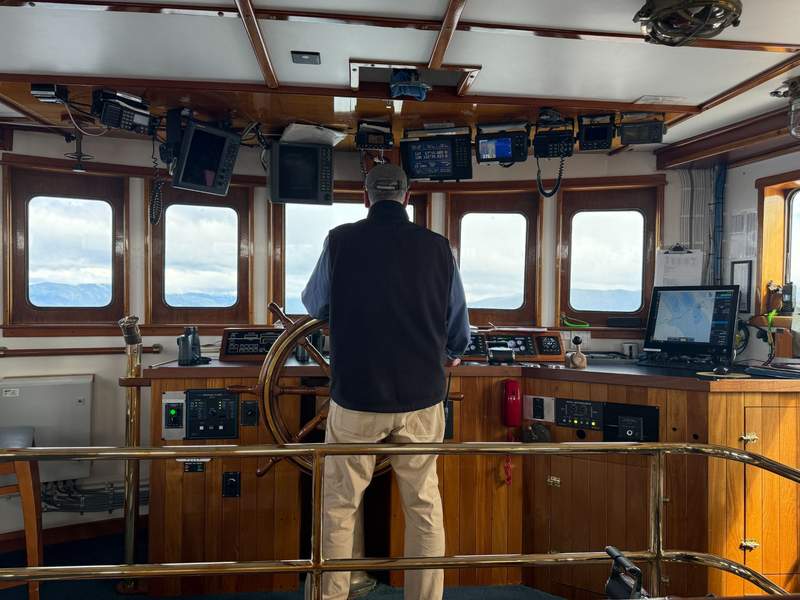
SheBuysTravel Tip: Spend time in the boat’s bridge. On our trip, Captain Jim welcomed us to hang out, chat or just enjoy the views.
Freestyle Cruising
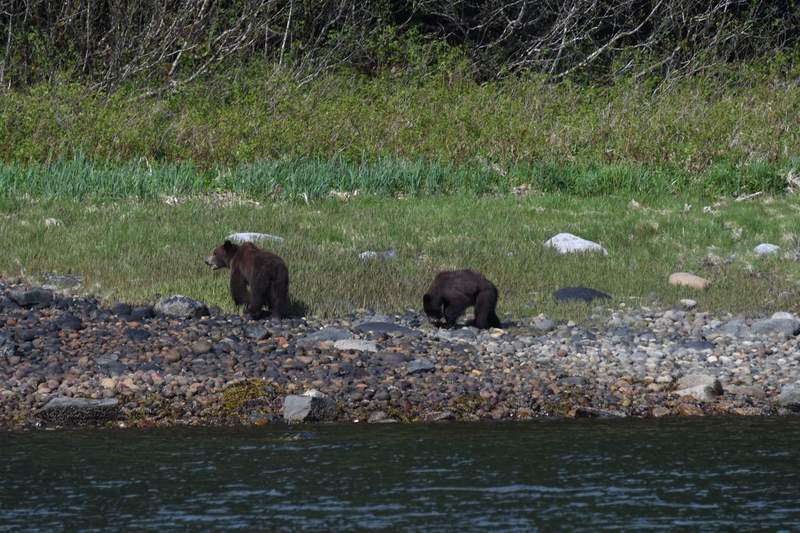
This flexible style of cruising reminded me of a road trip, stopping wherever and whenever we wanted. When whales were on the horizon, we sailed closer to them. And after my daughter spotted brown bears foraging on the shore, Captain Jim stopped the boat so we could take photos. One afternoon our group saw 10 bears!
Being out in the untamed wilderness captured the essence of Alaska’s Last Frontier.
Exploring Remote Islands and Coves
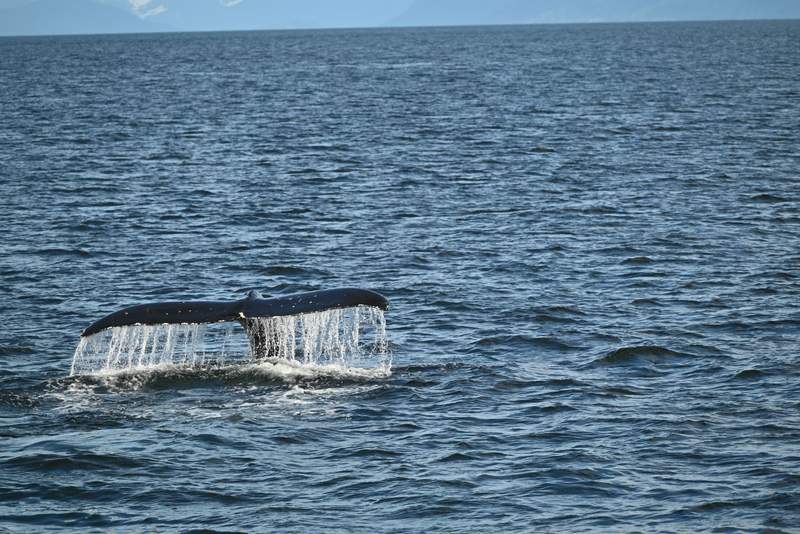
The wildlife – bears, whales, bald eagles, harbor seals, Dall’s porpoises and sea lions – put on a great show every day. Sometimes we’d see them from the Mist Cove and other times while kayaking, when we also saw seals, starfish, sea urchins and other marine life.
We never knew when wildlife would surprise us. One day, Dall’s porpoises popped up alongside the ship, swimming and playing in the wake. Black and white in color, they look like baby orcas and are fast swimmers (making it hard to take good photos).
Daily Activities Options
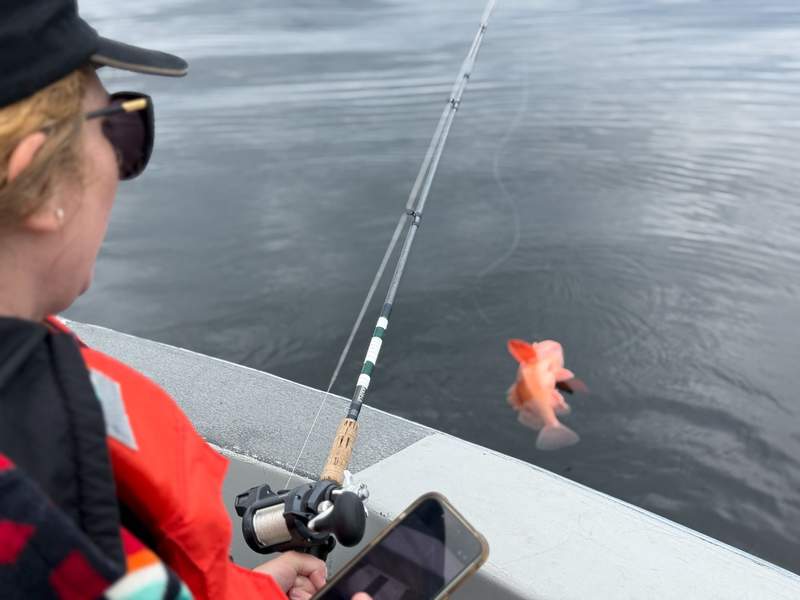
While some of the organization’s expeditions focus on fishing, our group had varied interests. Kayaking, hiking and fishing (saltwater and fresh water) options were posted daily on a whiteboard and described by Jessica – or Jess as we called her.
We could choose from at least two activities for the morning and afternoon. Megan and I alternated between hiking and kayaking, but tried saltwater fishing from a 20-foot-long flat-bottomed skiff one afternoon. Our guide, Nikki, showed us how to hook bait and use the fishing reel.
We caught cod and rockfish. We released our catch, but some passengers fished every day and either shared their catch for onboard ceviche or brought home their fish, packaged by the crew.
The crew handles all the necessary licensing documentation and provides the needed gear. “We’re the only ones that offer fresh and saltwater fishing almost every day,” says McIntosh.
SheBuysTravel Tip: Be adventurous! Megan and I don’t usually fish, but we’re glad we did on this trip. It was fun to learn the basics of fishing – and we each caught fish.
Hiking in the Tongass
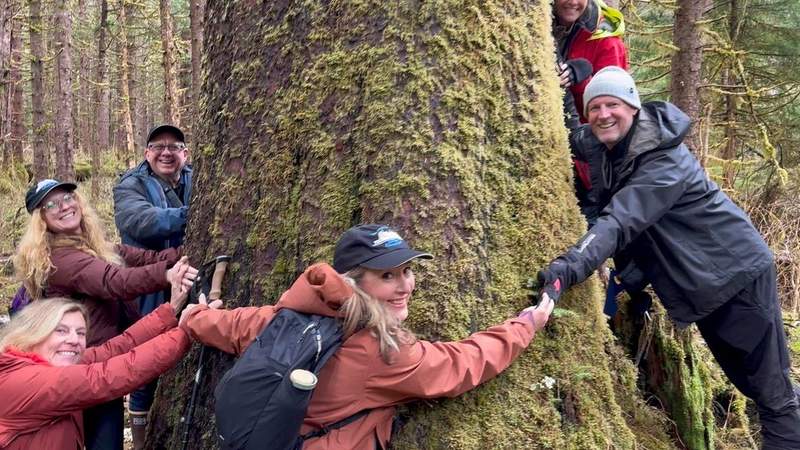
I was surprised to discover that the Tongass, a temperate rainforest, encompasses more than 1,000 islands carved by ancient glaciers. We explored a few of them on guided hikes through old-growth forests, learning to identify Sitka spruce, western hemlock and Alaskan yellow cedar trees.
I appreciated my Xtratuf rubber boots (the boot of choice in Alaska) and waterproof rain pants as we trudged through streams, patches of snow and mud.
On the Lake Eva Trail, we climbed over and under logs, crossed a bridge and hugged a spruce tree.
But we never quite made it to Lake Eva. Shortly before arriving at the lake, there was an awful stench of decay. And after Jess saw deer carcasses – a sign of nearby bears – we turned back.
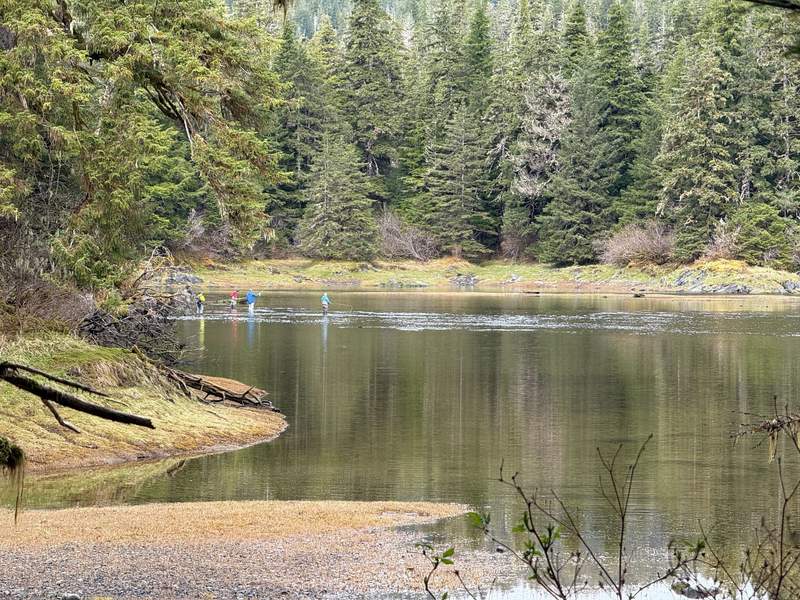
Plan B found us at serene Eva Lagoon, a prime spot for those who went fly fishing earlier.
Always Something New to See and Experience
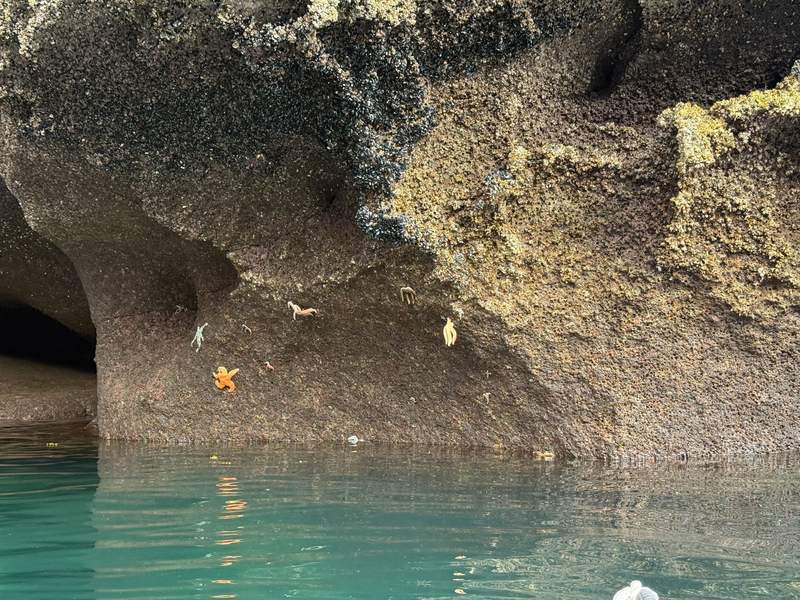
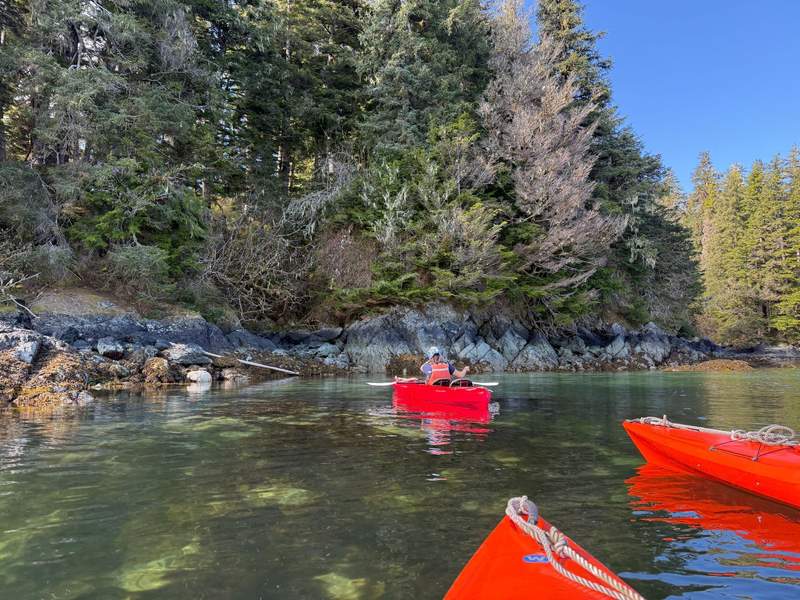
Each day brought something new. Kayaking in Morris Reef off Chichagof Island, we admired karst topography, peered into sea caves, tasted kelp, touched anemones, saw numerous starfish and held squirming sea urchins that tickled our hands.
The day we kayaked around Pond Island and saw harbor seals and Humpback whales, saltwater fishermen spotted their first brown bear and a pod of orcas at the same time. They came back with Pacific cod and rockfish, riding up in their skiff, shouting “ceviche for everyone!”
Scenic Nelson Bay
We spent one night snuggled in Nelson Bay, serenaded by two waterfalls. Early the next morning, we arose early to kayak. For about two hours we paddled leisurely around the serene, emerald green bay before breakfast, exploring waterfalls and sighting bald eagles and seals. It felt so rejuvenating to wake up in a beautiful bay and connect with nature.
As the crew raised the anchor, we gathered on the bridge to watch Captain Jim skillfully maneuver the boat around forested islets and over shallow waters (about 36 feet) out of the bay.
SheBuysTravel Tip: Keep your eyes open for wildlife while kayaking. Watch the shore and look up in the trees. We saw a young bald eagle by its nest in Nelson Bay.
Dropping Shrimp Pots Overboard
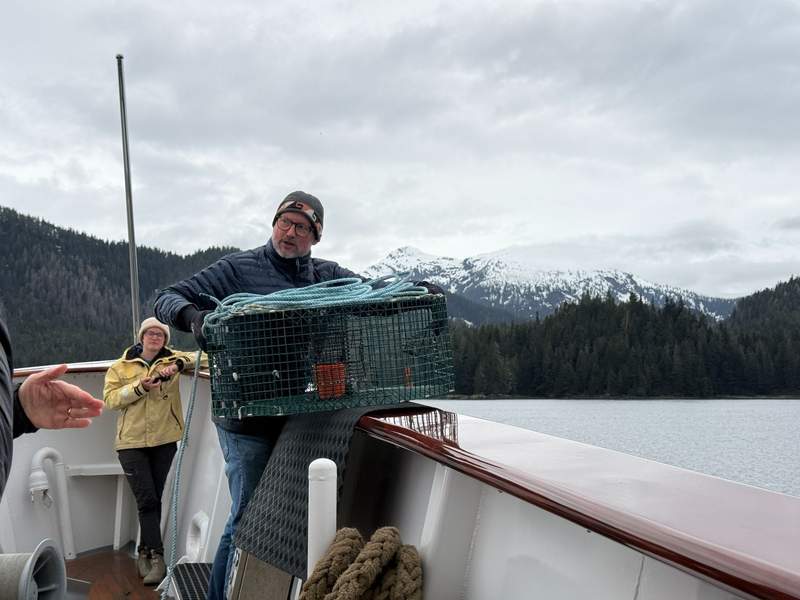
One evening, we gathered on the bow to watch four passengers drop wire shrimp pots overboard in Kelp Bay. They went out early the next morning to haul up the shrimp pots. Although they only had a small batch of shrimp, they saw humpback whales on their way back. Not a bad way to start the day.
Nature’s Hot and Cold Therapy in the Tongass National Forest
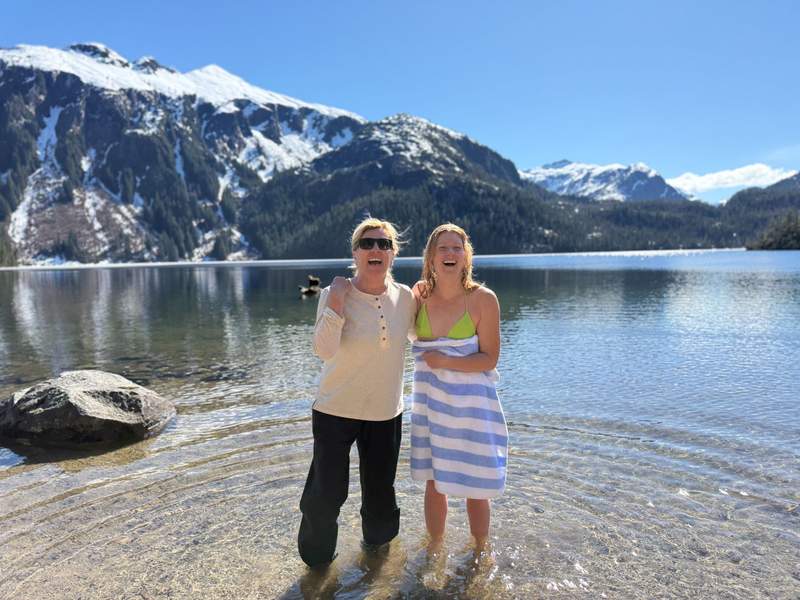
In addition to wildlife sightings and breathtaking scenery, we experienced the calming, therapeutic benefits of spending time in nature.
Hiking on Baranof Island, Megan and three others stripped down to their swimsuits for a cold plunge in the icy Baranof Lake.
After, a short hike brought us to Baranof Warm Springs, adjacent to a thunderous waterfall. Soaking in the hot water to the sound of the waterfall felt like a massage for the senses.
SheBuysTravel Tip: Pack a swimsuit. You won’t want to miss the chance to take a polar plunge or soak in hot springs.
More Nature Therapy in the Tongass National Forest
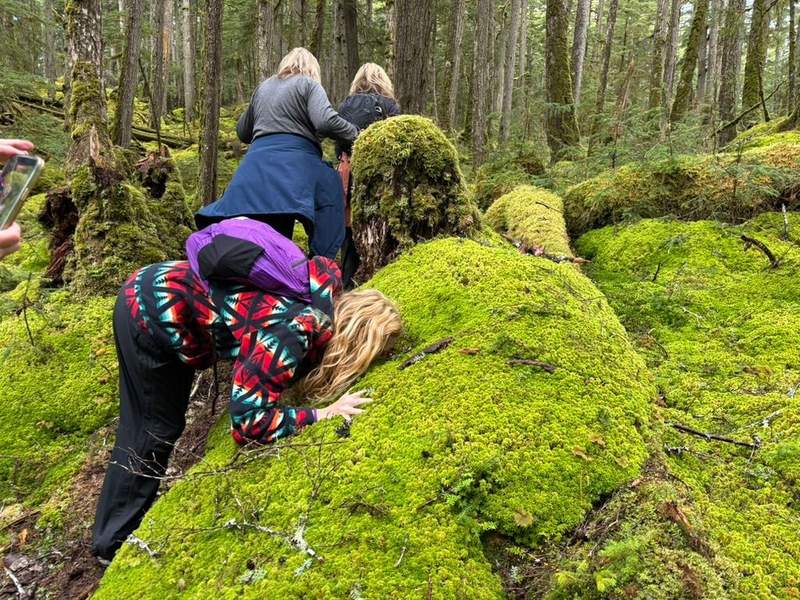
Megan and I went on three hikes with our group. On the spongy moss and lichen-covered Brothers Island, we stepped over logs and through slushy ground to reach the summit for ocean views.
Along the way, Jess showed us how to enjoy a natural facial. We each pressed our face into a soft mound of damp moss for a mini facial that smelled like earth in a nursery.
We also took time out for forest bathing. After each of us found a quiet spot to sit or lie down, we embraced the stillness and fresh air for about five minutes. Aah.
Dawes Glacier, Endicott Arm
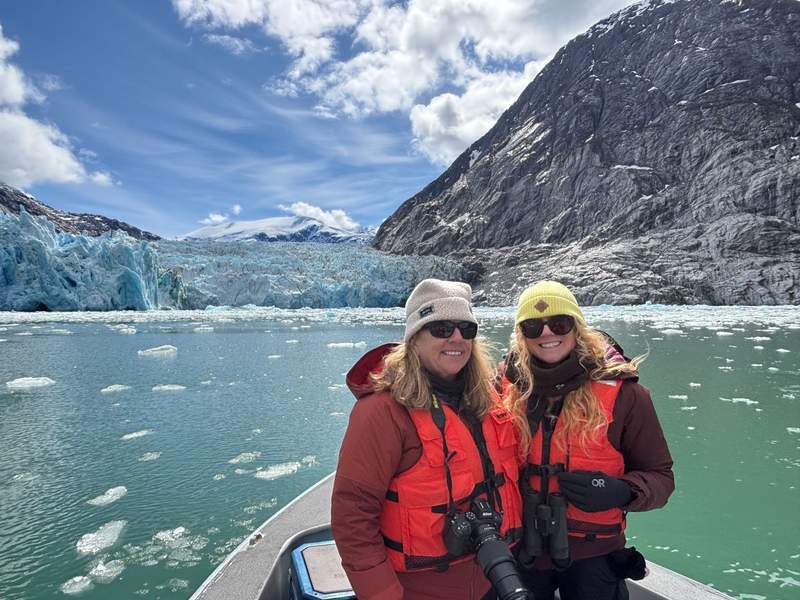
As we got into skiffs to see Dawes Glacier, we saw four black bears on the hillside. We lingered for a while to watch them and take photos. Shortly after the skiff sped off toward Dawes Glacier, we stopped again. This time to watch white furry mountain goats navigate rocky cliffsides. The binoculars from our room came in handy for such wildlife sightings.
At Dawes Glacier, groups of seals lounged on icebergs surrounding our skiff as the glacier calved repeatedly, sending sheets of ice splashing into the turquoise water. Bergy bits crackled in the water, sounding like ice cubes clinking in a glass. Waterfalls glittered in the sunshine. As we embraced the wonder of nature, our guide Noa offered us cups of hot cocoa with either whiskey or schnapps. We silently sipped our hot drinks and enjoyed the pristine scenery.
Smiles, Laughter and Camaraderie
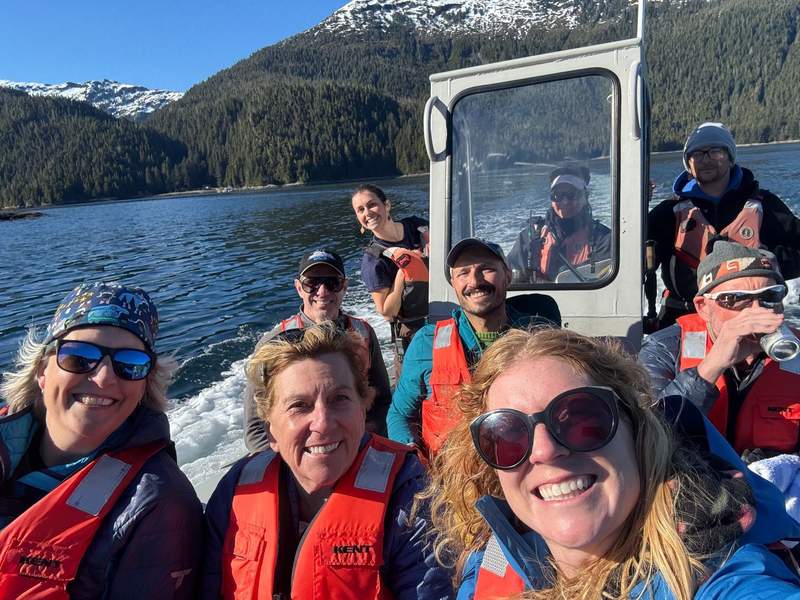
Riding the skiffs was part of the fun. We rode them nearly every day to reach islands and glaciers and go fishing. The crew helps everyone get in and out of the skiffs and makes sure everyone has a good time.
“Glamping” on the Sea: Life Onboard the Mist Cove
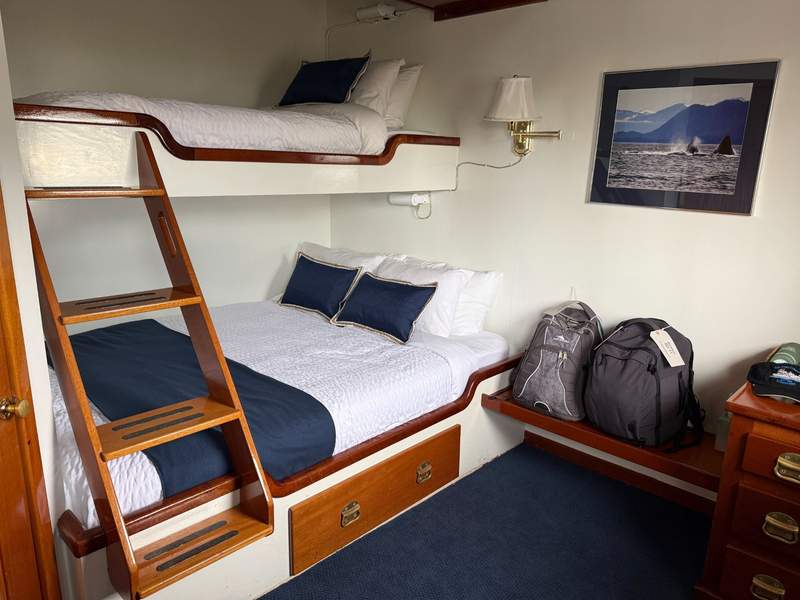
Okay, glamping is an exaggeration, but the boat felt like a floating lodge with creature comforts. Megan and I loved our cozy room on the mid-deck. Like most of the staterooms, ours had a queen bed with an upper bunk. Two staterooms on the main deck have two twin beds. All cabins have temperature controls, dressers, picture frame windows and private baths with a sink, mirror, toilet and shower (with lots of hot water).
Shampoo, conditioner, soap and a hair dryer are provided.
Housekeeping made our beds and tidied our room daily, and we got fresh towels on Wednesday. Binoculars are provided in every room and in the salon.
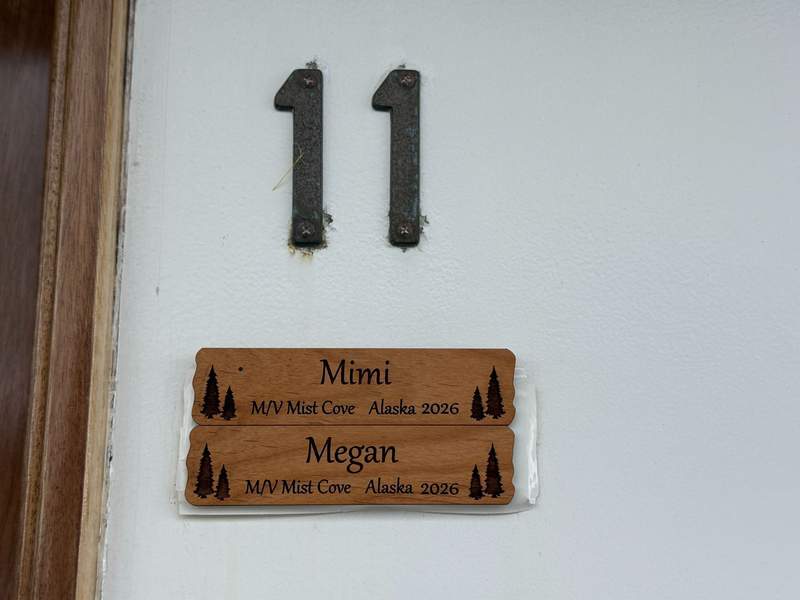
Personalized name plates (ours to keep) posted outside each room made us feel at home. It’s these little thoughtful touches that make the trip personal.
Passengers also receive a hat with the boat’s logo, water bottle with their name on it and snacks in the room.
Mist Cove Public Spaces
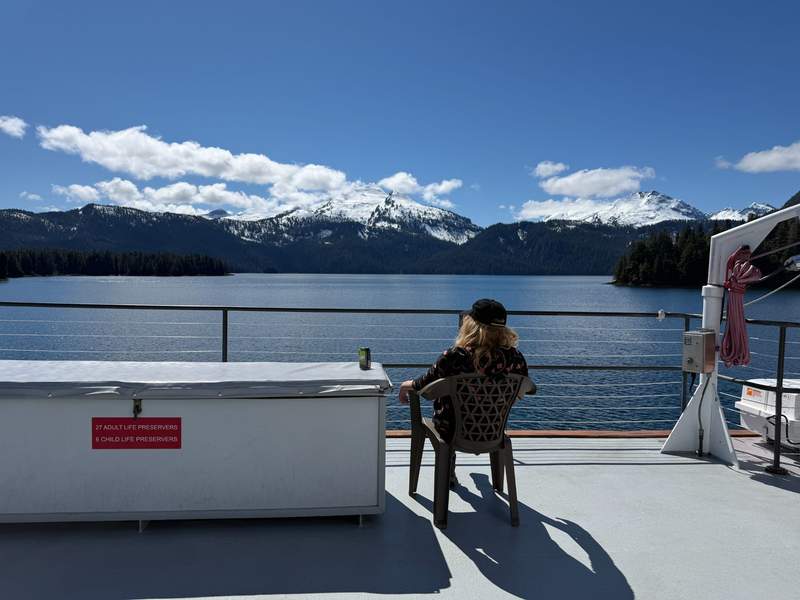
Although the Mist Cove is compact, it has a few public spaces. Enough to find a quiet spot if you want. The captain’s bridge and sundeck are on the top deck. Below the bridge is an enclosed observation room for reading and scenic viewing. The dining room in the enclosed fantail at the bow offers views of the passing scenery.
Although there are no laundry facilities, a drying locker on the mid-deck efficiently dries rain pants, swimsuits and other items.
Hanging Out in the Salon
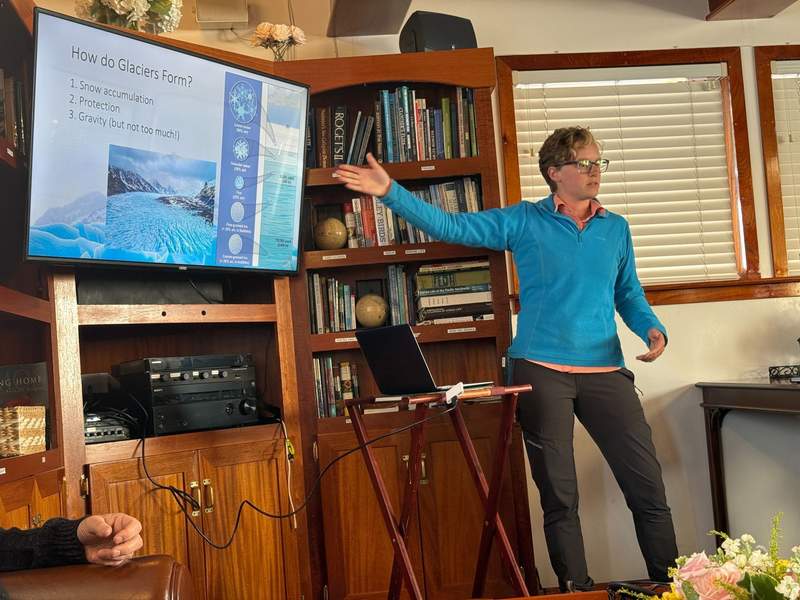
The salon had a family room vibe and was the hub for hors d’oeuvres, cocktail hour and evening naturalist talks. We sat on comfortably worn leather couches and chairs to read, play board games or just chat. People dressed comfortably, sometimes in pajamas and slippers.
Naturalist Rachel led the evening talks about the Tongass, marine mammals, bears, and glaciers. If she didn’t have an answer to someone’s question, she would supply it the next day.
On our last evening on the boat, the crew presented a slideshow with music featuring our week’s adventures. The heartwarming slideshow included everyone. After we got home, The Boat Company sent us each a link to the slideshow. It’s the best souvenir!
Snacks and Beverages All Day Long
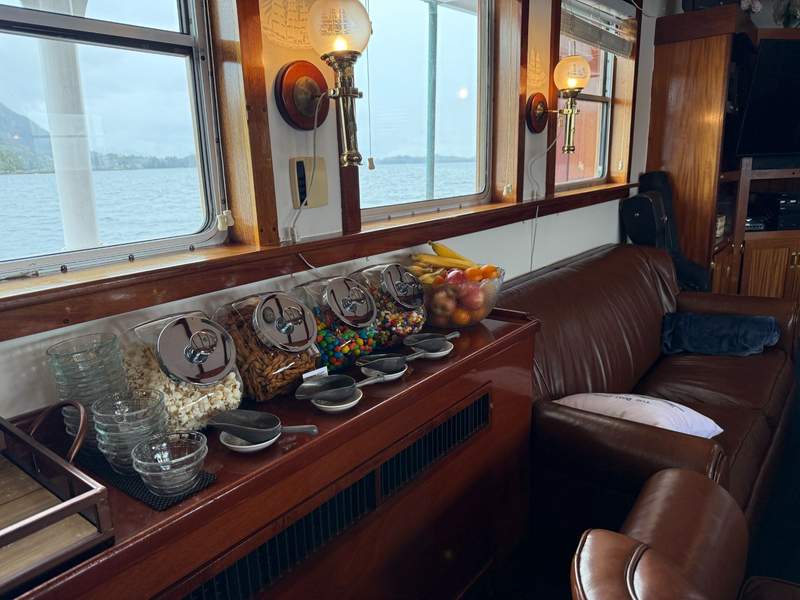
A self-serve open bar in the salon was stocked with a wide assortment of wine and spirits 24/7. The adjacent snack bar held a bowl of fresh fruit, and jars of popcorn, seasoned pretzels, peanut M&Ms, jelly beans and reusable snack bags to take the goodies on the go.
Two coolers on the deck were filled with beer and soda. I liked this self-serve approach. Often, passengers made drinks for each other, whether it was a Manhattan, Old-fashioned, glass of bubbly or an after-dinner boozy coffee drink. It was a homey touch.
Meals With a View
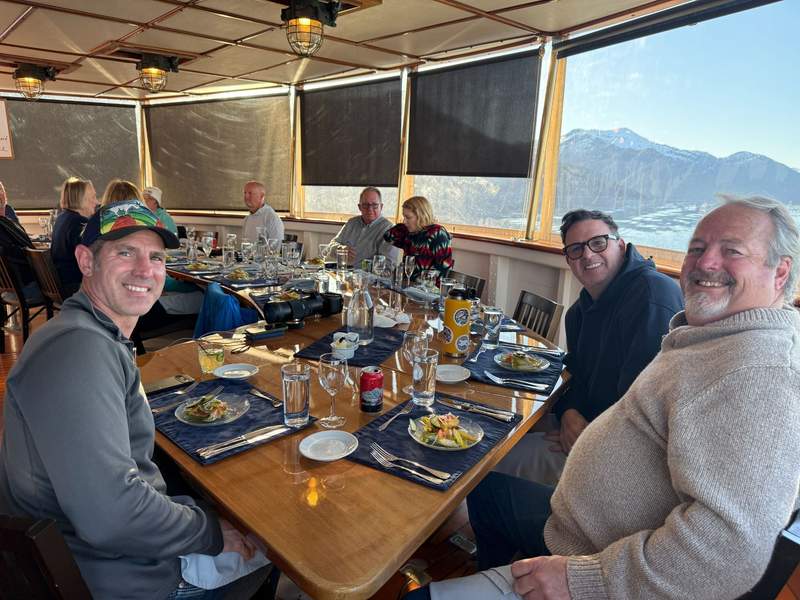
Although the daily schedule was flexible, meals were punctual in the boat’s fantail. Breakfast at 8, lunch at 1, cocktail hour at 6, naturalist talk at 6:15 and dinner at 7. Coffee awaited early risers at 5:30 a.m. The food is locally sourced and chefs accommodate all dietary requests.
To start our day, ship stewards Eli and Mandy served hearty breakfast dishes with fruit and variations of eggs, bacon and potatoes. Entrees varied and included an onion bisque, brie baton and sundried tomato focaccia, caramelized honey-poached salmon and a chocolate flourless torte. One night featured halibut as an entrée and bananas Foster bread pudding for dessert.
The soups, breads and juices tasted creative and delicious. For example, one day we enjoyed a delightful lunch of celery garbanzo soup served with a garden salad and French bread followed by raspberry bars for dessert. A peach mango green tea spritzer paired well with the meal. The fruit served every day was fresh and sweet.
The dramatic backdrop of Alaska scenery, which often looked like a painting, enhanced each meal.
Conservation Chats: Preserve and Protect the Tongass
The cruise itinerary might change, but conservation is always a hot topic aboard the ship. After all, preserving the Tongass is why Michael McIntosh launched The Boat Company in the first place. He set it up as a nonprofit organization through the McIntosh Foundation to funnel funds to conservation efforts and preserve the Tongass.
The goal is to avoid the possible rescission of The Roadless Rule. The policy, in place since 2001, serves to protect nearly 60 million acres of national forest from industrial development.
With Hunter McIntosh on board, we learned more about The Boat Company’s partnerships with several conservation-focused organizations. These include Earthjustice, the nation’s leading environmental law organization, which files and frequently wins legal battles to preserve the Tongass.
“My goal, in bringing all of our clients up to Alaska and introducing them to the Tongass National Forest, is that they have a life-altering experience and become advocates for the Tongass when they go home,” says McIntosh.
Growth on the Horizon for The Boat Company
Plans are in the works for the eco-based boat company to add two vessels to the fleet. The first is an 88-foot boat that will be operated and used to partner with local and regional researchers/scientists in the Puget Sound and Southeast Alaska.
The second vessel will carry passengers to Glacier Bay National Park starting in the summer of 2027.
How Much Does a Boat Company Eco Cruise Cost?
The Boat Company charges varying costs based on the time of year, but expect to pay about $12,000 per person for the week.
Proceeds from cabin sales cover operating expenses; the remaining revenue is reinvested into conservation efforts. For example, The Boat Company provides the Sitka Trail Works with an annual grant for the maintenance of the Lake Eva Trail.
- What’s included in the rate? The all-inclusive rate covers accommodations, meals, an open bar, and activities. Airfare is separate. We booked our flights from Los Angeles on Alaska Airlines.
- Where does the cruise begin and end? The one-way cruise begins in either Juneau or Sitka. It includes one night in a hotel in either Juneau or Sitka prior to boarding the boat. On our trip, we spent two days in Sitka. That gave us time to shop, visit historical sites and to visit Fortress of the Bear.
SheBuysTravel Tip: Book an early flight into your destination city to give time to enjoy the town before boarding the ship.
FAQ
The Boat Company will email you a packing list. Dress for comfort on the boat. Dressing in layers is the key to comfort. Bring hiking clothes and hiking shoes. Most importantly, bring 15-inch high rubber boots, waterproof rain pants and a waterproof jacket.
No. Onboard attire is very casual.
That depends on what you prioritize. Cabins on the main deck are closer to the salon and dining room. But there’s more foot traffic. Cabins on the mid-deck are more private but require climbing up and down narrow stairs.
While the company does not offer babysitting services, the crew can include kids in the activities offered. Some families bring a nanny to care for their kids.
Space is limited onboard. The Boat Company recommends one standard suitcase per person.
It’s recommended you tip the industry standard of 10-15 percent of the ticket price for each cabin. Check and credit cards are accepted. Tips are pooled and shared by all crew members.
Read More:
- When is the Best Time to Cruise to Alaska: The Month Matters!
- Experience America’s Last Frontier: Alaska Vacations for Families
- Why Summer in Alaska is the Best Time to Visit
- Alaska Travel Adventures by Foot, Saddle and Sea

Leave a Reply