


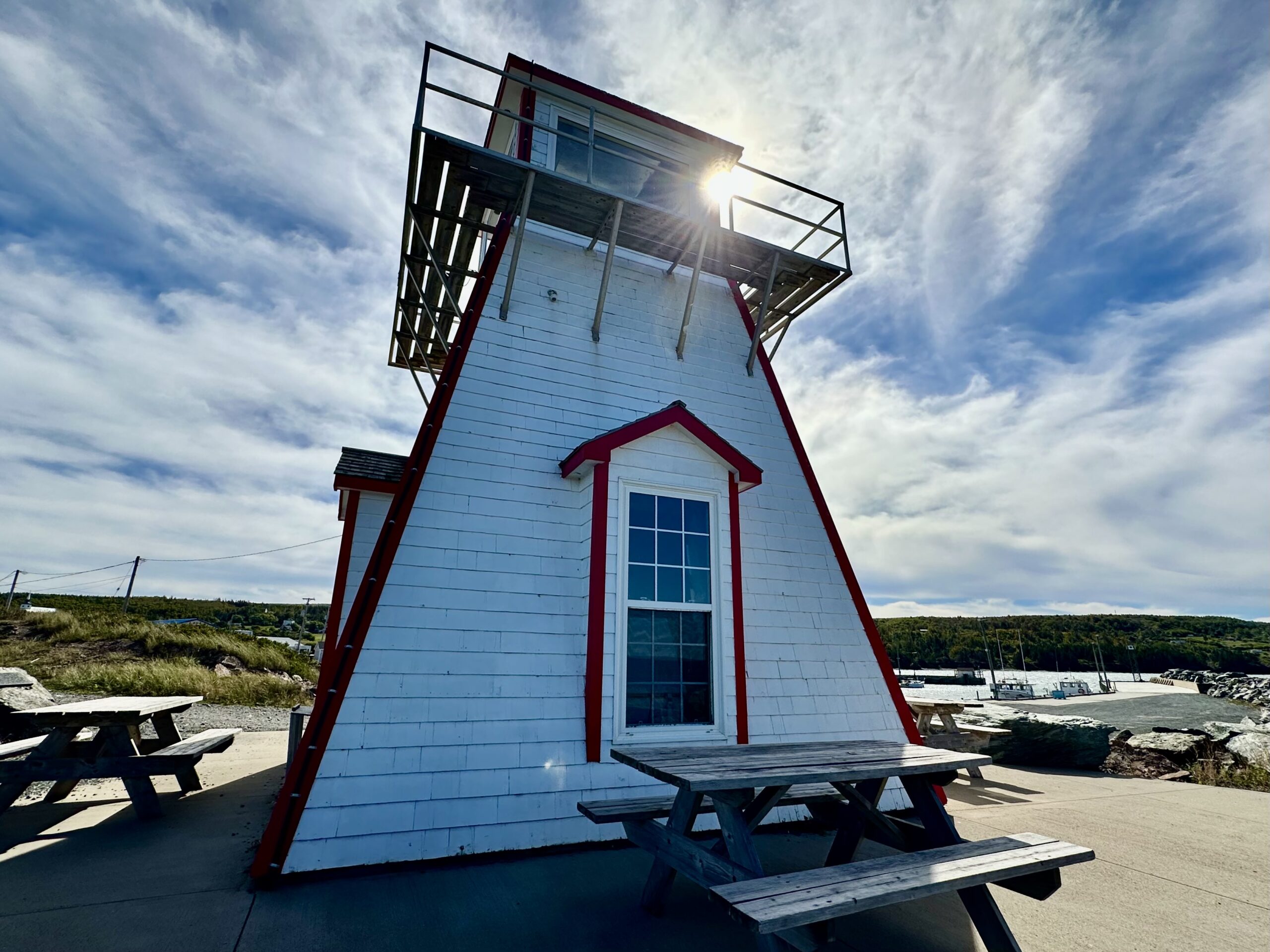
The assembled tourists squealed and scrambled to the observation deck railing to capture two provincial icons – the Peggy’s Cove lighthouse and Bluenose II schooner – in the same photo. When I mentioned this unexpected delight to locals during my week-long Chowder Trail road trip, the response was always the same.
“It doesn’t get more Nova Scotia than that.”
To help you plan your Nova Scotia road trip, here’s my 7-day itinerary with must-see attractions, best bites and recommended rest stops.
Editor’s Note: The writer was hosted.
How to Explore Nova Scotia, One Bowl at a Time
Featured Deal: Drive a better car on your next road trip! Rent a car through Turo, the better alternative to traditional car rentals. Book unique vehicles from local hosts—everything from practical SUVs to fun convertibles—often with flexible pickup locations and even delivery options. Planning a longer road trip? Keep the car for 30 days or more and score an amazing deal!
To celebrate Nova Scotia’s local flavors, Taste of Nova Scotia created four delicious trails spotlighting authentic, Nova Scotian-owned establishments (Chowder, Lobster, Cheese, Good Cheer). The Chowder Trail provides a fun framework for planning your road trip. Each stop links Nova Scotia’s landscapes, coastal towns and culinary heritage one bowl at a time.
- Download the app: End the “Where should we eat?” debate once and for all. The Chowder Trail app helps you discover nearby trail stops serving up authentic local chowder.
- Eat local: Each participating restaurant features fresh, Nova Scotian ingredients and regional recipes.
- Earn rewards: Collect virtual passport stamps as you go to earn entries in prize drawings.
Visit at least 10 Chowder Trail locations and you’ll earn a free T-shirt (and bragging rights). Full contest details are available on the Taste of Nova Scotia website.
Are you ready to explore off the beaten path? Let us inspire you!
7-Day Nova Scotia Chowder Trail Road Trip Itinerary
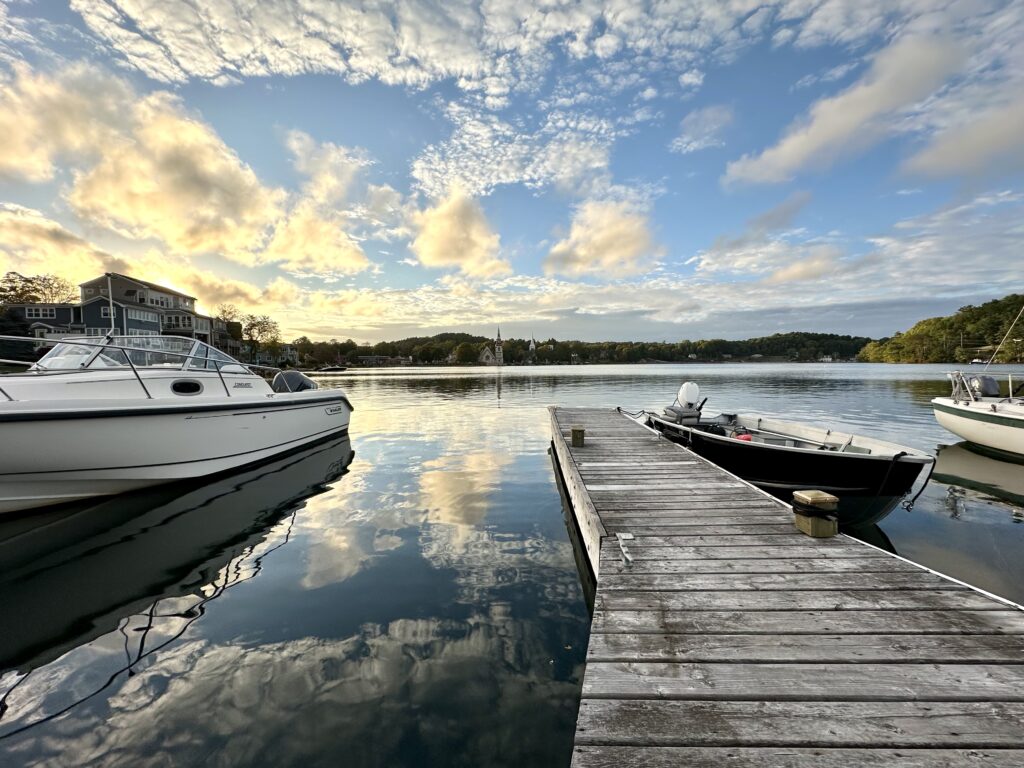
Water was almost always in view during my 1200-kilometer loop drive. Although Nova Scotia is the second smallest province, Canada’s Ocean Playground boasts impressive water stats:
- Over 13,000 km of coastline
- 6,674 lakes
- 160-mile-long St. Mary’s River
Days 1 and 2: Discover Halifax
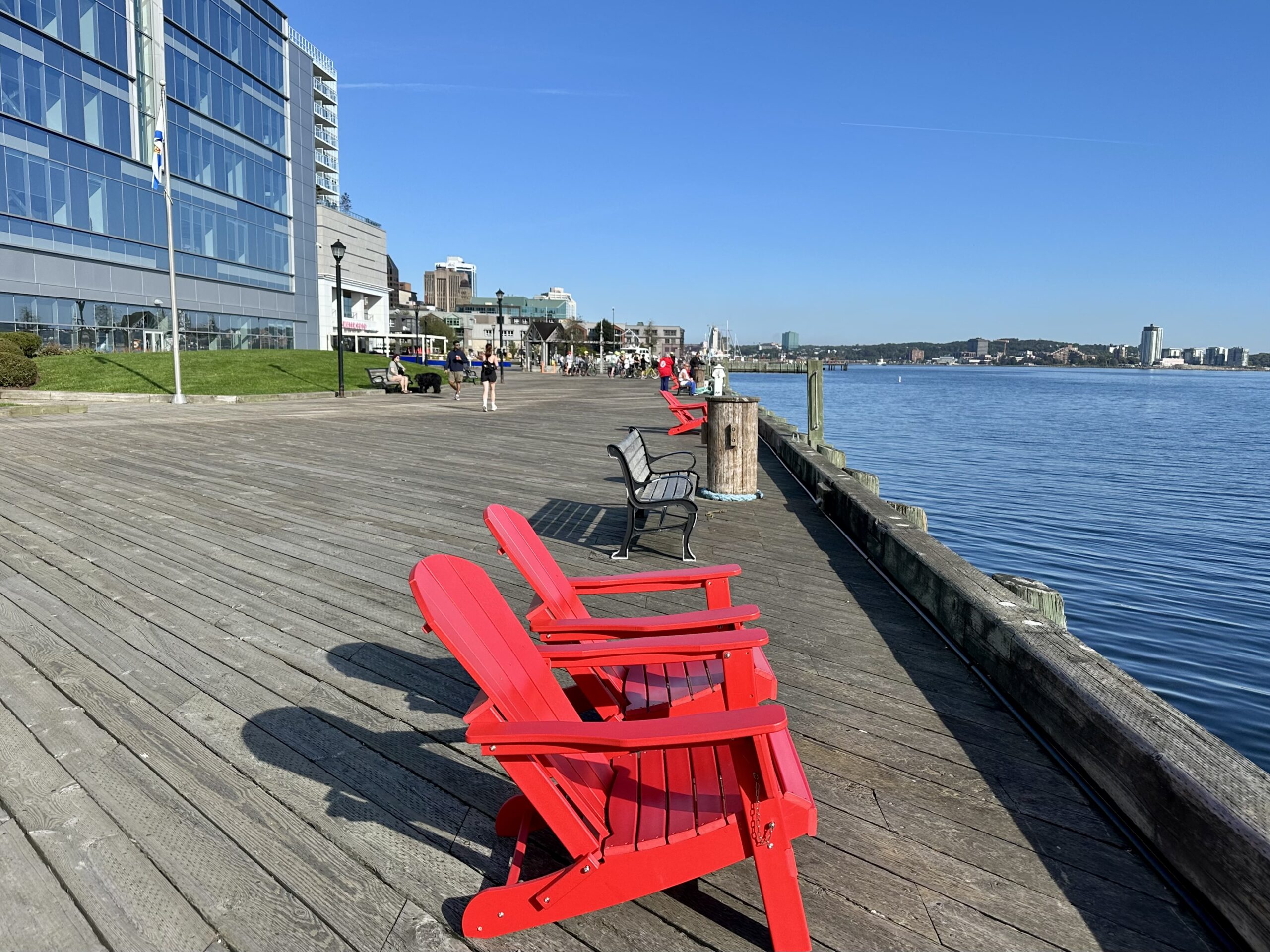
Halifax, Nova Scotia’s capital city, is my recommended starting point. Plan to spend two days exploring the very walkable waterfront to learn about the history and cultural traditions of the province.
It can get busy when the motor coaches and cruise ships discharge tourists. Off the waterfront, Halifax has a college town vibe with over 35,000 students attending universities there.
SheBuysTravel Tip: Be prepared for a glute workout; the Halifax hills are steep.
Things to Do in Halifax
- Take a one-hour Harbour Hopper tour to orient yourself. The repurposed amphibious military vehicle drives up to Citadel Hill before dunking into the water for epic skyline views.
- Tour the Maritime Museum of the Atlantic for exhibits dedicated to the 1917 explosion that devastated Halifax and the 1912 Titanic sinking, with recovered artifacts.
- Lean against one of the “Drunken Lamposts,” an intentionally crooked art installation. Or time your waterfront stroll to coincide with high or low tide to experience the 12-minute light show at the Tidal Beacon.
- Visit Alexander Keith’s, the Nova Scotian equivalent of Budweiser. Tours, conducted by costumed guides, are offered daily in the 1820 brewery.
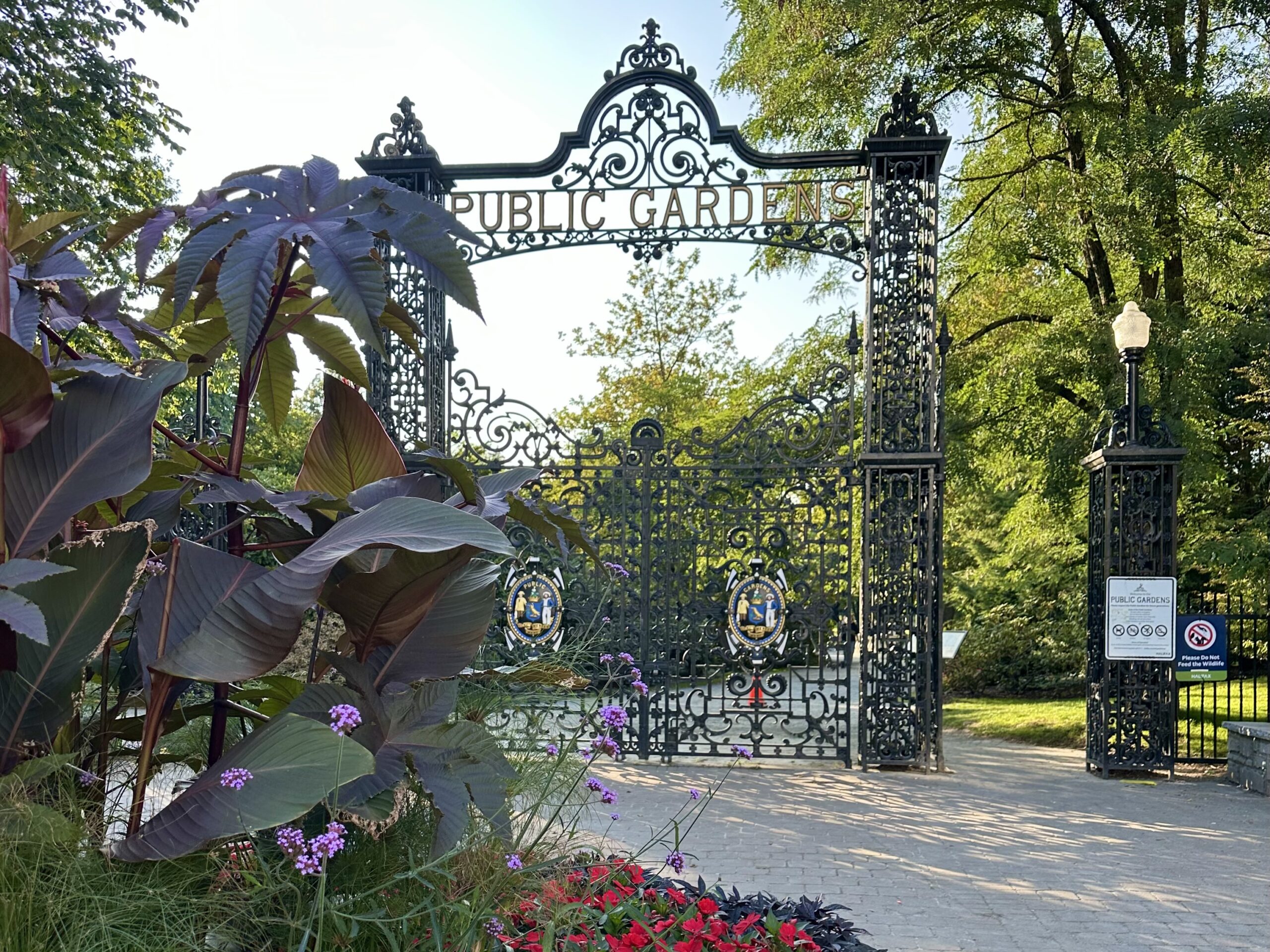
- Shop Spring Garden Road, then continue uphill to the ornate wrought-iron gated entrance to the Halifax Public Gardens. Established in 1867, the Victorian fountains, bridges and formal beds are a colorful urban oasis.
- Learn about beloved Nova Scotian folk artist Maud Lewis, who lived and worked in a hand-painted rustic cabin installed in the Art Gallery of Nova Scotia.
Day 3: Peggy’s Cove and the Lighthouse Route
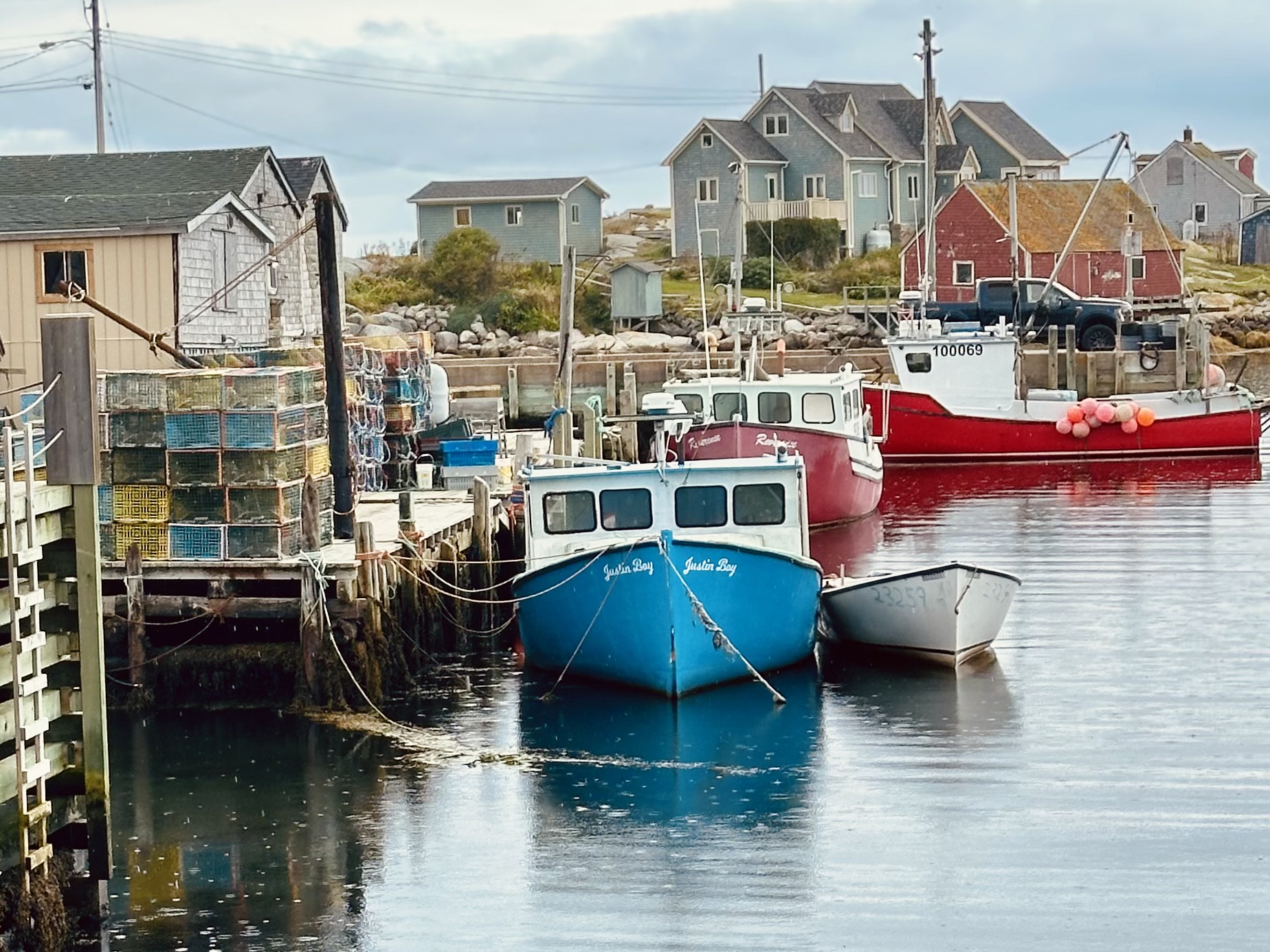
Get an early jump out of Halifax to avoid driving behind motor coaches along Route 333. Accessing the road to Peggy’s Cove, according to the hotel valet, can be a “bag of hammers” during the weekday morning rush. There was some traffic and plenty of students walking and biking to class, but it was relatively tame compared to driving in midtown Manhattan.
Leaving Peggy’s Cove, the Lighthouse Route continues along Route 3, tracing the craggy South Shore, to Lunenburg, a designated UNESCO World Heritage Site.
Things to See Along the Lighthouse Route
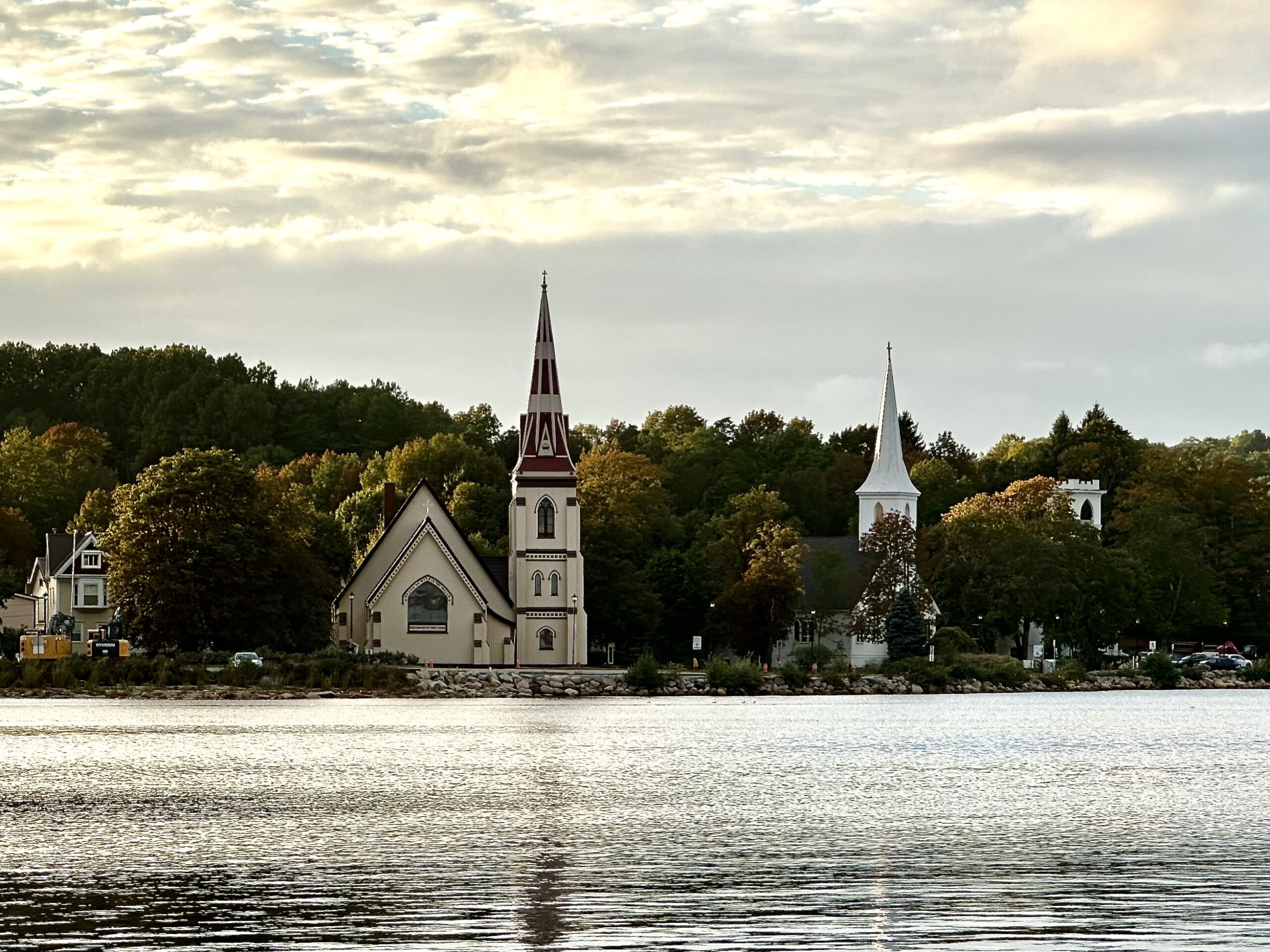
- Peggy’s Cove: If you haven’t photographed the 1915 lighthouse on Peggy’s Point, you haven’t been to Nova Scotia. Watch your footing on glacially deposited granite boulders for a close-up, or hang back on the newly constructed observation deck.
- Bluenose II: By now, you’ll have met Bluenose, but might not know it. The fishing and racing schooner appears on Nova Scotia license plates and the Canadian dime. Two-hour cruises are available from June to September at different coastal locations.
- Hooked Rug Museum of North America: A small museum staffed by talented (rug) hookers is worth a visit. The craft developed out of necessity. By weaving scrap fabric into old burlap, women created rugs to cover cold floors. Historic examples, tools and patterns are on display and there’s a large selection of handmade rugs, runners and mats for sale.
- Oak Island: Sadly, fans of the History Channel’s wildly popular series can’t help Marty and Rick Lagina dig for treasure on Oak Island. But weekend Money Pit Express tram tours are available. Boat tours led by one of the show’s divers are another option. Didn’t book a tour? Visitors are permitted to access the island and take a picture of the memorial to the six treasure hunters who’ve died. The official Treasure Shop is located on Route 3.
- Take a Lunenburg Walking Tour: Themed tours with a local guide are a great way to explore this historic fishing village. My food-focused adventure included tastes of chowder, lobster and a terrific chicken salad dotted with locally grown cranberries. I learned that Nova Scotian pickled herring is called Solomon Gundy, not to be confused with the nursery rhyme or the ’60s pop song by The Foundations.
- The Fisheries Museum of the Atlantic: Learn about the first fishers, the indigenous Mi’kmaq, and the explosive commercial growth of the industry. Watch historic video footage of fishing dories in action in the Ice House theater. Be sure to ask one of the passionate young guides about the Bluenose. Built in Lunenburg, the fishing schooner’s four wins in international racing competitions during the ‘20s and ‘30s remain a source of provincial pride.
- SS Atlantic Heritage Interpretation Park: The worst shipwreck before the Titanic was the 1873 sinking of the SS Atlantic. Local fishing families rescued 400 passengers and crew from the frigid winter waters. A short trail leads downhill to the bayside monument and there’s a small, volunteer-staffed museum.
Day 4: Annapolis Valley
You can opt to take the long, scenic way to the farms, orchards and vineyards in the Annapolis Valley by traveling southwest from Lunenburg, through Yarmouth, before heading northeast. But you’ll need at least 5 hours of drive time, 6 if you travel scenic Routes 3 and 1. With only a week, I chose to bisect Nova Scotia’s narrow mid-section, traveling north on Highway 102 to reach Port Williams, one of the Valley’s oldest agricultural villages.
Things to See in the Annapolis Valley

- Wolfville Farmers’ Market: Park in the large Acadia University lot on Main Street and walk to the popular Saturday Farmers’ Market, open from 8:30 am to 1 pm year-round. In addition to some of the prettiest produce I’ve ever seen, you’ll find home-baked goods, local authors, artisan crafts and wine tastings.
- Winery Tours and Tastings: The Annapolis Valley is home to 12 wineries, producing extremely drinkable wines, including Tidal Bay, Nova Scotia’s first wine appellation. Unique wine experiences I’ll try when I return with a designated driver include:
- Make a reservation to dine at acclaimed Chowder Trail stop, Le Caveau at Domaine de Grand Pré.
- Take a wine tour aboard a British double-decker bus.
- Phone anyone, anywhere from the British phone box in the middle of the Luckett vineyards.
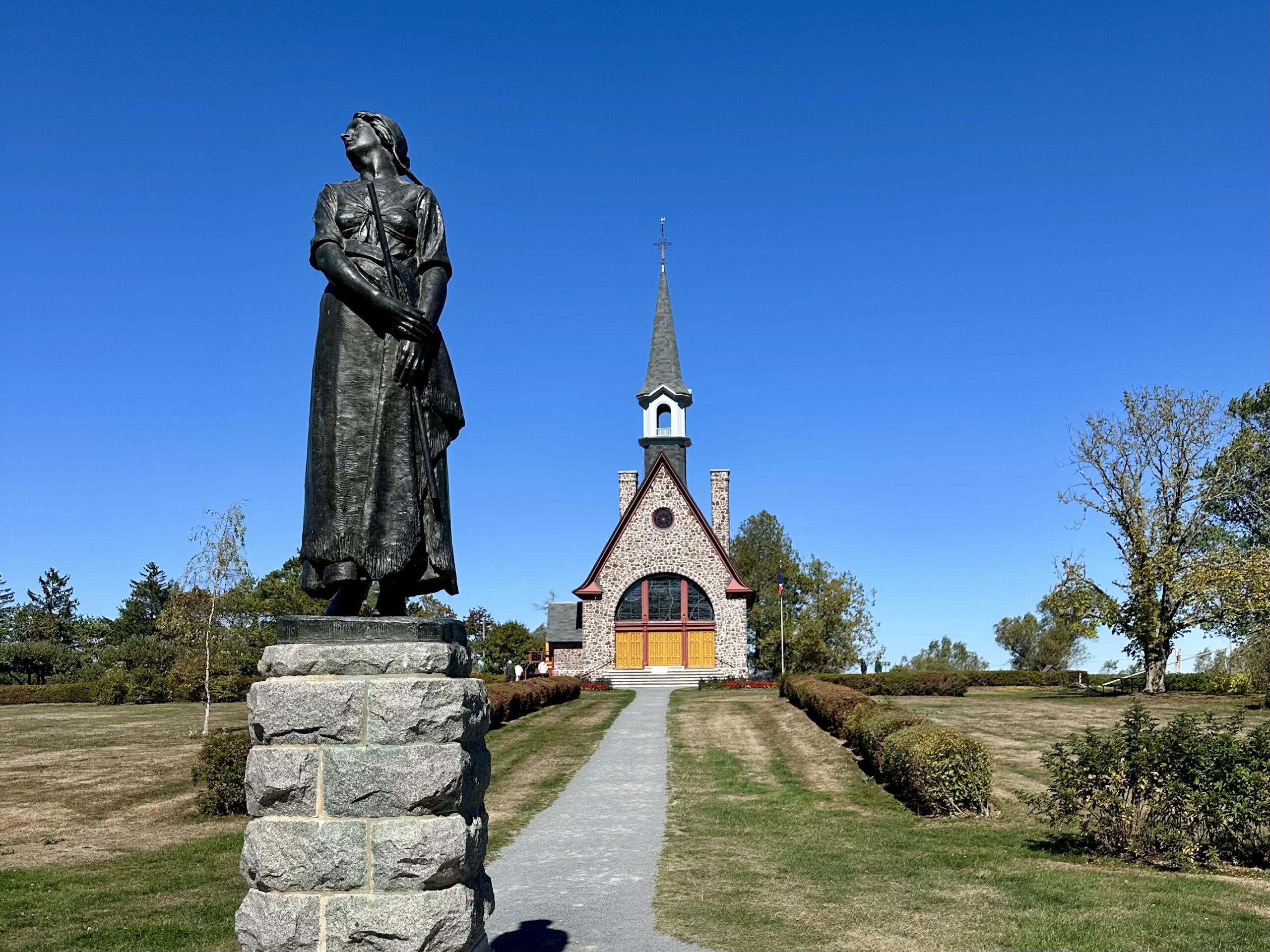
- Grand-Pré National Historic Site: French Catholic Acadians established productive farms by creating intricate dyke systems that prevented Fundy saltwater from flooding the fields, and lived peacefully with the indigenous Mi’kmaq. Because the Acadians refused to swear allegiance to the British Crown, approximately 10,000-12,000 were forcibly expelled from 1755-1764. Louisiana’s Cajuns trace their ancestors to these refugees. Tour the museum, memorial church and gardens.
Bay of Fundy Detours
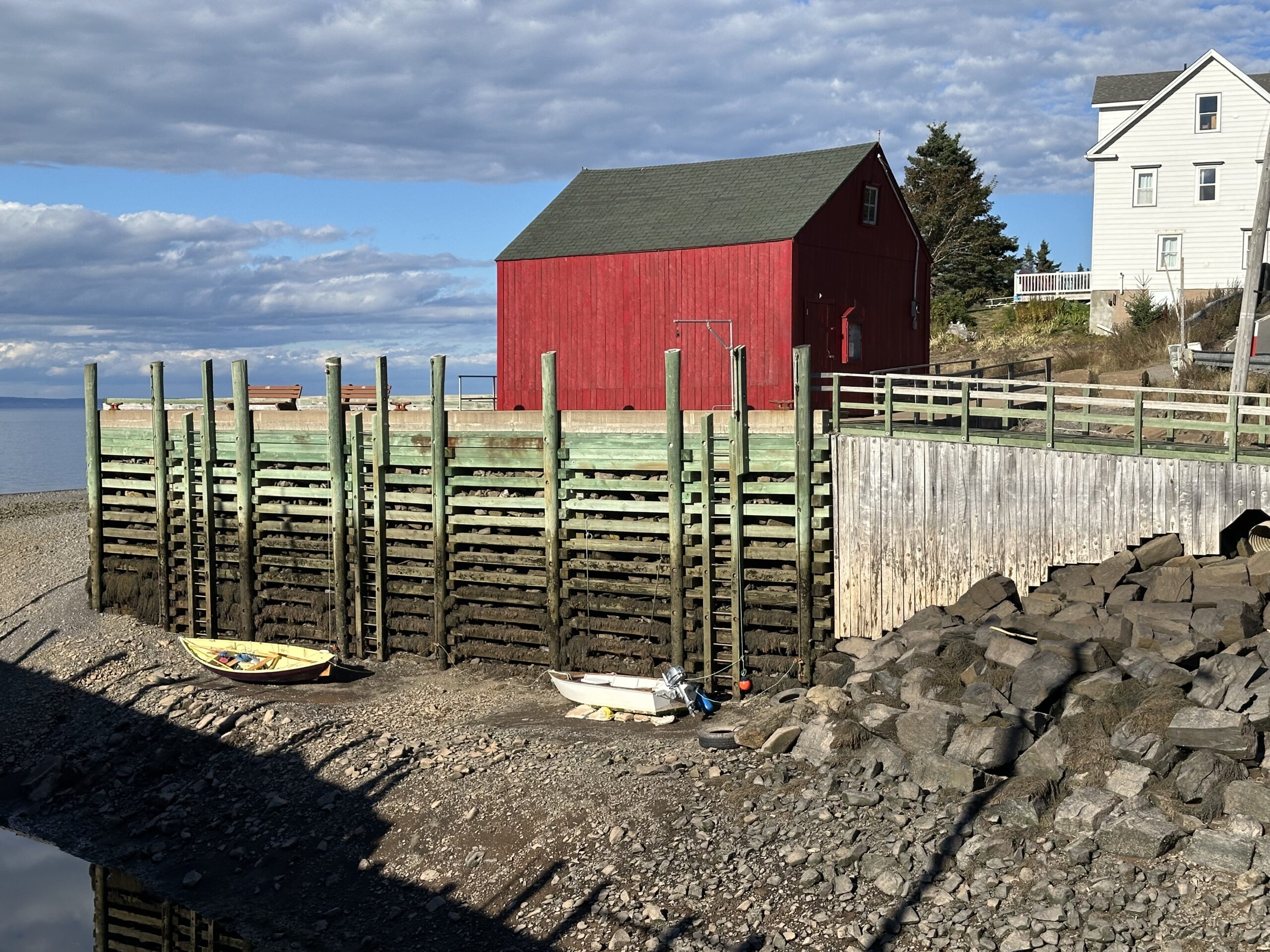
The Bay of Fundy is an Atlantic Ocean inlet between New Brunswick and Nova Scotia with the world’s highest tides. Twice a day, more water moves in and out of the Bay than flows through all of the world’s freshwater rivers.
Let that sink in for a second.
Bay of Fundy experiences range in duration, exertion and price, and can be accessed easily from the Annapolis Valley and Northumberland Shore.
I chose free options proximate to my road trip pit stops. While in the Annapolis Valley, I timed a visit to Hall’s Harbour at low tide to see beached boats and teeny tiny people walking along the water’s edge.
From the Northumberland Shore, I backtracked to the Bay of Fundy Discovery Site in Truro at high tide to watch the tidal bore roll in. This phenomenon can be dramatic. One resident told me she’d witnessed surfers ride the bore wave. On my visit, the bore was gentle but noisy, startling a flock of sea birds sunning on a sandbar as it rolled past the onlookers gathered on the bank of the Salmon River.
Additional Bay of Fundy Excursions
- Walk the ocean floor at Burntcoat Head Park
- Go Tidal Bore rafting
- Kayak the Bay of Fundy coastline
Day 5: Northumberland Shore
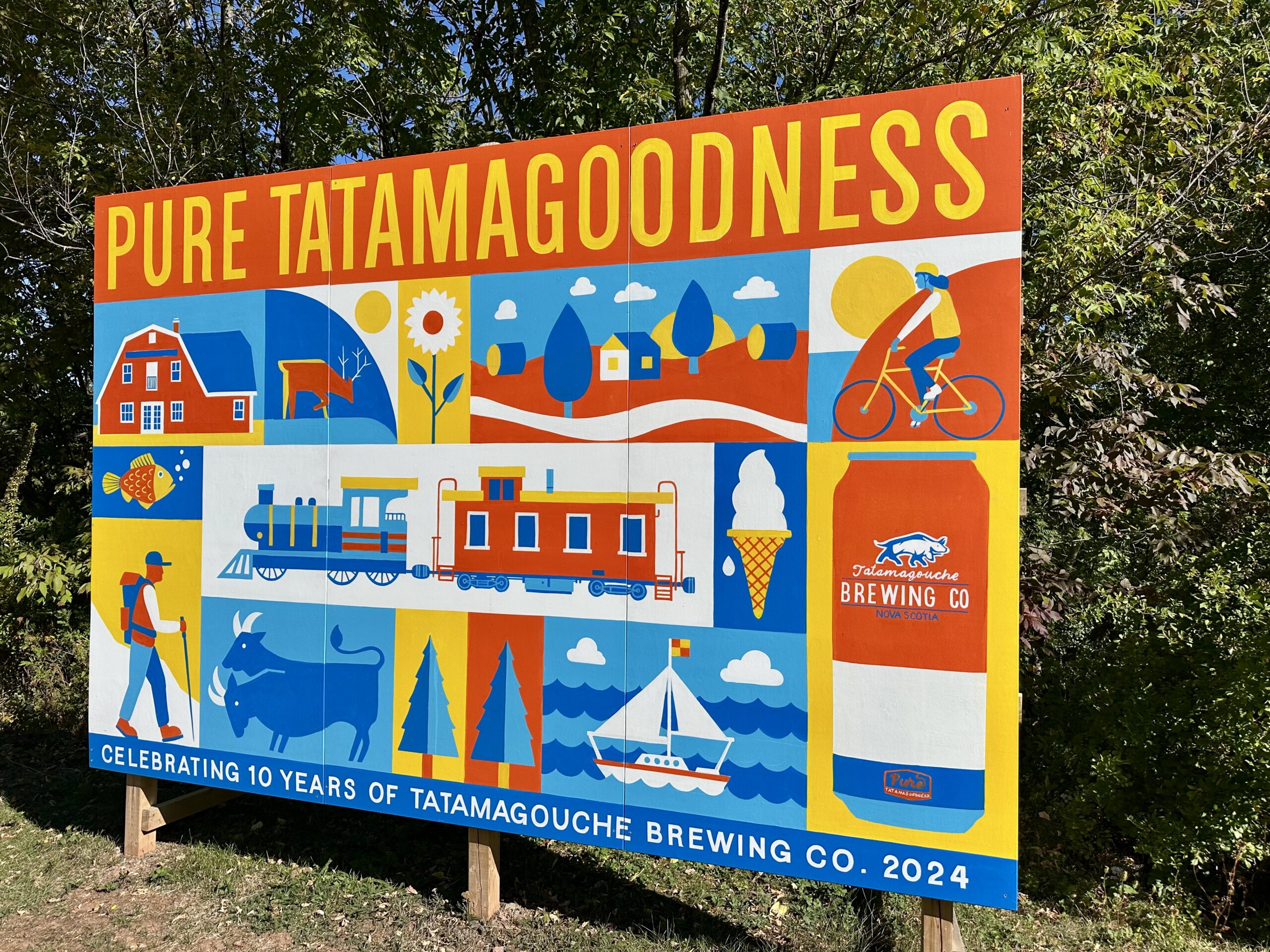
Dip into Windsor as you head to the Northumberland Shore, Nova Scotia’s warm-water vacation destination. Tour the museum celebrating the town as the birthplace of hockey and, if it’s fall, go to Dill’s Farm, home of Atlantic Giant, the world’s largest pumpkin variety. Then continue on to Tatamagouche – fun to say, fun to stay.
SheBuysTravel Tip: Summer’s the season for this region. During my late September visit, shops, restaurants and attractions were beginning to close up for the year.
Things to Do Along the Northumberland Shore

- Cycle or stroll a segment of the Trans Canada Trail, the world’s largest recreational trail network.
- Ride the Tatamagouche Road Train, a ½ hour guided tour around town.
- Sip a Sunrise Session Ale at the Tatamagouche Brewing Co., a Nova Scotia Good Cheer Trail establishment.
- Go for a dip at one of the area beaches. Rushtons Beach is rumored to have the warmest water north of the Carolinas.
Day 6: Continue Along the Sunrise Trail
Nova Scotia’s Cabot Trail is always included on the world’s most scenic drives. You need at least one day to travel the 185-mile loop, but it’s best savored over several. I’ll return with my son on another trip to hit the Cape Breton golf courses along the route.
Fortunately, there are other scenic waterfront driving routes in Nova Scotia. Traveling east from Tatamagouche, I followed signs for the Sunrise Trail to access charming coastal villages, like Pictou and New Glasgow.
Things to Do Along the Sunrise Trail

- Stop in Pictou to see a replica of the Ship Hector, the vessel that brought the first wave of Scottish immigrants to Nova Scotia in 1773.
- Visit Vendor Village, a collection of artisan shops, is located on the Hector Heritage Quay.
- Check the event calendar for the riverfront Glasgow Square Theatre. The venue hosts a year-round variety of music, comedy and dance performances.
- See the Museum of Industry in Stellarton. Explore the important and arduous work done by generations of residents. The entire 2nd floor is devoted to coal mining with memorials to the hundreds of Nova Scotians who perished in cave-ins and explosions, most recently in 1992.
Day 7: Marine Drive to Porters Lake
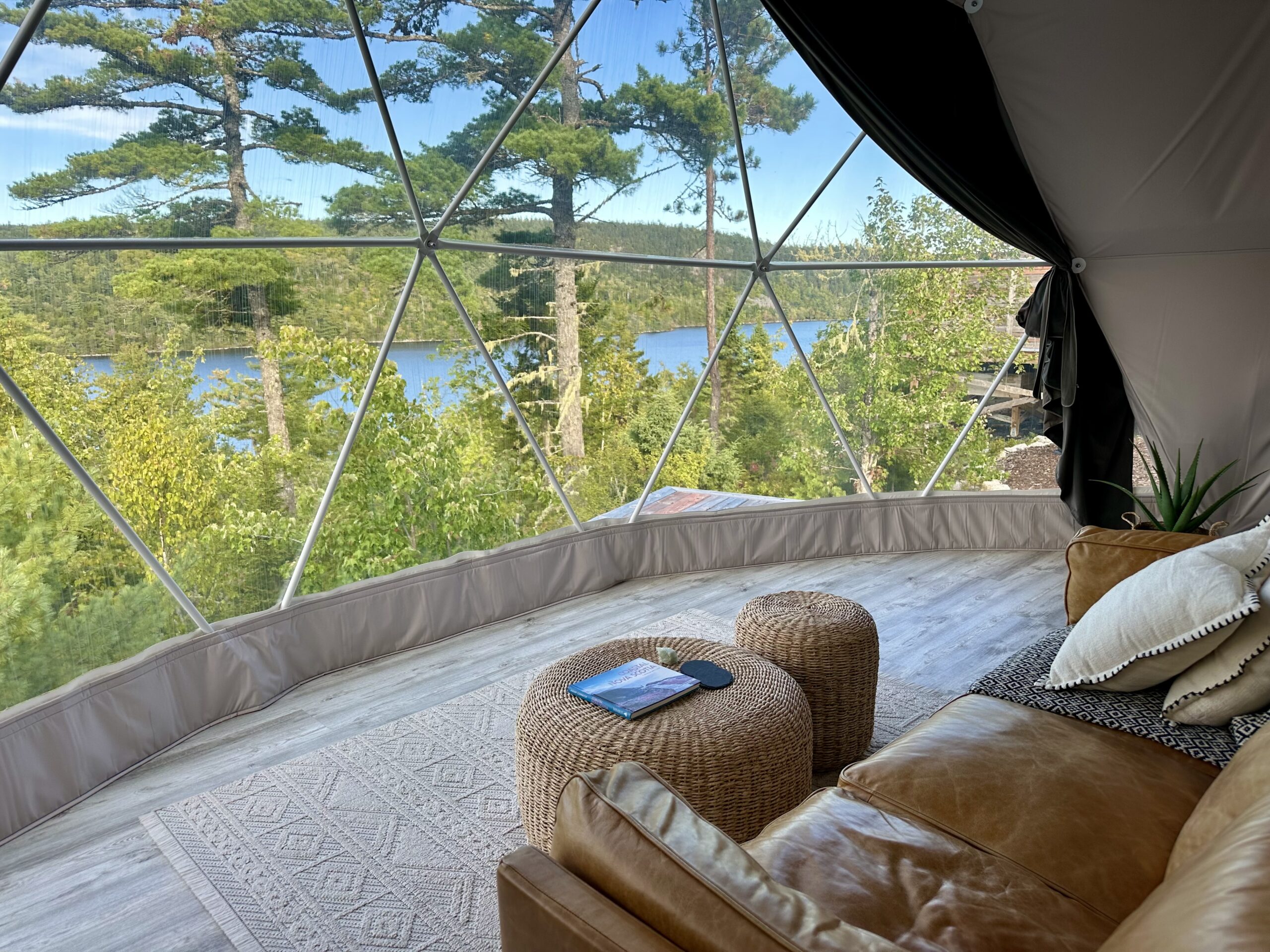
After spending the night in New Glasgow, I headed east to Antigonish, then followed Route 7 south along the shores of multiple long, narrow lakes glittering in the September sunshine. Following my final Chowder Trail stop at the Liscombe Lodge, I traced the ocean coastline on designated Marine Drive. Stands of pine trees anchor a series of coves, lined with moss-covered boulders. It’s one of the many Nova Scotia postcard moments I’ve committed to memory.
SheBuysTravel Tip: If your pants are snugger than they were at the beginning of the week, hike the Crowbar Lakes Trails before settling in for a hot tub soak at Nalu Retreat.
Best Bites Along the Nova Scotia Chowder Trail
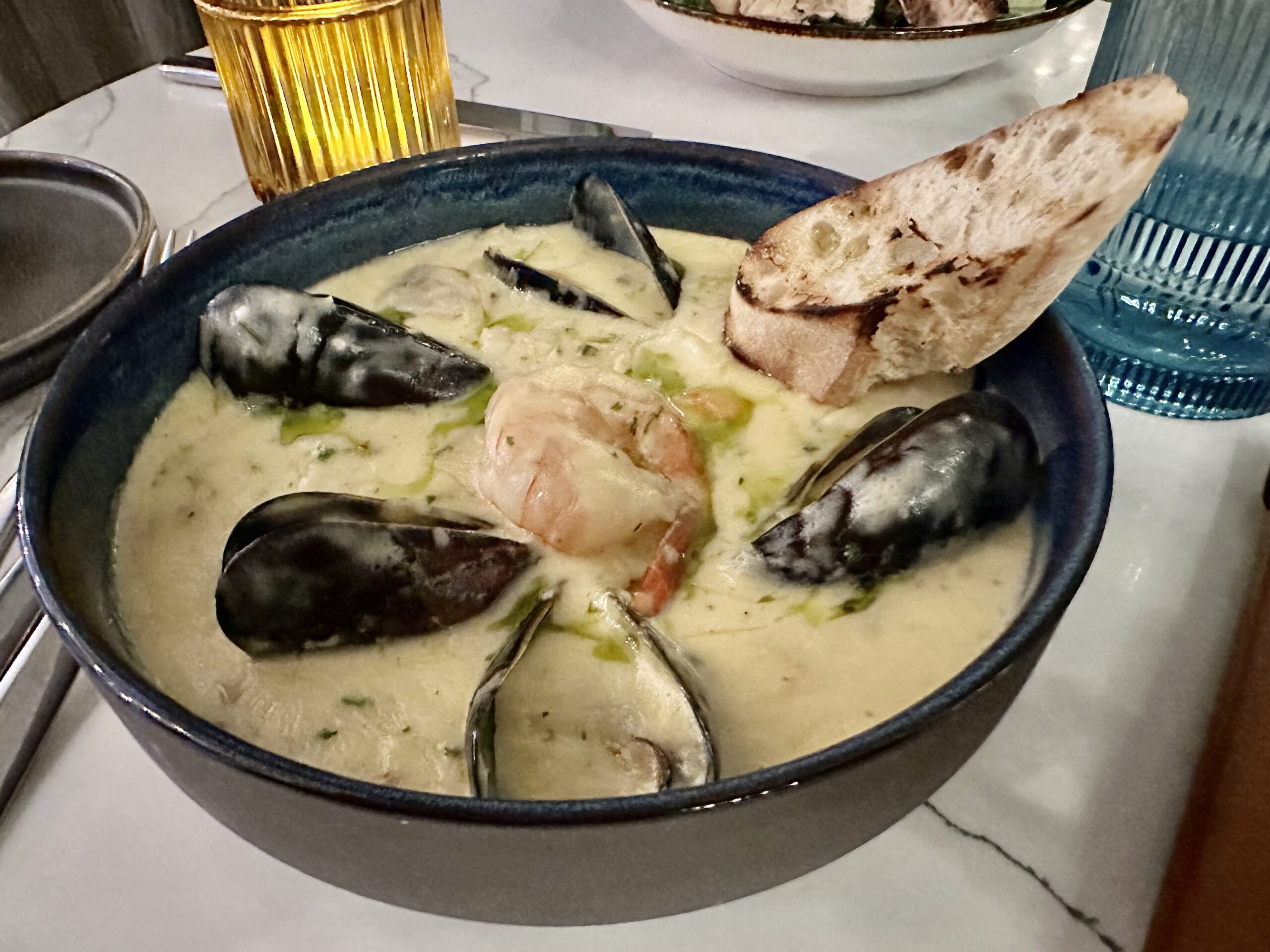
Seaport Social: I paired a bowl of chowder with a ½ portion of the beetroot salad, offered as one of the Eat Well options at the Westin Nova Scotian’s on-property restaurant.
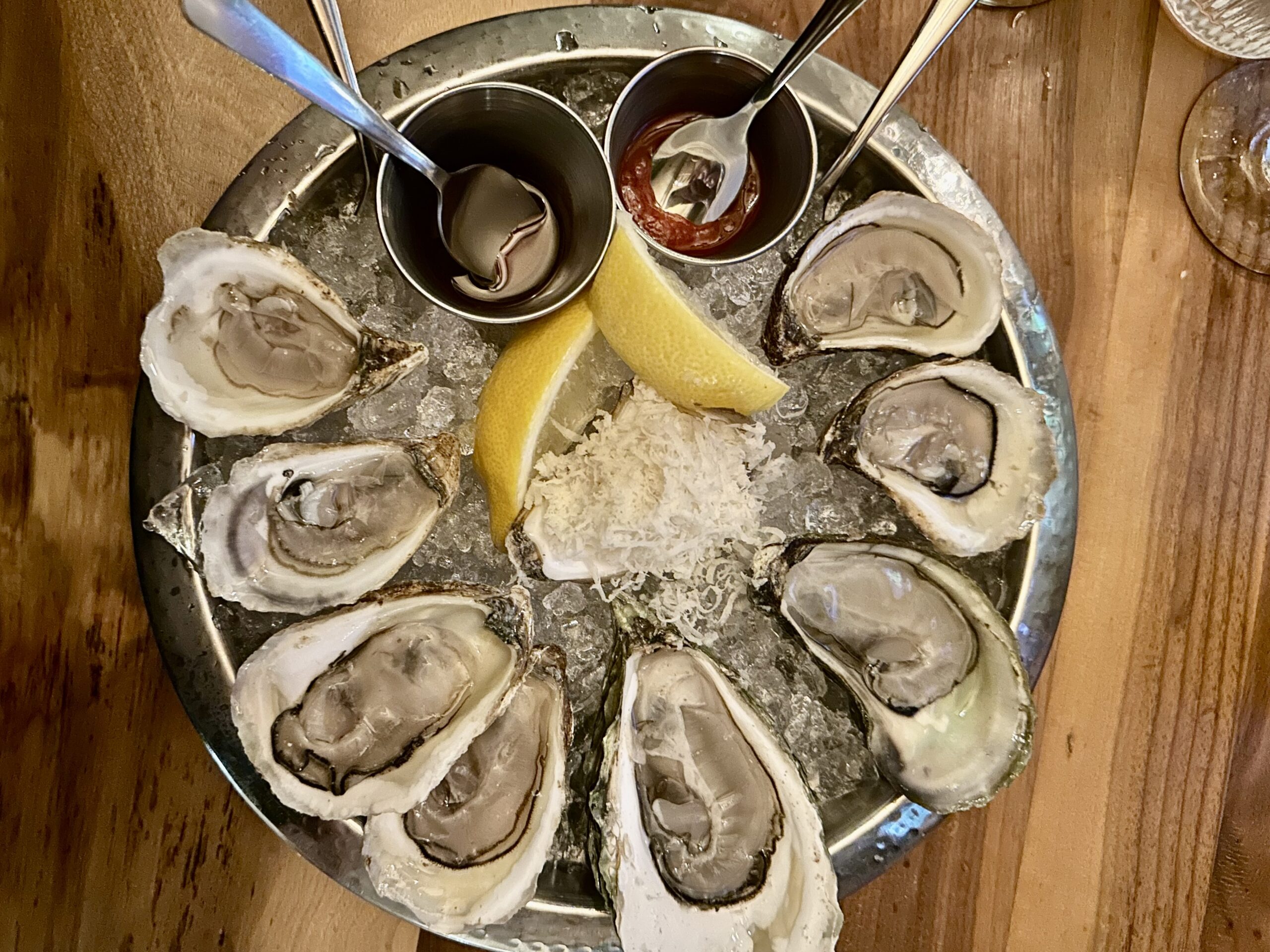
The Press Gang: Make a reservation to experience a chef-driven menu in a Halifax cellar that dates back to 1759. Don’t skip the local oysters; pair them with a flute of Nova Scotian bubbly brut.
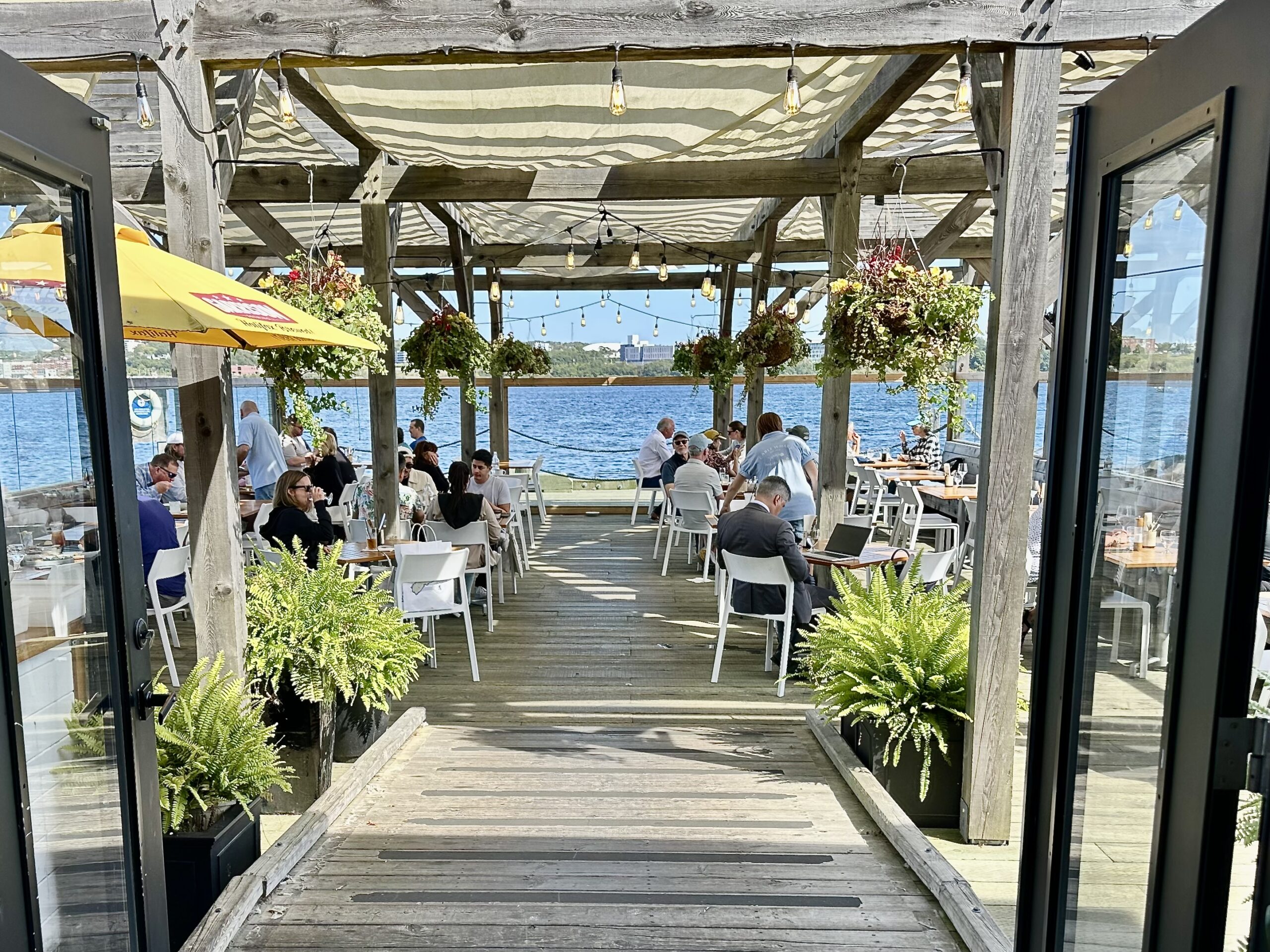
Cable Wharf: Grilled sourdough with maple butter accompanies the seafood chowder at Cable Wharf, which also has a tasty lobster roll and scenic al fresco seating.
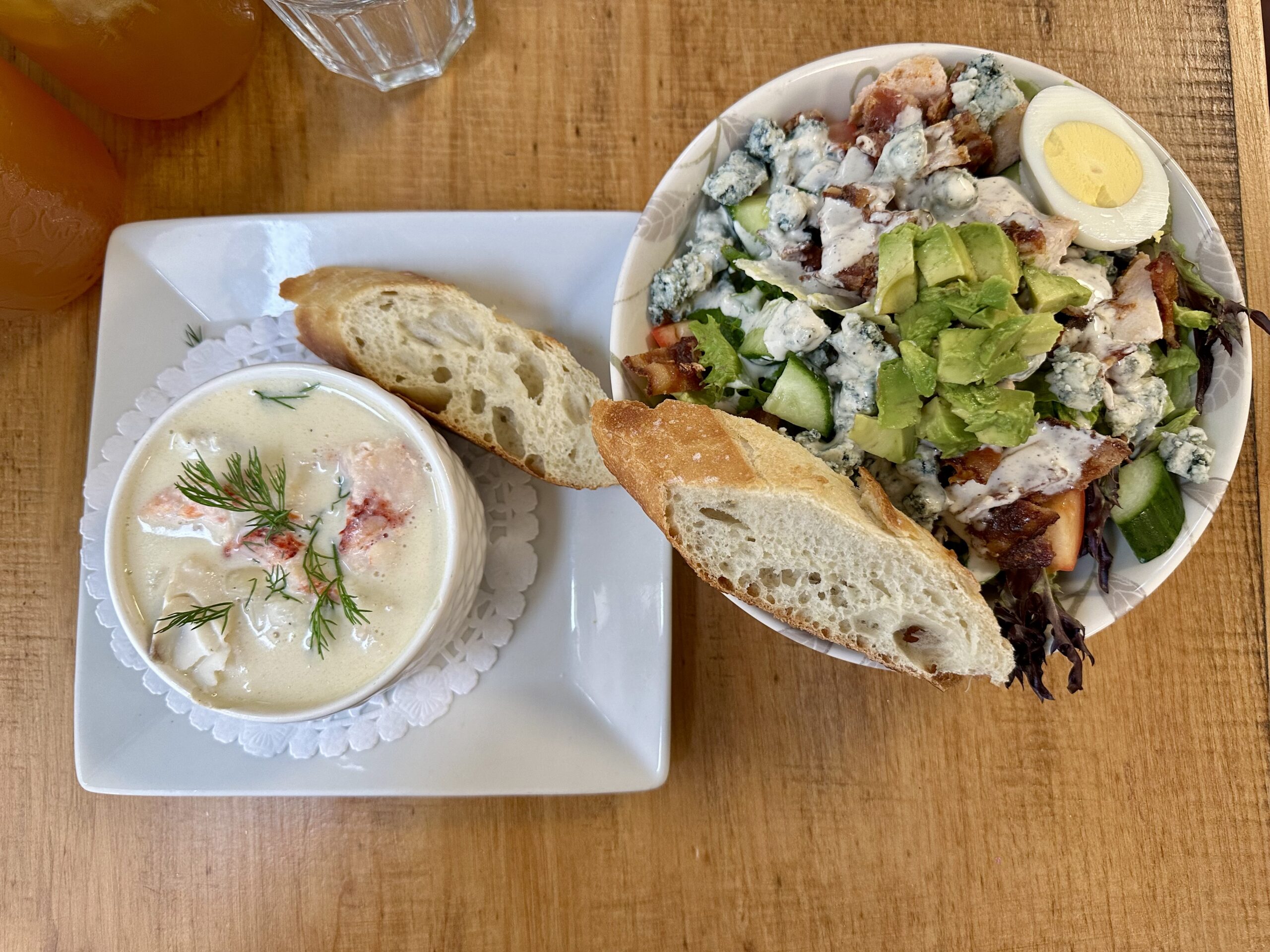
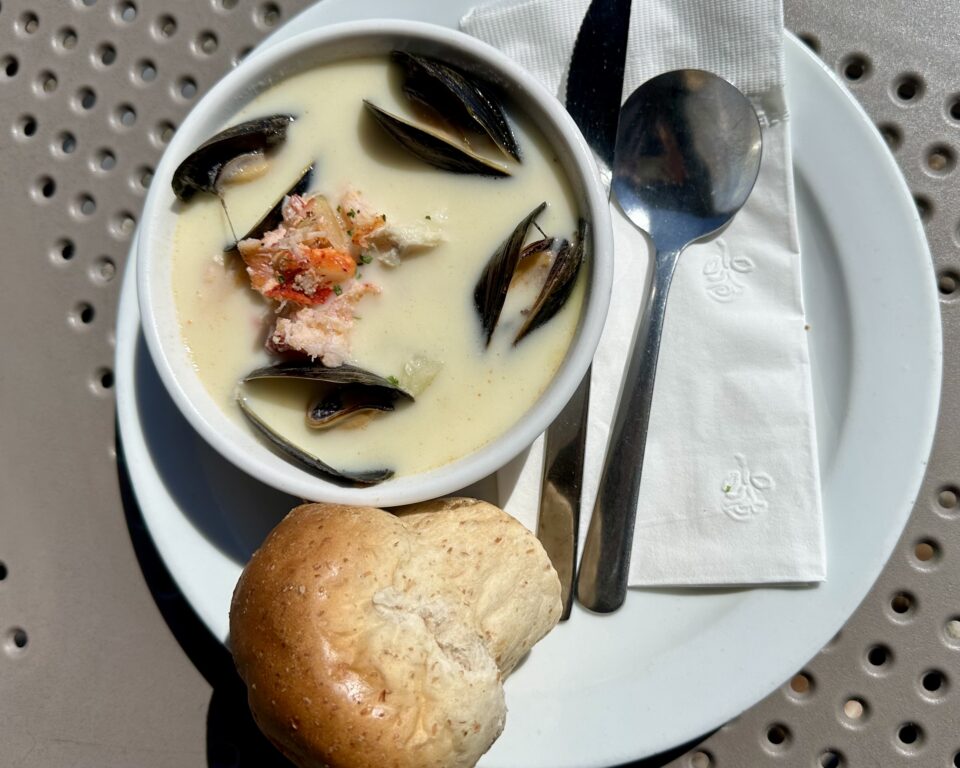
The Kiwi Cafe: Open daily from 8 am – 4 pm, this Chester gem has a yummy lobster and haddock chowder. I paired a small soup with a 1/2 portion of their Cobb salad, muscled my way through it all AND wedged in a homemade chocolate cheesecake brownie.

Old Fish Factory Restaurant & Ice House Bar: Located in the same building as the Lunenburg Fisheries Museum, the Old Fish Factory has wonderful waterfront views, a delicious lobster roll and homemade kettle chips.
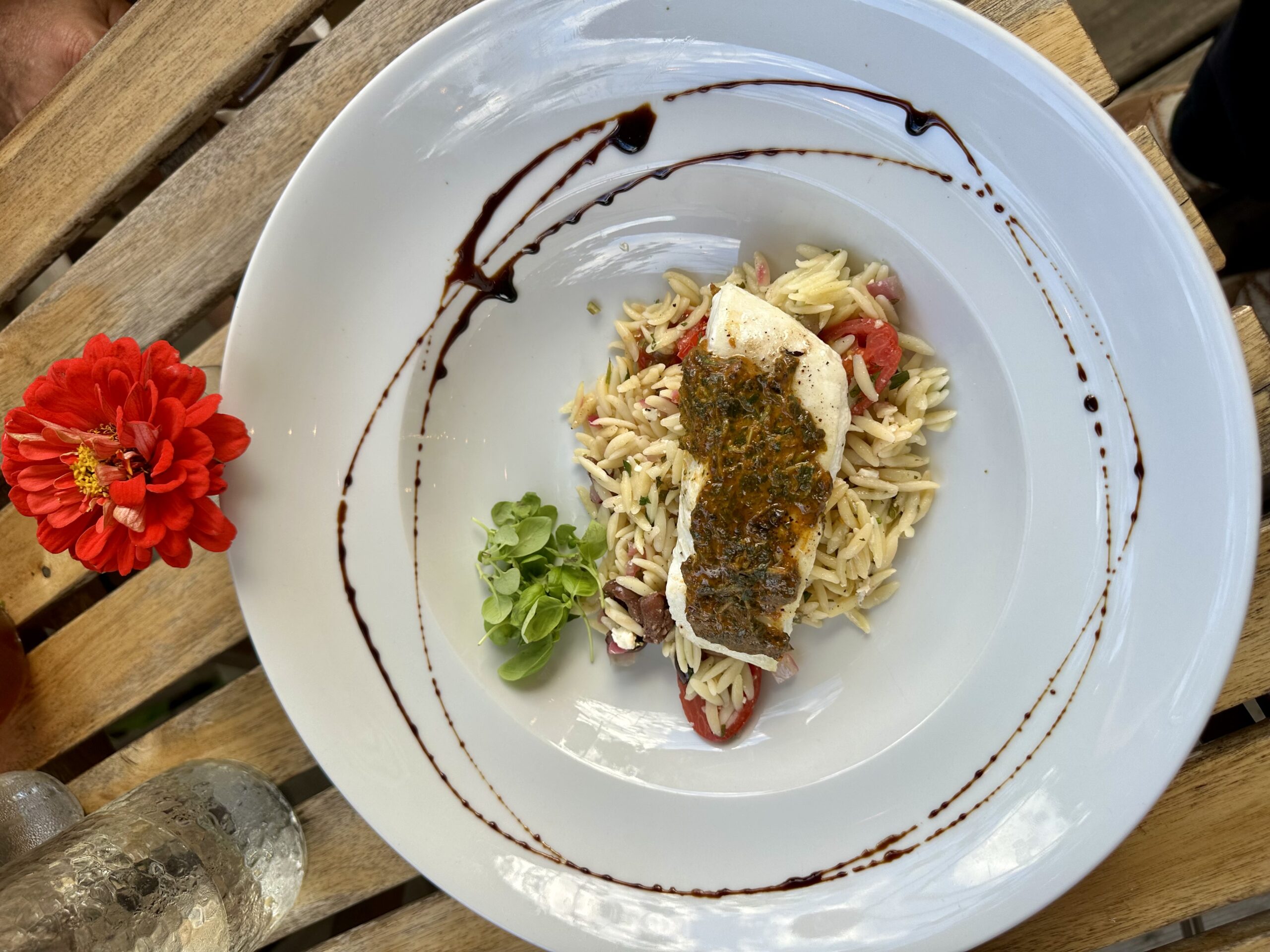
Mateus Bistro: Friday grill specials and live music are seasonal highlights of this Mahone Bay restaurant. The weather was perfect for sipping a dark and stormy prepared with local Ironworks rum and Propeller Brewing Co. ginger beer.

Train Station Inn Railway Dining Car: The meal was my favorite of the trip, based on food quality and the pure fun of eating in a vintage dining car at this family-run restaurant.
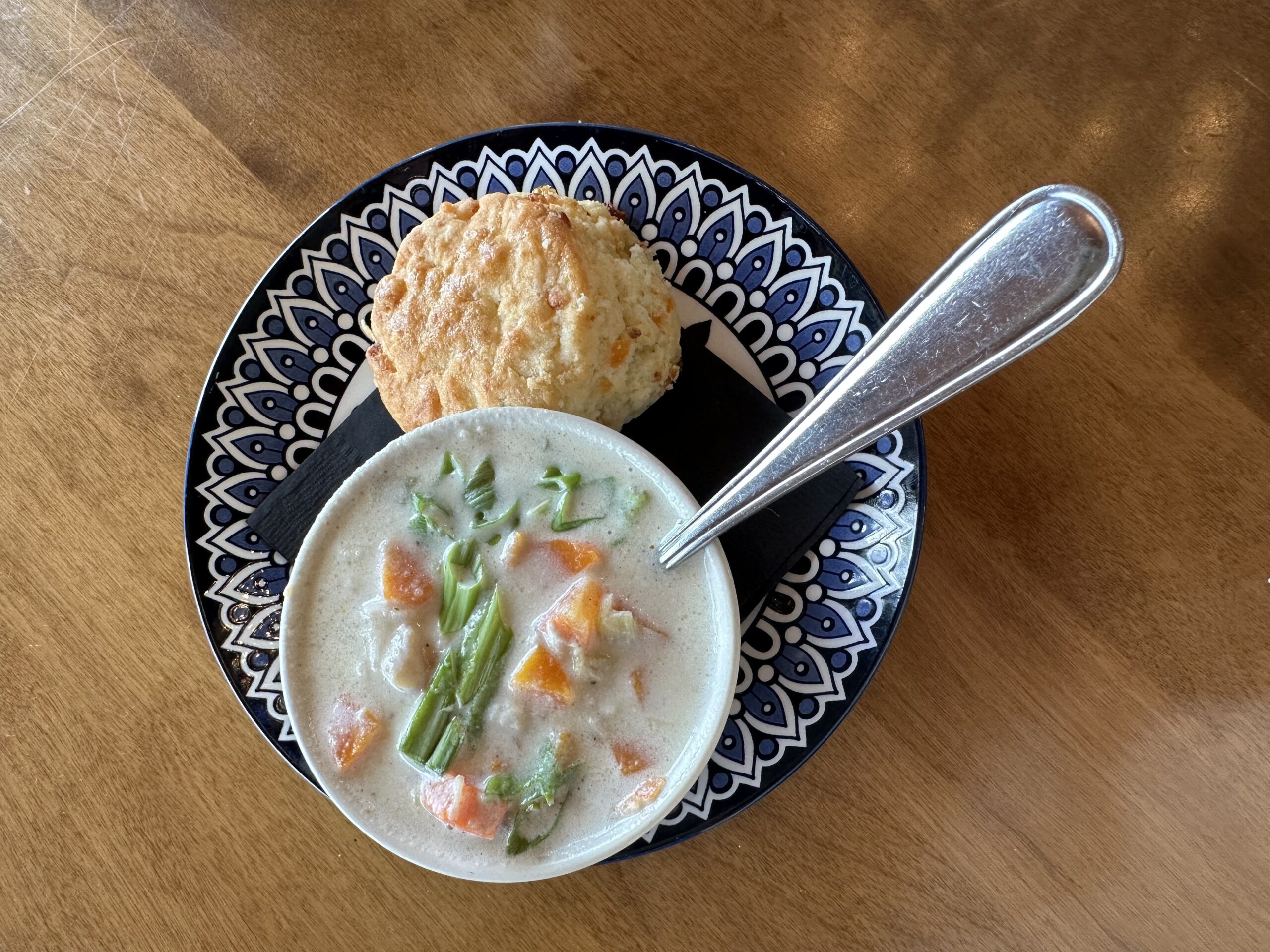
Liscombe Lodge Resort and Conference Centre: Sit along the back window wall in the lodge restaurant for relaxing river views. My final chowder was deliciously dotted with farm-fresh carrots and served with a flaky chive biscuit. A menu highlight for carnivores is the cheddar bacon burger served with a garlic aioli.
Best Time to Visit Nova Scotia
Although Nova Scotia temperatures are moderate year-round, winter precipitation brings icy driving conditions. So the best time of year to travel the Chowder Trail is May to October. July and August are high season for tourists. For a more laid-back vibe, consider spring or fall shoulder season.
Where to Stay Along the Chowder Trail
Google map of Nova Scotia Chowder Trail road trip overnight rest stops.
Westin Nova Scotian, Halifax

Vibe: Waterfront sophistication in a prime location
- Luxury renovation of a historic grand railway hotel
- Marriott Bonvoy brand
- Seaport Social, an on-site Chowder Trail restaurant
- Indoor pool, fitness center

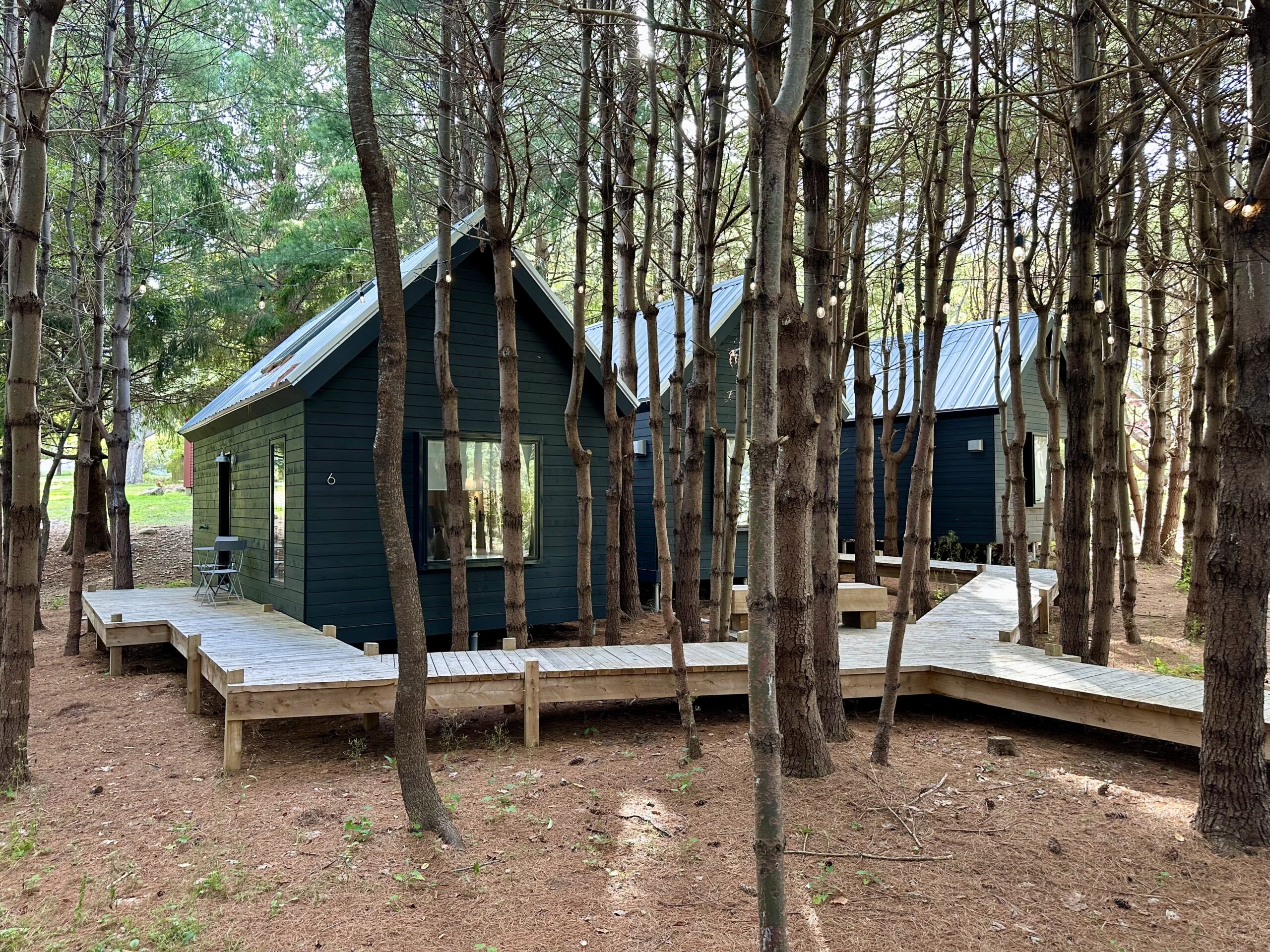
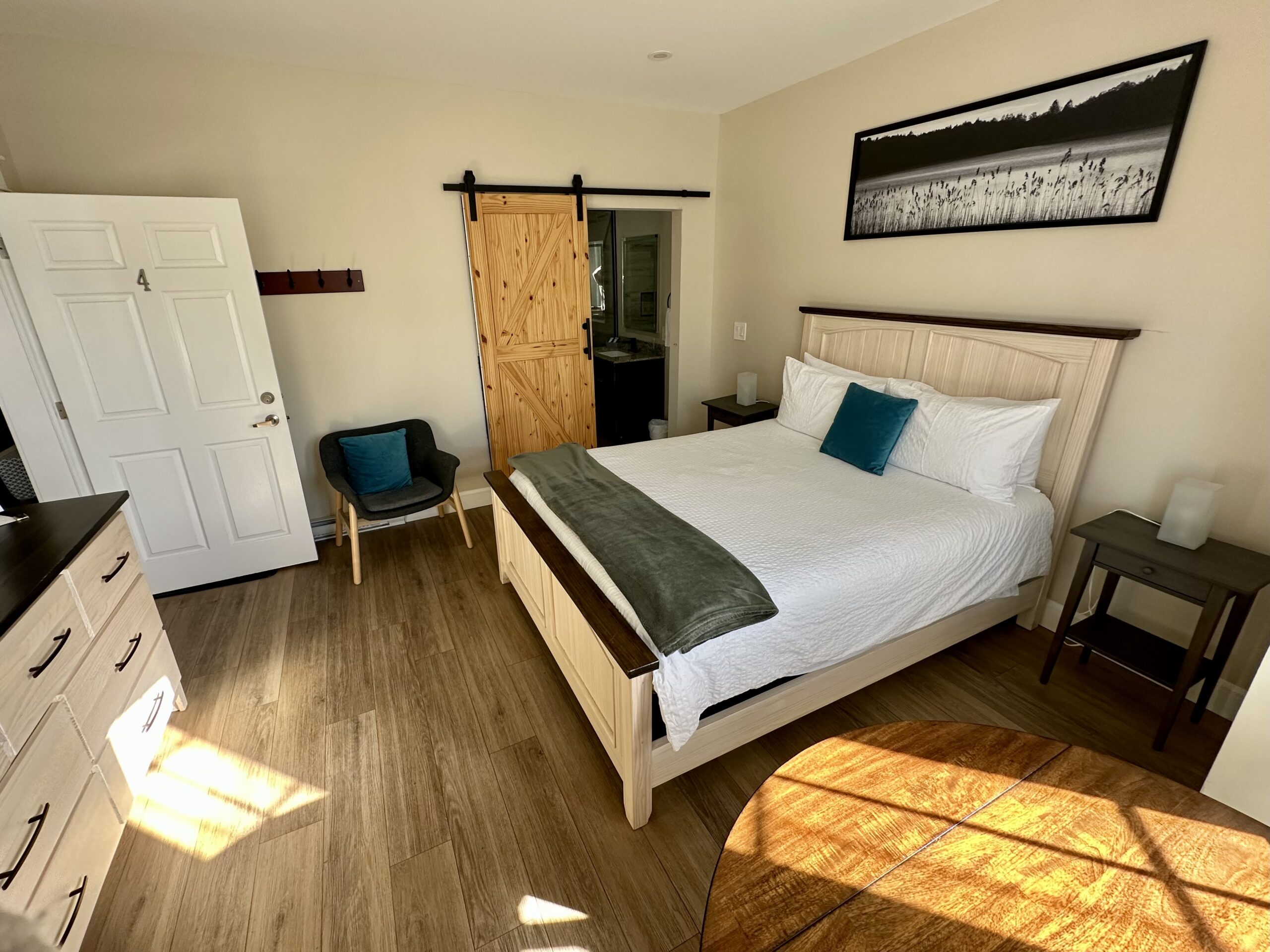
Black Forest Cabins, Mahone Bay
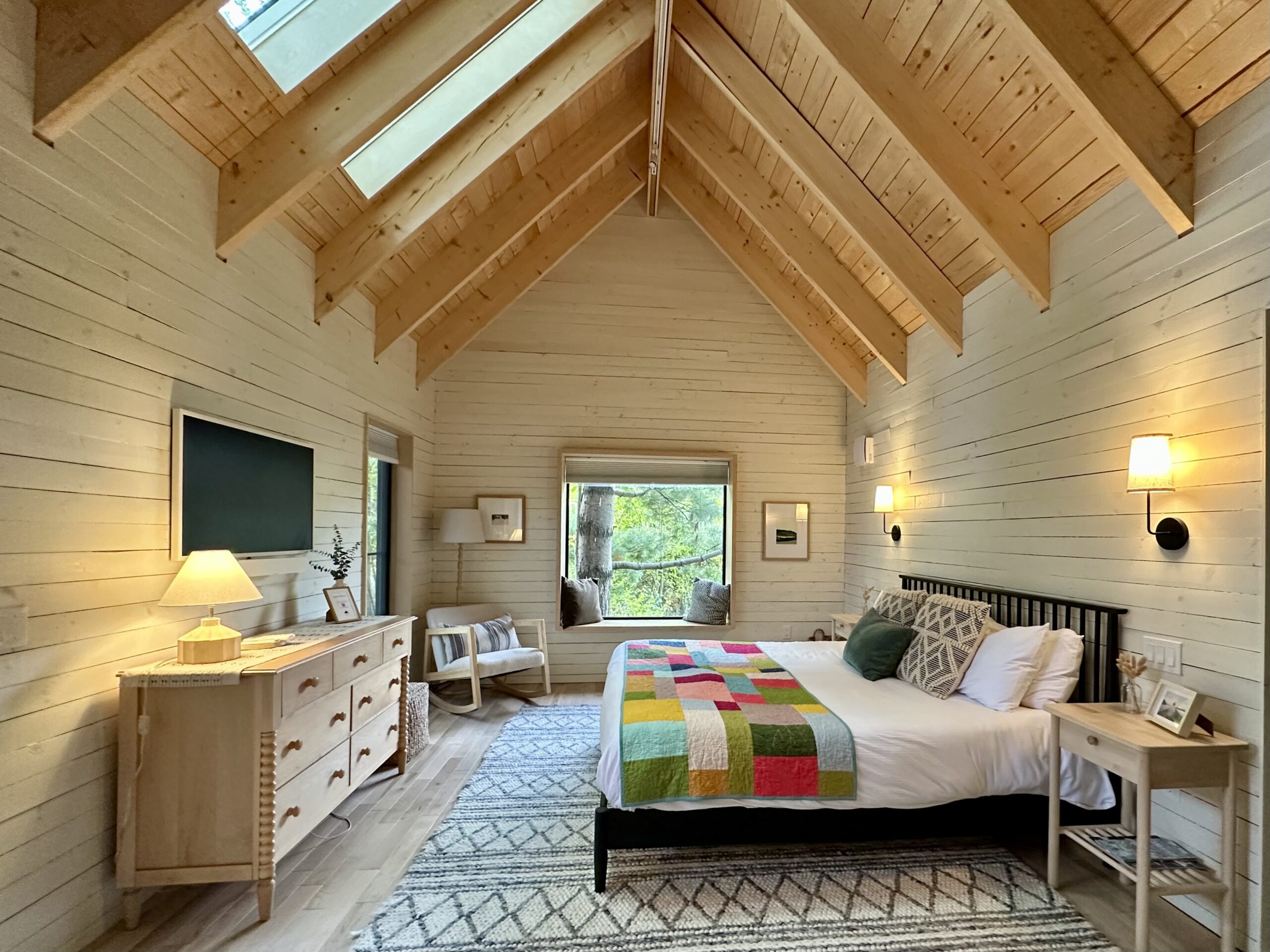
Vibe: Chic Scandinavian hideaway, camping for non-campers
- Cabins with modern exteriors, cozy interiors
- On-property sauna for guest use
- 15-minute walk to Mahone Bay shops and restaurants
- Sited along the 10 km Bay to Bay Trail connecting Mahone Bay and Lunenburg
The Stay at Planters Ridge, Port Williams
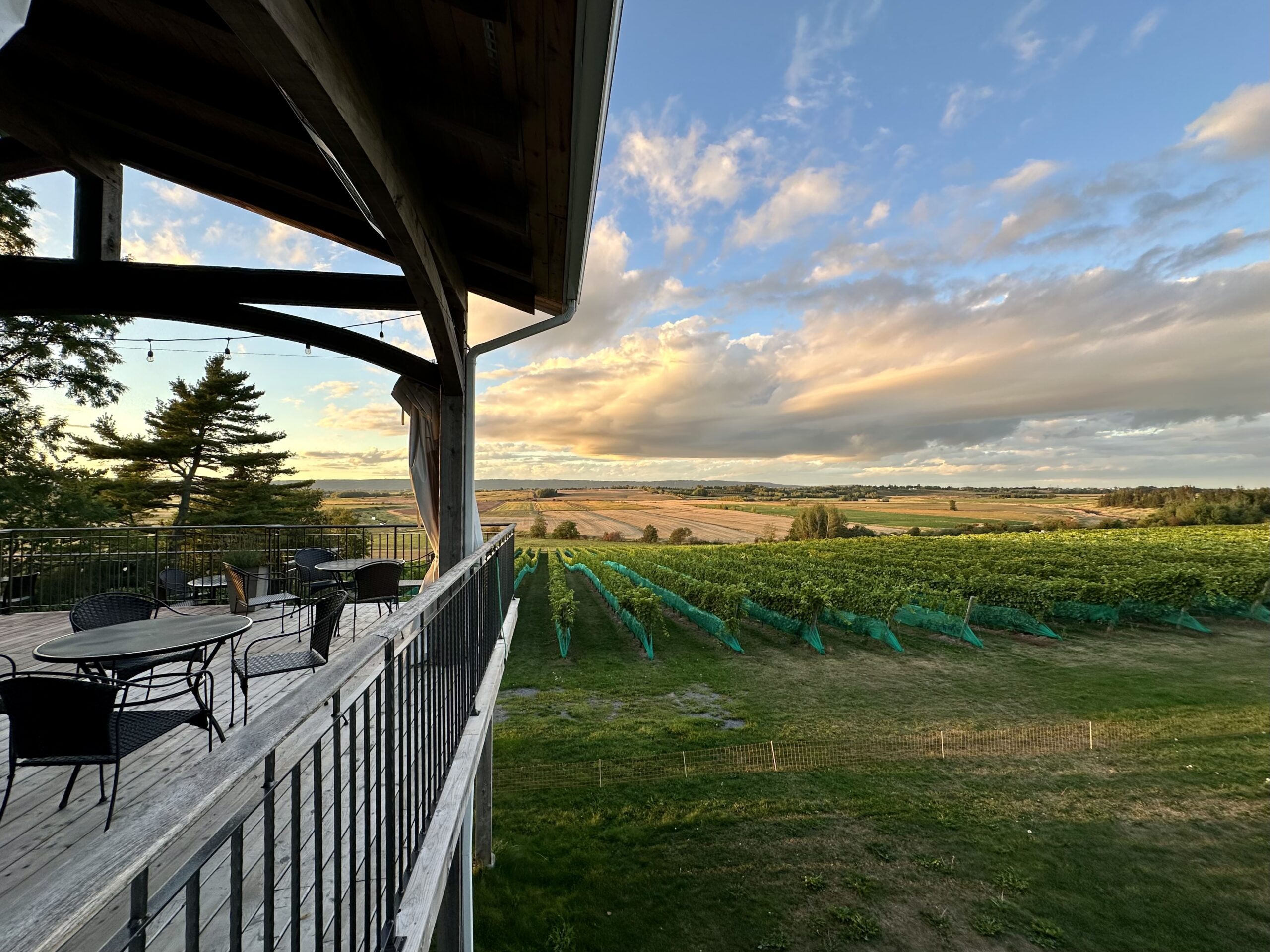
Vibe: Vineyard tranquility, leisurely countryside escape
- Three serene bedrooms in a renovated farmhouse
- Sip the vineyard’s sparkling Infatuation rosé in the deep soaking tub
- European-inspired breakfast included
- On-property winery
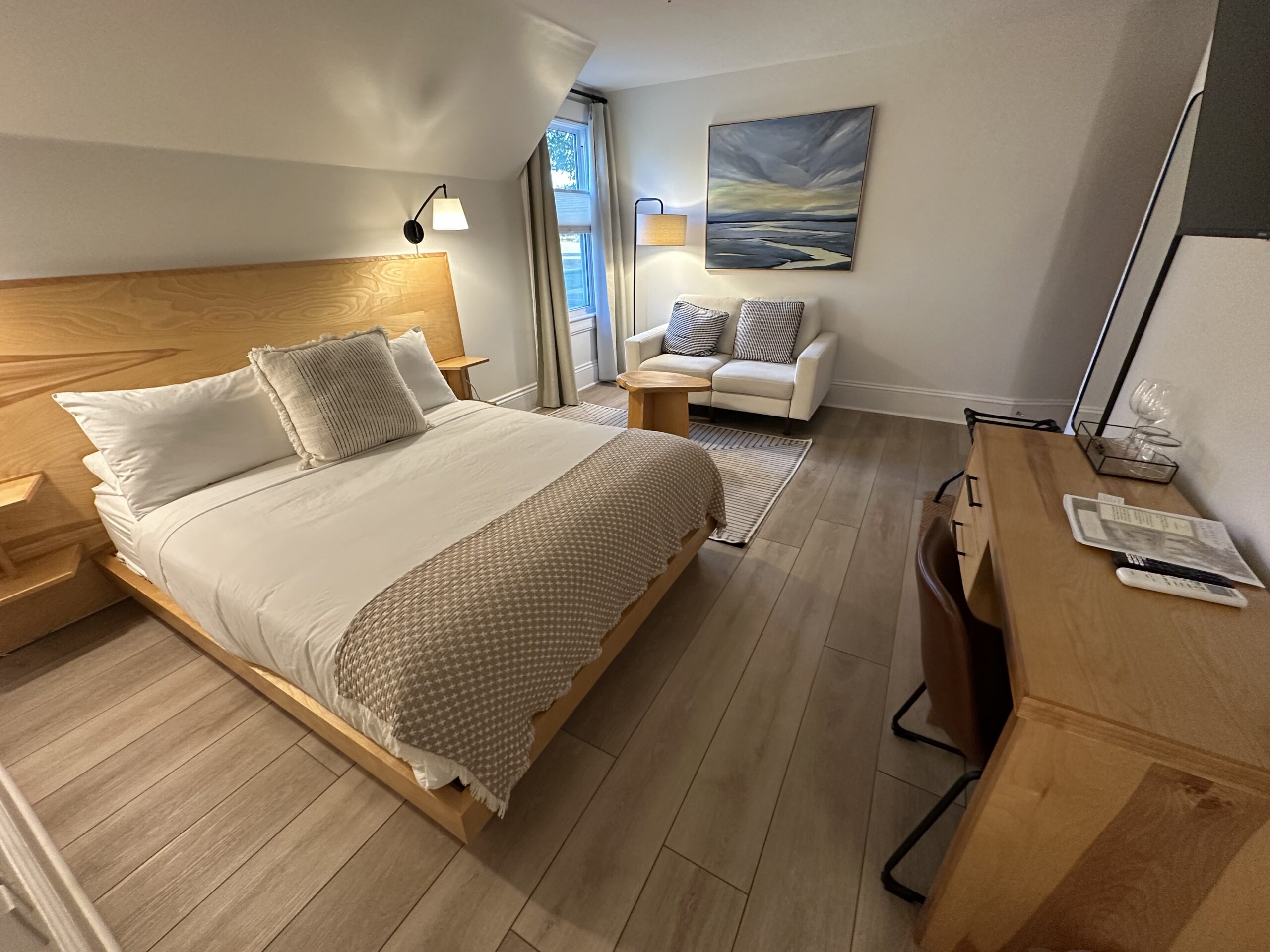
Train Station Inn, Tatamagouche
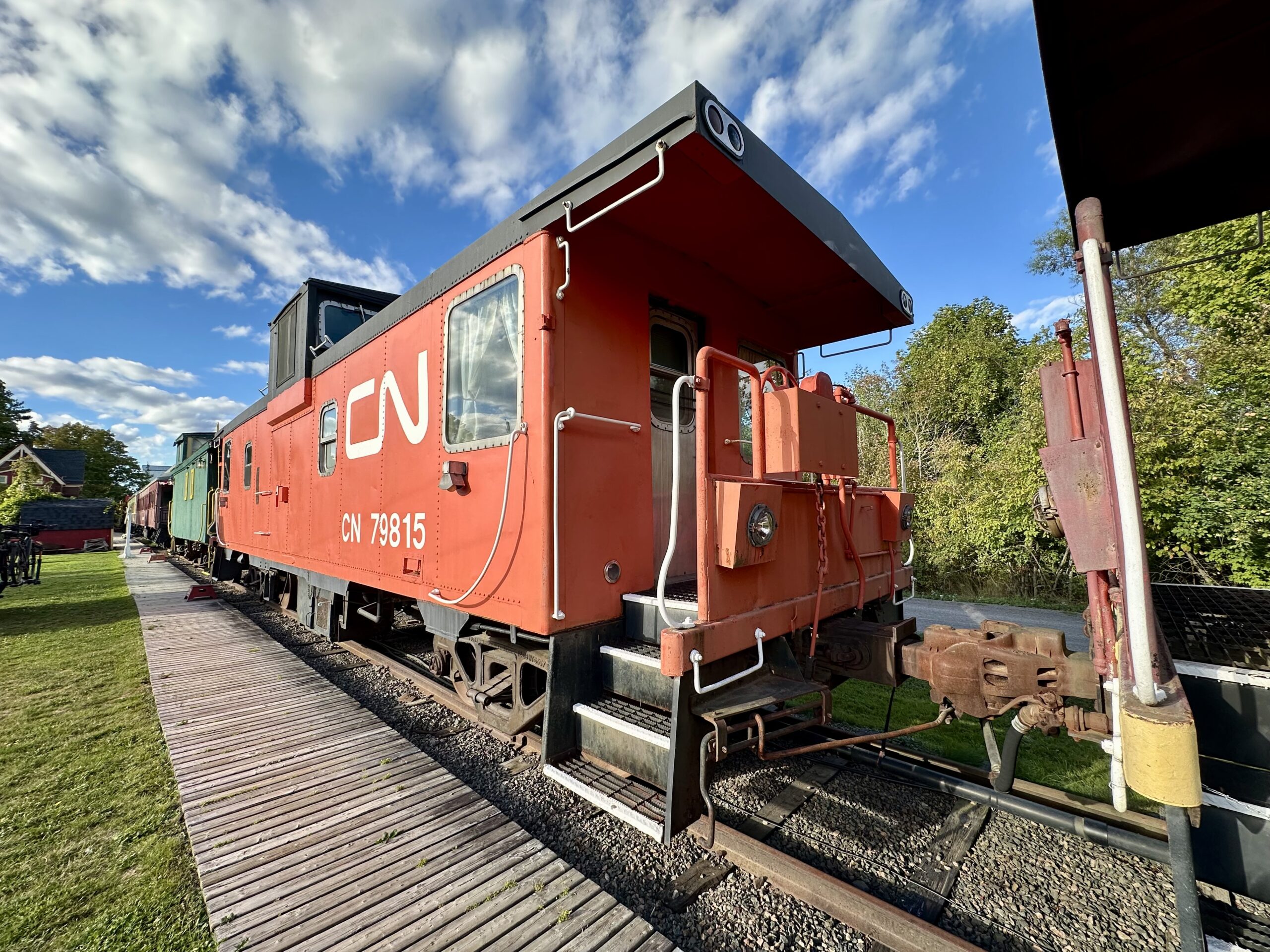
Vibe: Quirky nostalgia for playful adventurers
- Renovated vintage cabooses
- On-property fine dining, live music, bar and gift shop
- One of Condé Nast’s Most Unique Hotels in the World
- Easy access to the adjacent Trans Canada Trail
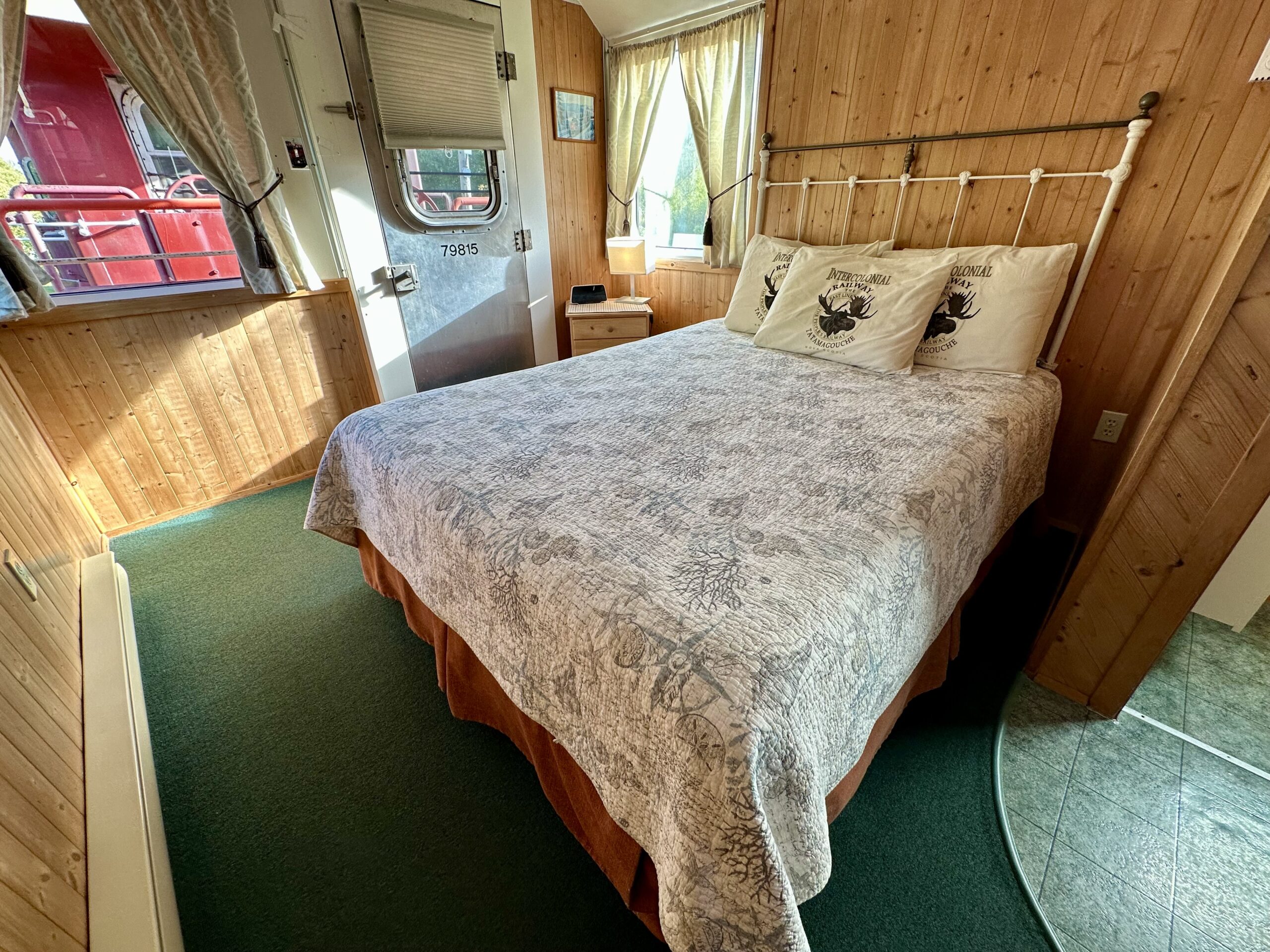
Riverside Inn, New Glasgow
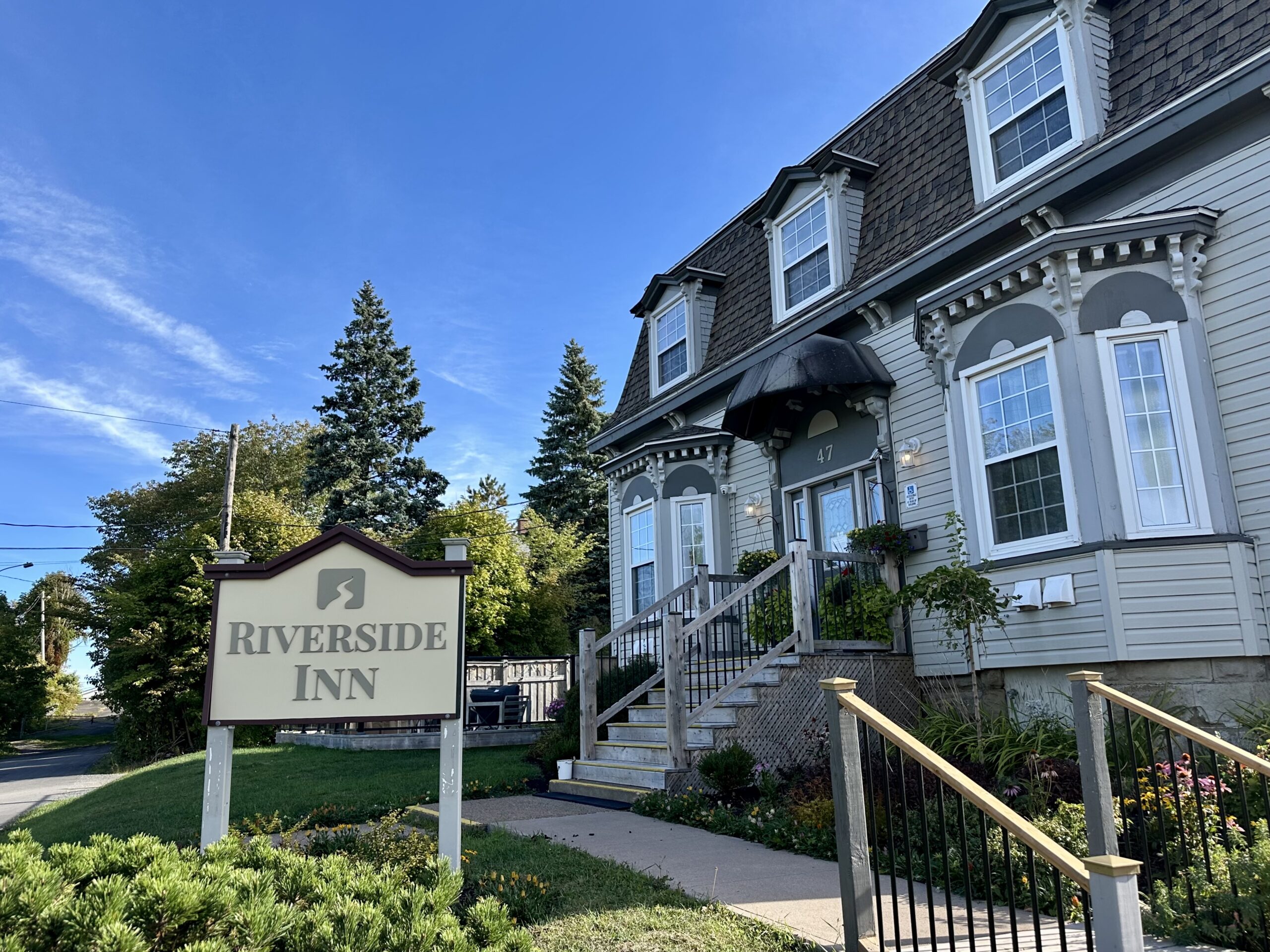
Vibe: Elegant romantic retreat
- Hot tub, sauna and fire pit for guest use
- Continental breakfast included in room rate
- Pets allowed (additional fee)
Nalu Retreat & Nordic Spa, Porters Lake
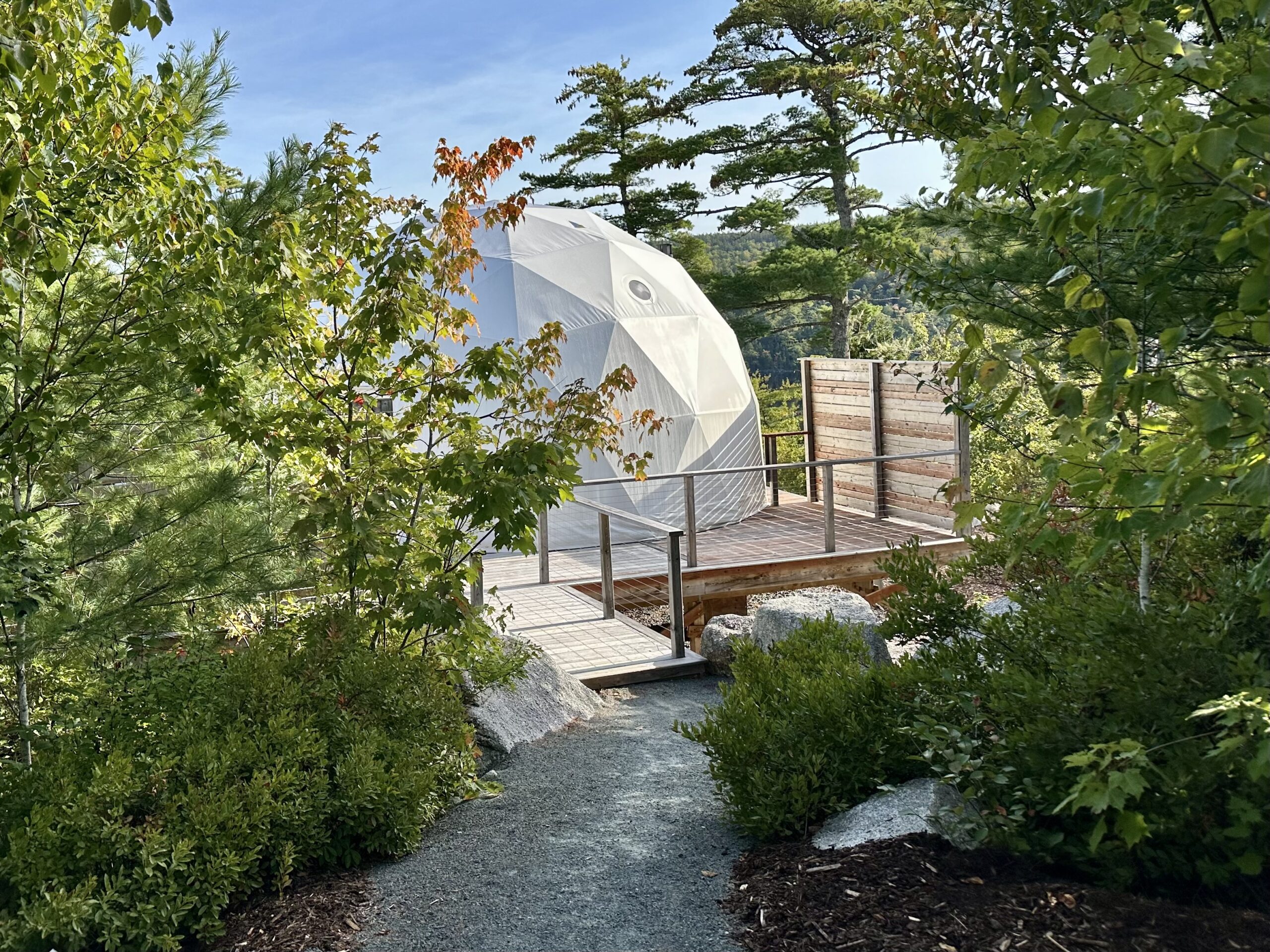
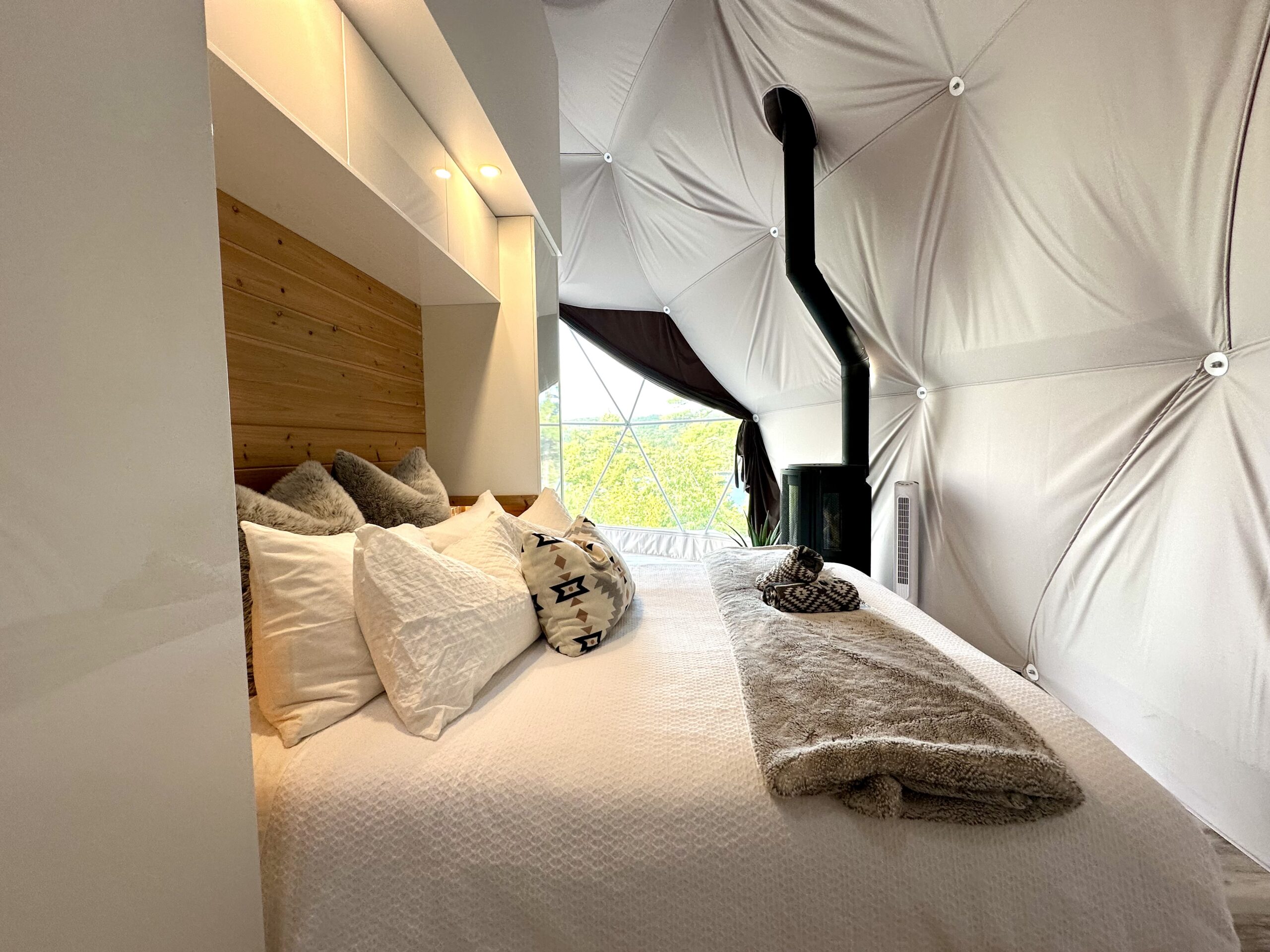
Vibe: Futuristic nature-immersed serenity
- Dome glamping overlooking Porters Lake
- Private hot tub and outdoor shower for a personal hydrotherapy experience
- Fire pit outside; fireplace inside
- Coming soon: Nordic spa
Getting to Nova Scotia: Arrive by Air, Sea or Land
I landed in Halifax after a quick two-hour non-stop flight from LaGuardia airport. In addition to New York, non-stop service is available from:
- Boston
- Chicago
- Orlando
- Philadelphia
- Fort Lauderdale (seasonal)
- Orlando (seasonal)
- Tampa (seasonal)
- Washington DC
Rental car counters are in the parking garage across from the terminal at Halifax Stanfield International Airport.
If you’re bringing your own car from the US, you’ll drive from Maine through New Brunswick. A scenic option is the three and ½ hour CAT high-speed car ferry between Bar Harbor, Maine, and Yarmouth, Nova Scotia.
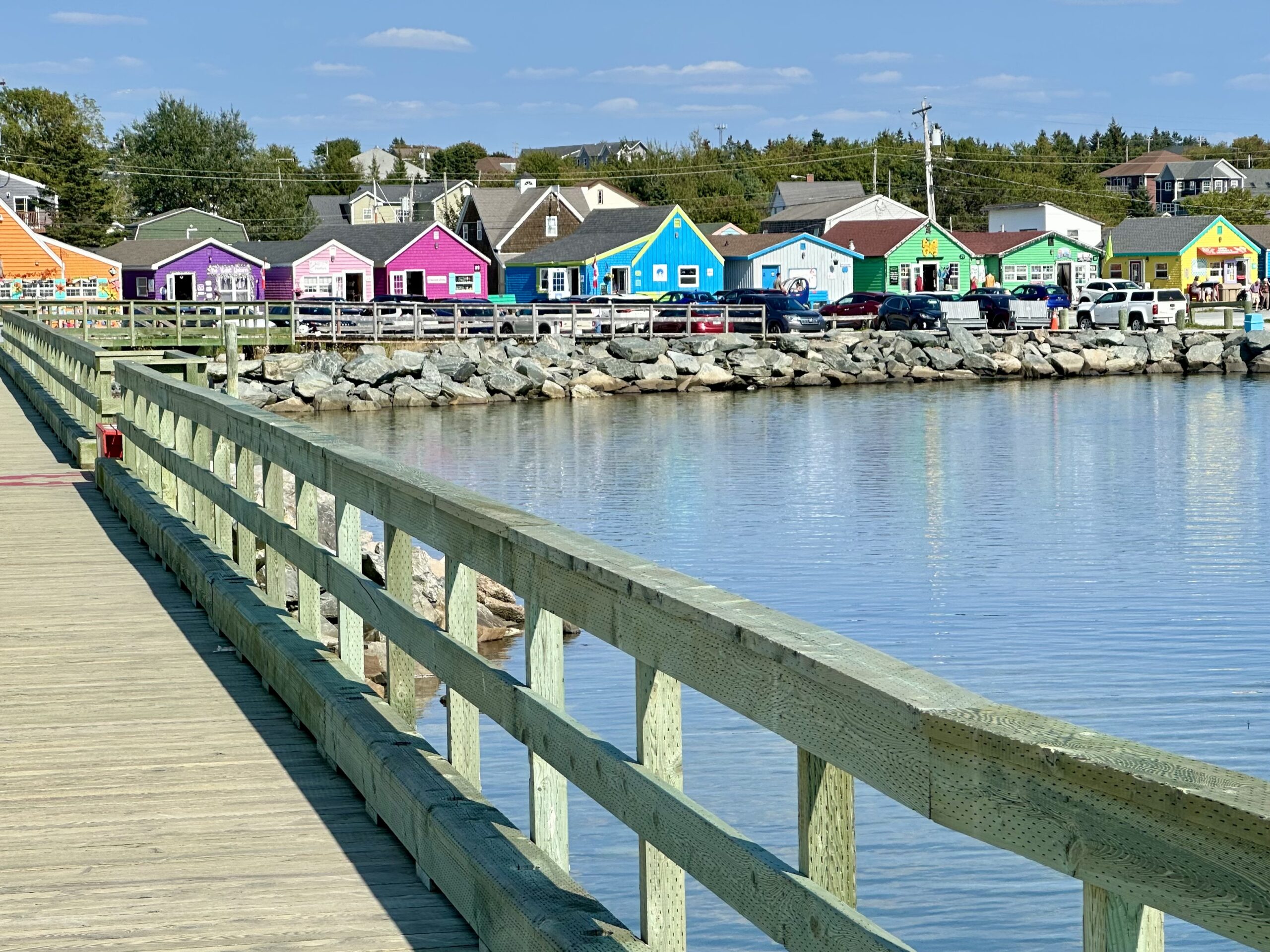
SheBuysTravel Tip: If you arrive in Nova Scotia before hotel check-in, visit the colorful souvenir shops in Fisherman’s Cove and have your first chowder at Evan’s in Dartmouth for skyline views of Halifax.
Additional Info
- As of the original publication date (October 2025), one US dollar is approximately $1.40 CAD.
- Electrical outlets are the same in the US and Canada. A power adapter is not required.
- Drive on the right side of the road in Nova Scotia. Speed limit signs are posted in kilometers, not miles per hour.
- My phone’s GPS worked well throughout the trip.
Read More:
- 14 Fun Things to Do in Halifax, Nova Scotia
- Hopewell Rocks Park: Getting Down and Dirty in Canada’s Bay of Fundy
- The Muir Hotel Review: 5-Star Luxury in the Heart of Halifax, Nova Scotia
- Visiting Canada’s Bruce Peninsula


Leave a Reply