

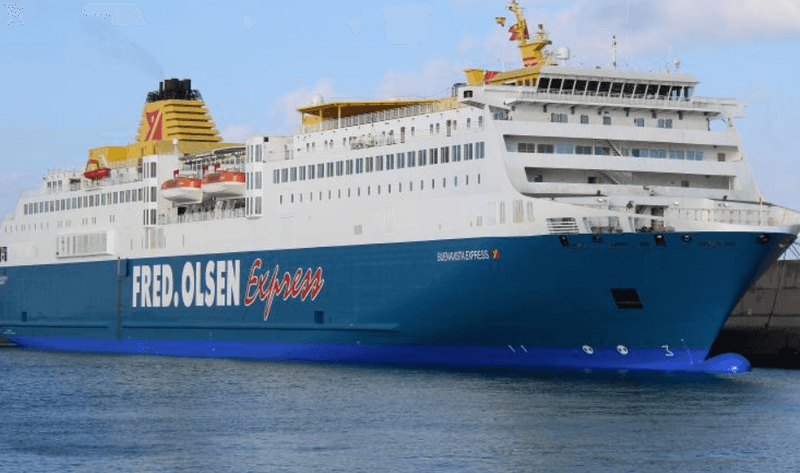
After road-tripping through Spain in a campervan, my husband and I weren’t ready for the adventure to end. Instead of returning our campervan, we took it with us aboard the Fred Olsen ferry from Huelva, Spain, to Tenerife in the Canary Islands.
I’ll admit, 33 hours on a ferry sounded like a very long time. But with a private cabin, meals, a swimming pool, sun deck and activities, our crossing felt more like a mini cruise than a transportation day.
Highlights
- Taking a campervan: How we drove our rental campervan aboard in Huelva and off in Tenerife.
- Spending 33 hours at sea: What sleeping, eating, swimming and relaxing aboard the ferry actually felt like.
- Planning the crossing: What I learned about booking, accommodations, Wi-Fi, overnight parking and packing.
Editor’s note: The writer was hosted.
Let us inspire your travels! Sign up for our newsletter now.
What Is the Ferry From Spain to Tenerife Like?

What surprised me most about our Fred Olsen 33-hour ferry from Huelva to Tenerife was how much we enjoyed the journey itself.
We walked the outdoor decks, sat in the sun, read, worked, played games and disappeared into our cabin for a nap. After driving around Spain in a campervan, having nowhere we needed to go felt pretty wonderful.
Best of all, we didn’t have to return our campervan, fly to the Canary Islands and start over. Our little home on wheels came with us.
SheBuysTravel Tip: Treat the crossing as part of your vacation rather than 33 hours you need to kill. Packing a swimsuit and booking accommodations that suited us made all the difference.
Can You Take a Campervan From Spain to Tenerife?
Yes. We drove our rental campervan onto the ferry in Huelva and drove it off again in Tenerife. Fred Olsen Express also provides specific information for travelers planning to take a campervan to the Canary Islands.
I felt much more nervous about boarding than I needed to. We arrived about three hours before departure and followed the crew’s directions once boarding started.
Then we watched the world’s largest game of Tetris.
Cars, campervans, motorhomes and enormous trucks disappeared into the ship while crew members guided them into spaces I would have sworn couldn’t hold them.
Once parked, we grabbed our overnight bags and headed into the passenger areas.
SheBuysTravel Tip: Pack your ferry bag before reaching the port. Mine included toiletries, medications, chargers, swimsuits and clothes for the crossing. Anything left in our campervan stayed there until Tenerife.
How to Book a Ferry From Spain to the Canary Islands
Booking our ferry from mainland Spain to the Canary Islands felt fairly straightforward, although bringing a campervan added a few steps. Because we rented ours, we got the vehicle information we needed from the rental company.
Before booking, I’d check:
- Vehicle: Enter the correct category and exact dimensions.
- Sleeping options: Compare reclining seats, Sleep Lounge bunks and private cabins.
- Meals: Check exactly what’s included in your fare.
- Extras: Price available upgrades before completing your reservation.
- Pets: Reserve pet accommodations early if you’re bringing a dog.
We chose a private cabin with a bed, bathroom and shower, a splurge I’d make again for a 33-hour crossing.
How Much Does the Ferry From Spain to Tenerife Cost?
There’s no single price. The final fare depends on travel dates, number of passengers, vehicle type and size, accommodations and extras.
I’d price several sleeping options for the same sailing before deciding. For a 33-hour overnight crossing, I wouldn’t automatically choose the cheapest.
For us, having a real bed, private bathroom and shower made the cabin worth the splurge.
Can You Bring a Dog on the Ferry to Tenerife?
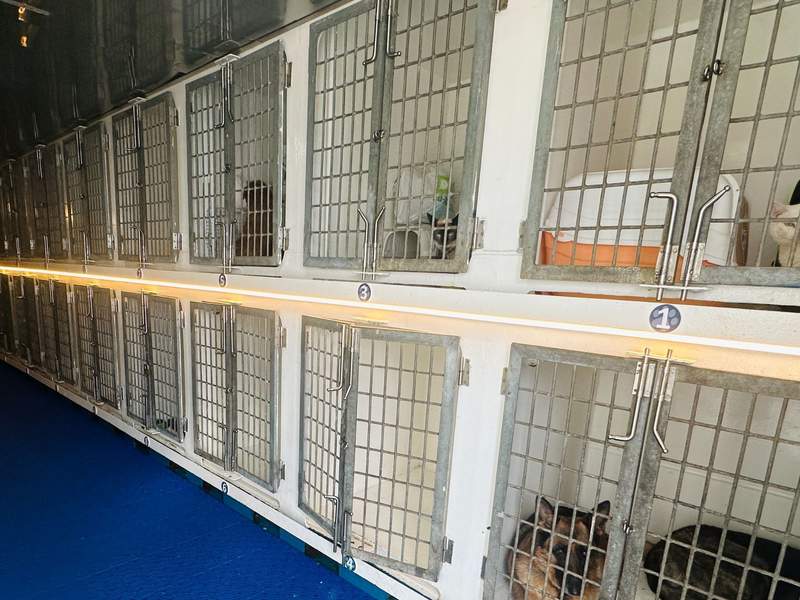
Although we didn’t bring a dog, I learned that travelers can bring four-legged companions aboard.
Fred Olsen Express offers pet-friendly cabins, and Buenavista Express also has individual Pet Rooms in a covered, ventilated kennel area. The ship has a designated outdoor dog-walking and toilet area.
Pet accommodations have limited availability, so I’d reserve early and confirm the required travel documentation before departure.
SheBuysTravel Tip: Before clicking reserve, double-check your vehicle dimensions, sleeping arrangements, meals and pet accommodations. Those choices can affect both the price and comfort of your crossing.
Where Do You Sleep on the Ferry to Tenerife?
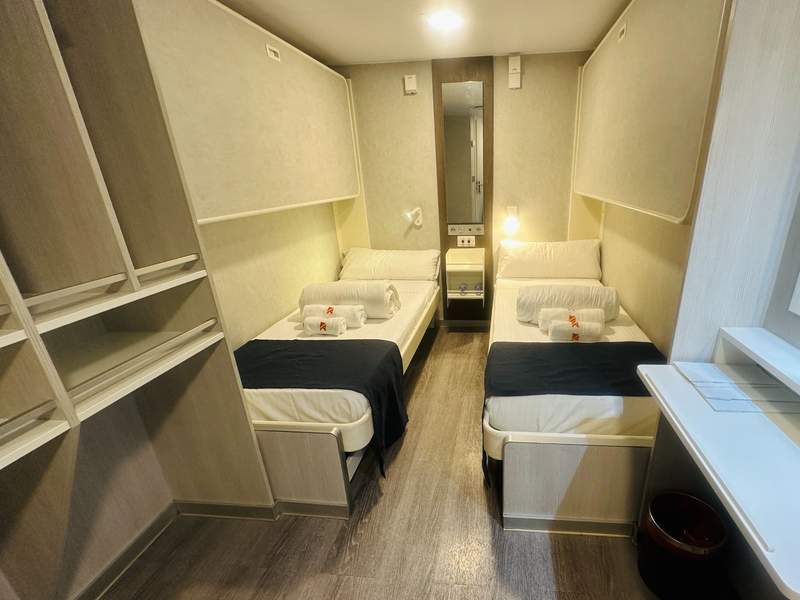
I wouldn’t hesitate to book our private cabin again, but travelers have several sleeping options:
- Reclining seats: The budget choice, with electrical and USB connections.
- Sleep Lounge: Individual bunks with privacy curtains, reading lights, outlets and lockers, plus access to a bathroom with a shower.
- Private cabin: My choice for couples who want a bed, private bathroom, shower and quiet place to retreat.
One detail I’d want to know before booking the Sleep Lounge: Bedding includes sheets, but passengers should bring their own pillow and pillowcase.
After weeks of campervan living, I may have appreciated that private shower more than the average passenger.
SheBuysTravel Tip: For couples, I’d splurge on a private cabin if the budget allows. The Sleep Lounge looks like a smart compromise if you want to lie flat for less.
What Is There to Do on the 33-Hour Ferry to Tenerife?
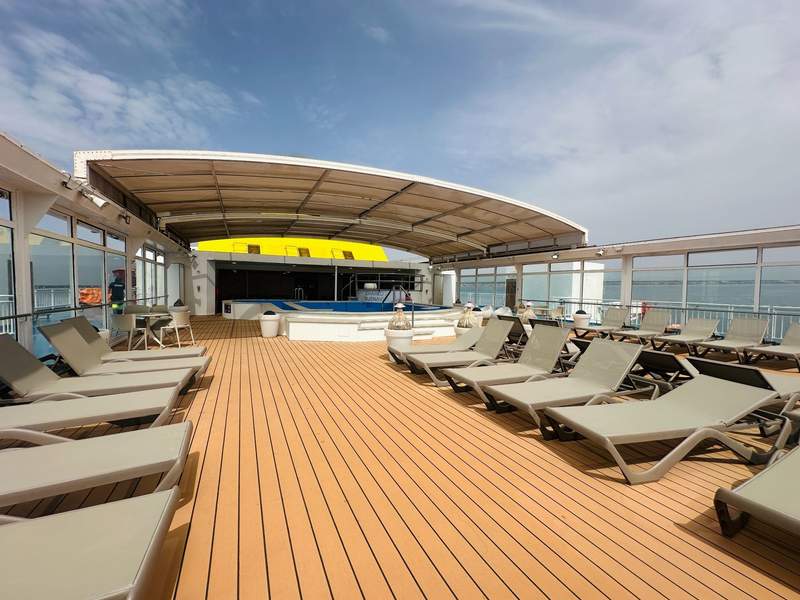
The pool surprised me most.
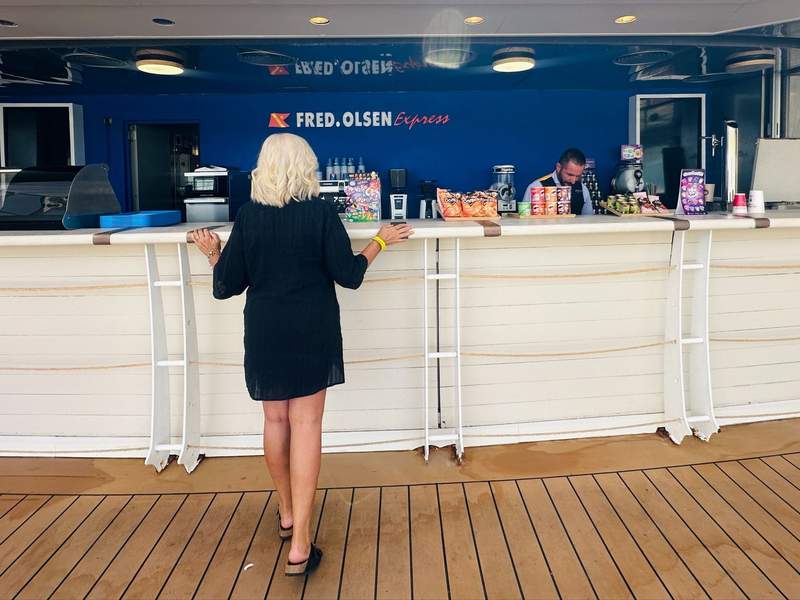
Buenavista Express has a saltwater swimming pool, sun deck, loungers and an outdoor bar. Yes, on a ferry.
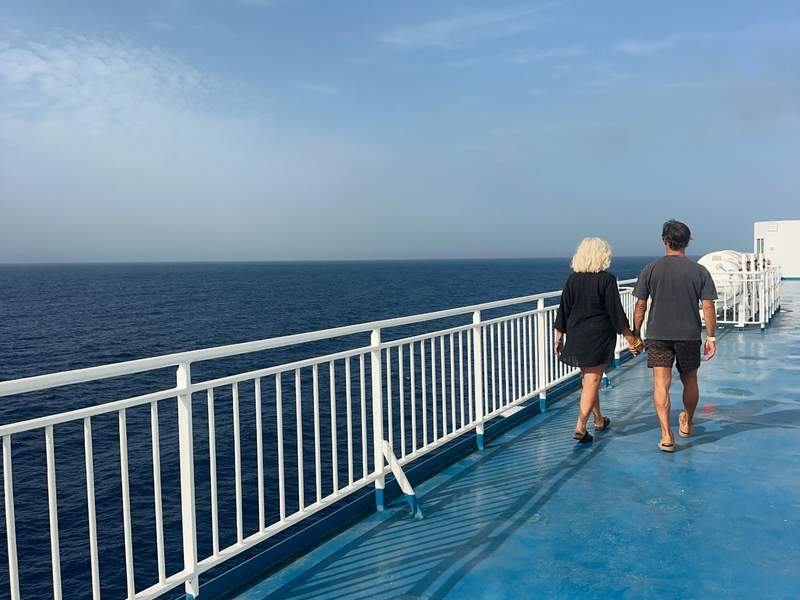
My husband and I ordered tropical drinks, grabbed a spot near the pool and watched the Atlantic stretch in every direction. For a while, I forgot we’d boarded primarily to transport a campervan to Tenerife.
That afternoon changed the crossing from transportation into vacation.
Beyond the pool, we found plenty to fill our 33 hours:
- Outdoor decks: Fresh air and room to walk made the long crossing much more enjoyable.
- Organized activities: Our sailing offered games, crafts and even a dance lesson.
- Quiet spaces: We found spots to read, do puzzles and watch the ocean.
- Arcade games: Another option when we wanted something to do indoors.
- Coworking area: Tables and workspaces gave me somewhere to open my laptop.
- Onboard entertainment: Movies, television shows and podcasts streamed to our devices.
- Kids’ area: If you are traveling with children, families have a dedicated space where younger travelers can play and take a break from the adult passenger areas.
As someone who usually tries to squeeze approximately 47 things into every travel day, getting stuck in the middle of the Atlantic felt surprisingly relaxing.
SheBuysTravel Tip: Bring a swimsuit. Pool time became one of my favorite parts of the entire crossing.
What Is the Food Like on the Fred Olsen Ferry to Tenerife?
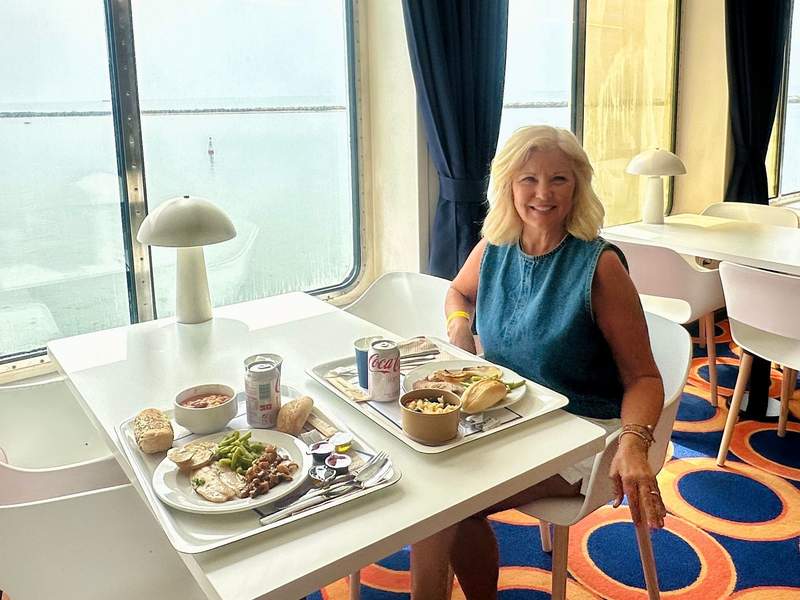
I didn’t board expecting memorable food, but the meals pleasantly surprised me. Our buffets generally offered two or three main courses plus salads, sides, fruit and desserts.
Our booking included meals but not drinks. At check-in, we received wristbands assigning us to one of two dining groups with specific times.
I appreciated watching staff give families with young children priority. I remember traveling with four little girls, and hungry toddlers plus buffet lines never make a great combination.
Other food and drink options included:
- Pool bar: My favorite place to grab a drink and head back outside.
- Sports Bar: Drinks and snacks plus European football and Formula 1 on the TVs.
- Between-meal snacks: Pastries, sandwiches, pizza, drinks and ice cream.
- Onboard shop: Snacks, gifts, toiletries and other basics.
SheBuysTravel Tip: Getting in line about 10-15 minutes before our assigned dining time helped us avoid some of the longest waits.
Free Wi-Fi was available onboard, along with an entertainment system offering movies, television shows, podcasts and other content we could access on our own devices.
Because I needed to work, we upgraded to premium Wi-Fi for about 5 euros per device for the entire crossing. For me, it easily earned its price.
I could work, check email and stay connected. Then I could close my laptop and walk outside to the pool.
That’s my kind of commute.
SheBuysTravel Tip: I paid about 5 euros per device for premium Wi-Fi during our 2026 crossing and would buy it again if I needed to work or stay connected during the crossing.
What Should You Know Before Boarding the Ferry in Huelva?
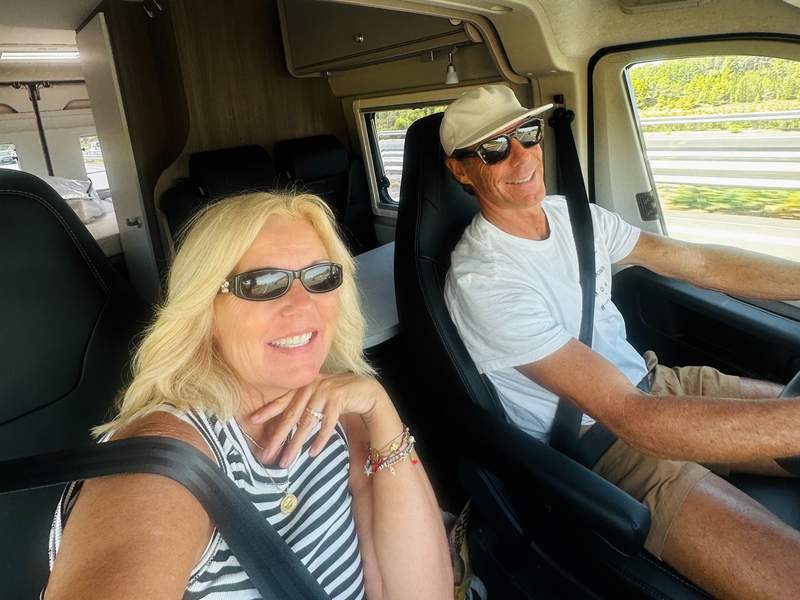
One of my most useful discoveries happened before we even boarded. We spent the night in the free parking area at the Huelva ferry terminal designated for campervans and motorhomes.
Arriving early removed a huge chunk of departure-day stress.
Here’s what I’d do again:
- Arrive the night before: We slept in the designated campervan and motorhome parking area.
- Pack a ferry bag: Keep everything you’ll need aboard separate from your campervan gear.
- Allow plenty of time: We arrived about three hours before departure.
- Know what’s available: We found covered parking, restrooms and 24-hour vending machines.
Just don’t arrive expecting a campground.
The next morning, we didn’t have to navigate traffic, worry about a wrong turn or wonder whether we’d make the ferry.
If you’ve ever traveled with your husband, being able to eliminate one potential “Are we going to miss the ferry?” argument counts as a win.
SheBuysTravel Tip: I’d absolutely arrive the night before again. Empty your waste tanks and fill your fresh water first because we didn’t find campervan service facilities at the port.
Why I’d Take the Ferry From Spain to Tenerife Again

After 33 hours at sea, we reached Tenerife, climbed into our campervan and drove off the ship.
No airport. No baggage claim. No rental-car counter.
If speed mattered most to me, I’d fly. But traveling with a car, campervan or motorhome changes the equation. The ferry let us continue the same road trip from mainland Spain to the Canary Islands.
After someone else handled the transportation for 33 hours, my husband and I simply climbed back into our campervan and kept going.
I’d do it again.
Frequently Asked Questions About the Ferry From Spain to Tenerife
Our direct crossing took about 33 hours. Other itineraries may include a stop and take longer, so I’d check the schedule for your specific sailing.
Yes. We drove our campervan onto the ferry in Huelva and off again in Tenerife, allowing us to continue the same road trip in the Canary Islands.
I’d book one again. Our cabin gave us a bed, private bathroom, shower and quiet space to retreat during the 33-hour crossing.
It wasn’t for us. Between the pool, outdoor decks, meals, organized activities, entertainment and our cabin, those 33 hours passed much faster than I expected.
For speed, I’d fly. But when traveling with a car, campervan or motorhome, I loved that the ferry allowed us to bring our vehicle and continue the same road trip in Tenerife.
Read More From SheBuysTravel
- Why Shoulder Season Is the Most Romantic Time to Cruise the Mediterranean
- Best All-Inclusive Resorts in the Caribbean for a Kid-Free Vacation Spree
- My Husband Does Active and I Chill: Finding Balance on Vacation
- Romantic Fiji Getaway: A Paradise for Couples

Leave a Reply