

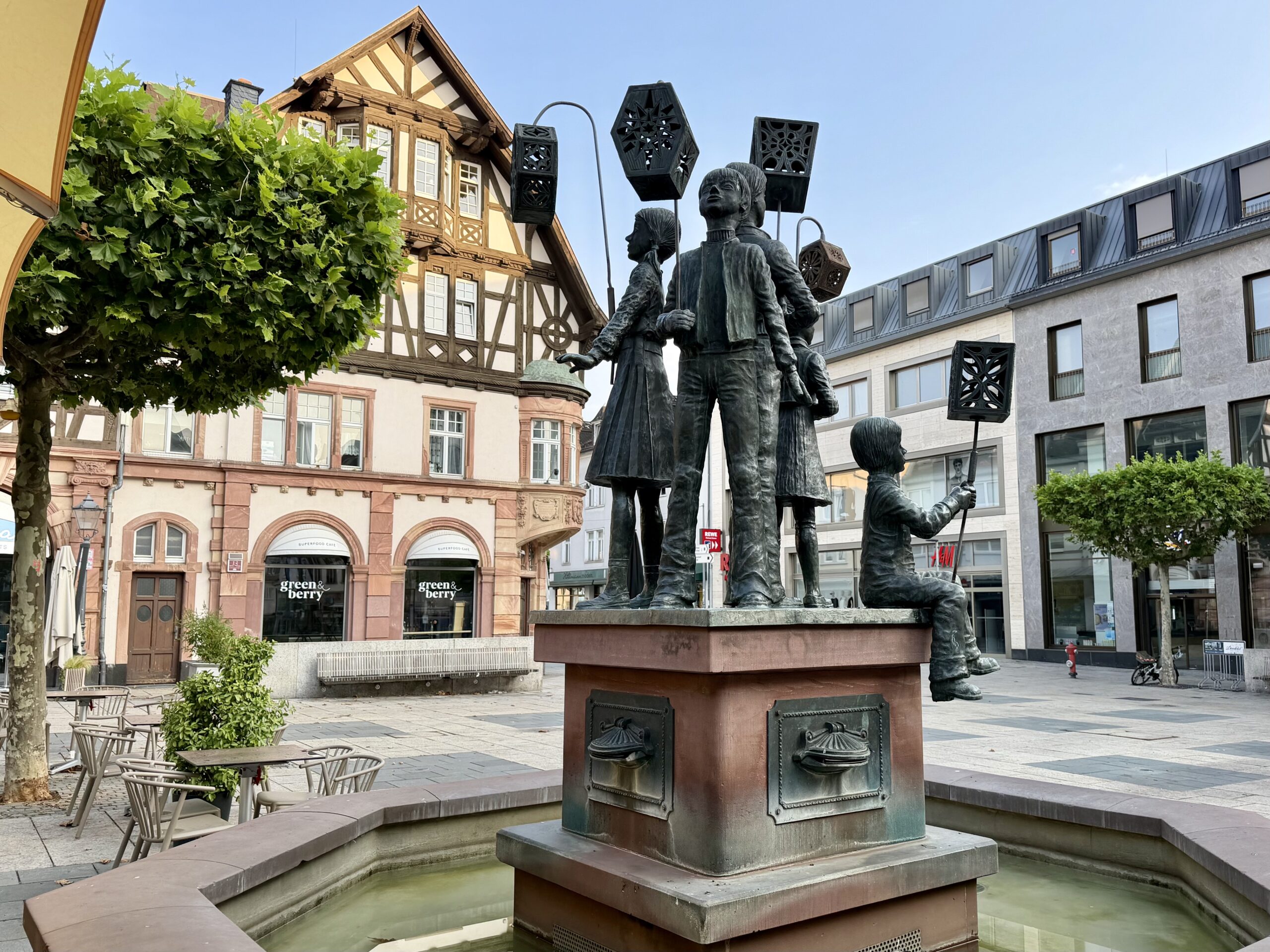
Looking to extend your European vacation in a unique destination with a rich wellness tradition and ties to the King of Rock ‘n’ Roll? The historic spa towns near Frankfurt – Wiesbaden, Bad Nauheim and Bad Homburg – are easy to get to and offer a variety of year-round experiences for all travelers. Kids will love the giant cuckoo clock. Adults can try their luck in elegant casinos where the roulette wheel’s been spinning since the late 1700s. And what’s more unexpected and delightful than a ’50s classic car parade and German Elvis impersonators?
Why the Frankfurt-Area Spa Towns are Worth Visiting
- Grand structures begging to be photographed, from an ancient Roman fort to a modern museum designed by one of the world’s leading architects.
- Regional cuisine features farm-fresh ingredients, best paired with a local Rheingau Riesling that balances fruit notes with a subtle minerality.
- Feel-good moments include spa experiences developed in the late 1800s, immersive open-air museums, city parks and mountain hikes.
Editor’s note: The writer was hosted.
Let us inspire your travels! Sign up for our newsletter now.
Take Advantage of that Frankfurt Connection
Once you’ve committed the money and time needed to travel to Europe for a cruise or tour, adding a pre- or post-trip extension to an additional destination is a worthwhile consideration.
I’ve lengthened a continental holiday with a multi-day stopover in Reykjavik, Iceland, and extended a Viking Danube River cruise with a trip to Prague. My thought is, “Since I’m already here, why not?”
But I’d never considered exploring the area near Frankfurt, one of Europe’s most popular connections for US travelers. It’s a hub I’ve passed through several times, pausing briefly for a bathroom break and a frankfurter before boarding another flight.
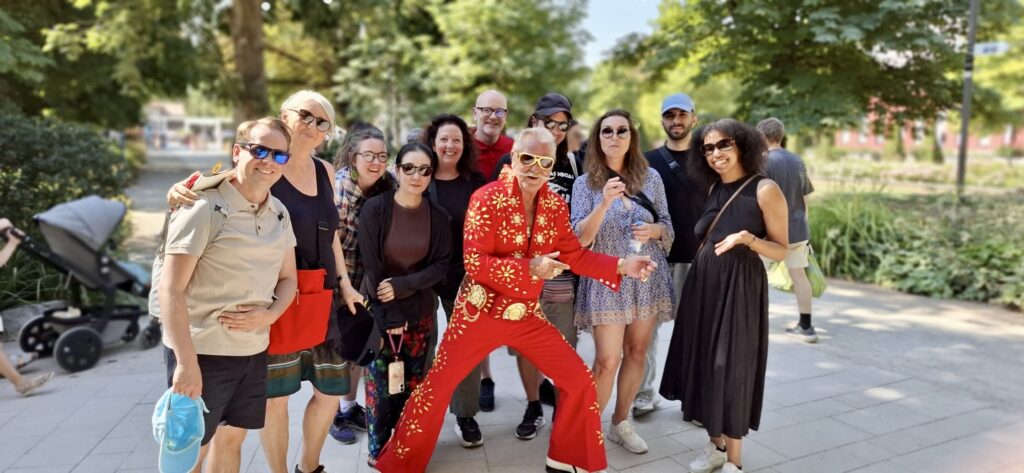
Frankfurt is located in the state of Hesse (Hessen in German), a region dotted with historic spa towns. I spent a delightful week gawking at stunning historic mansions, sipping crisp white wines and unexpectedly bumping into several Elvis impersonators.
Discover why the Frankfurt-area spa towns have jetted to the top of my must-stay-and-play list, with appeal for both families and adults traveling without kids.
When Bad is Good: German Spa Towns Near Frankfurt
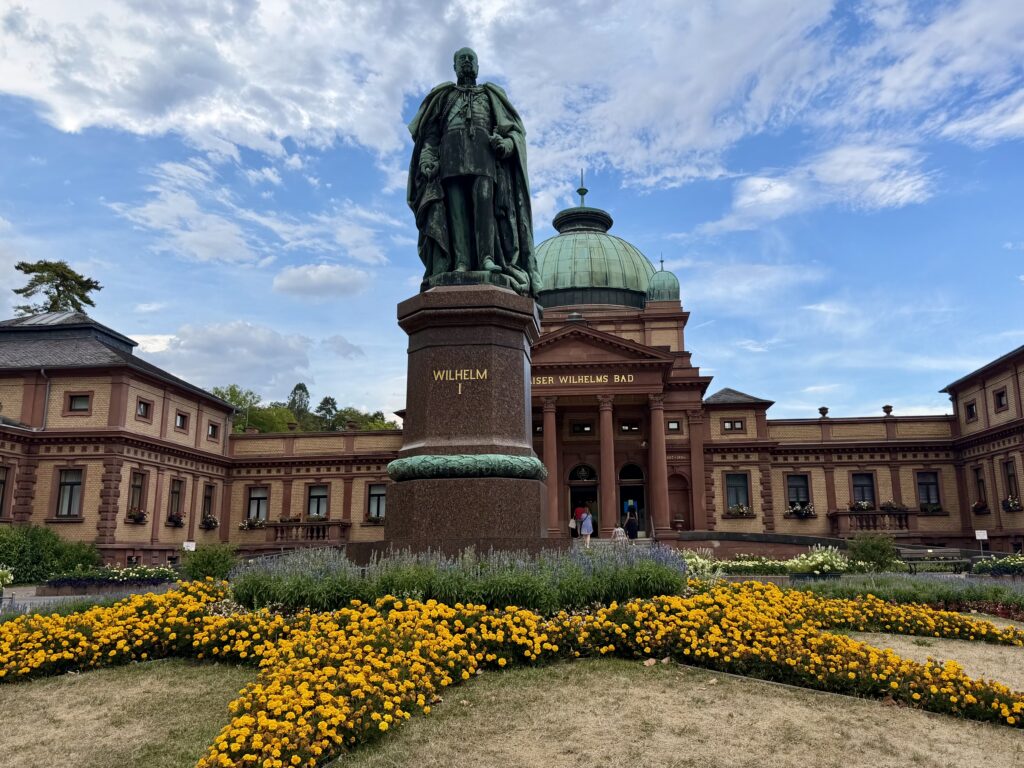
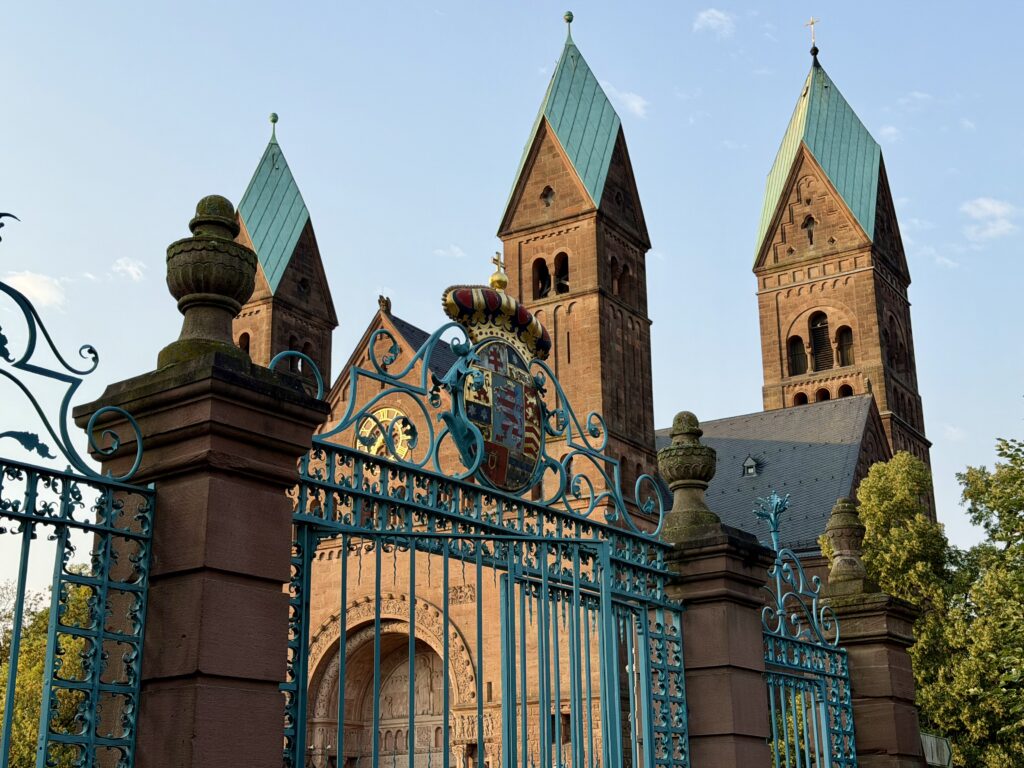
If you see “bad,” the German word for bath, in a place name, the destination has been officially reviewed and legally designated as a wellness destination. The towns near Frankfurt I visited – Wiesbaden, Bad Nauheim and Bad Homburg – originally developed as popular resort healing locations in the 19th century.
Patients arriving for prescriptive stays engaged in a variety of treatments, many involving the region’s mineral-rich thermal springs. Casinos and sporting activities, like tennis and golf, provided entertainment for well-heeled guests who stayed for weeks at a time, often relocating their families for extended periods.
U.S. President Franklin Roosevelt, for example, attended school as a child in Wiesbaden while his father received care for a cardiac condition.
Today, many of the historic spas continue to operate, so you can bathe as Prussian nobles did in the 1800s. But the appeal of the towns extends beyond the wellness experiences.
Family-Friendly Things to Do in the Frankfurt-Area Spa Towns
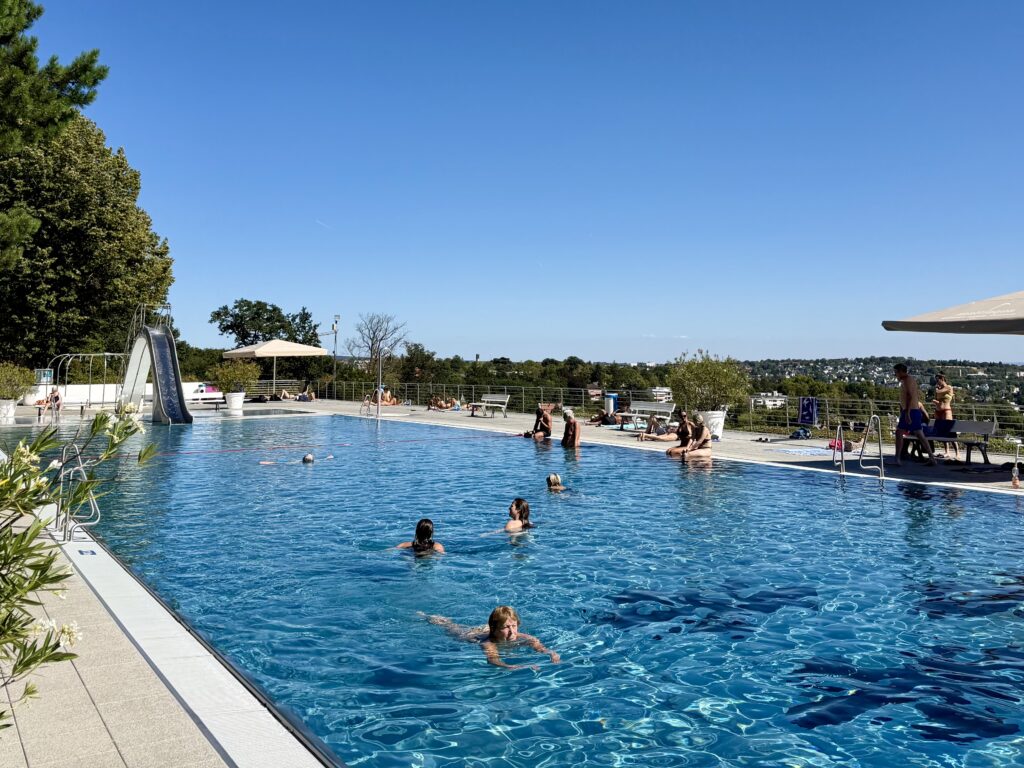
When my kids were little, we often broke up long trips with short stays focusing on outdoor activities to let them run off steam. The spa towns near Frankfurt are ideal for this type of family-friendly break, offering delightful storybook adventures.
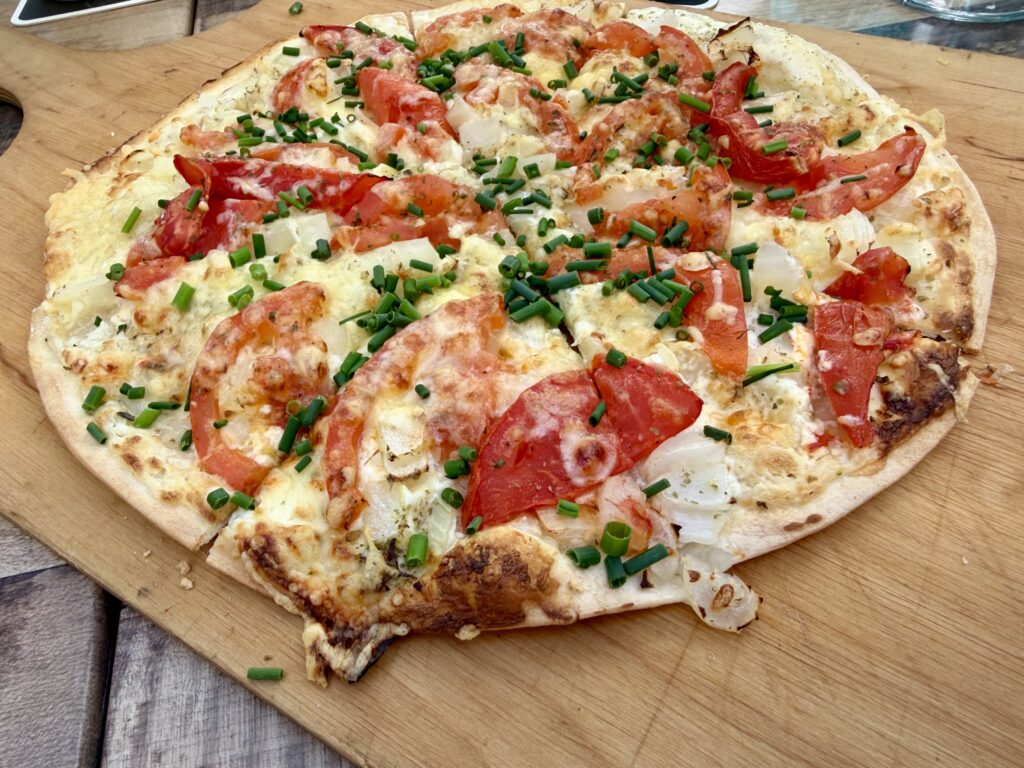
And meal times can be relatively drama-free. Look for familiar comfort food options on area menus like flammkuchen, a thin-crust pizza, or schnitzel for kids who love cutlets.
Top Things to Do with Kids
- Ride the historic, water-powered funicular to the Neroberg hill summit for panoramic views of Wiesbaden. Then go for a dip in the outdoor Opelbad swimming pool.
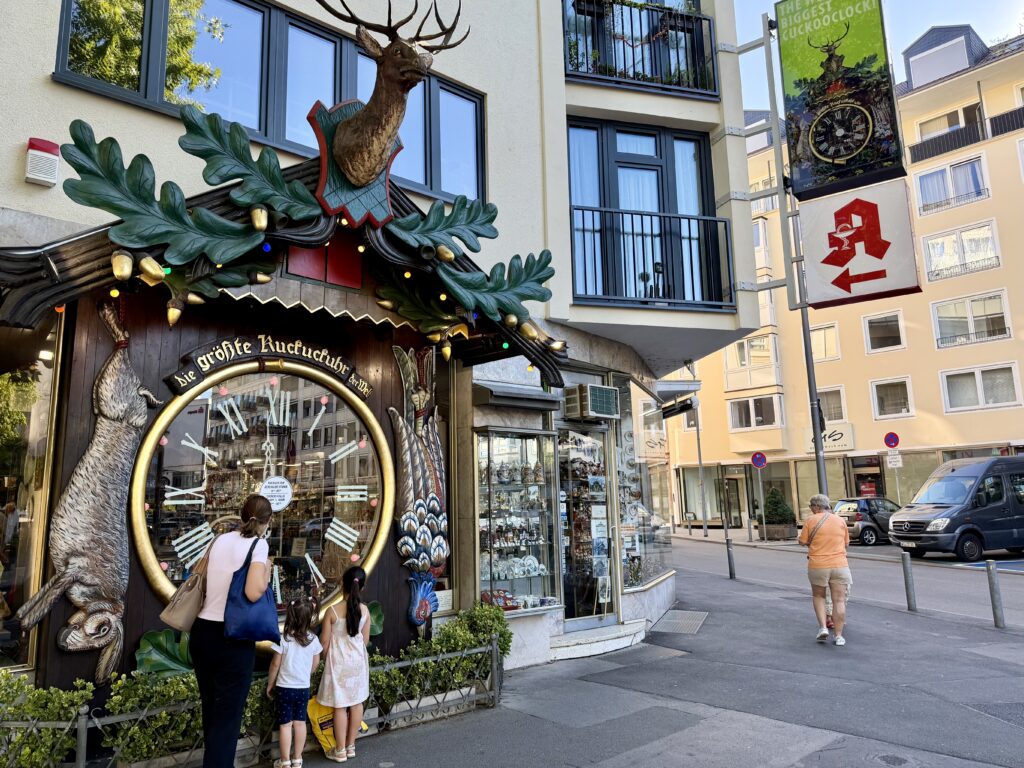
- The self-proclaimed world’s biggest cuckoo clock, set into a souvenir shop facade in downtown Wiesbaden, chimes on the half hour.
- Designed by renowned architect Fumihiko Maki and opened days before he died in 2024, the Museum Reinhard Ernst houses a stunning private collection of contemporary art and a kid-friendly atmosphere with free admission for all under 18, children’s tours and a playroom where kids and kid-like adults use movement to create digital art.
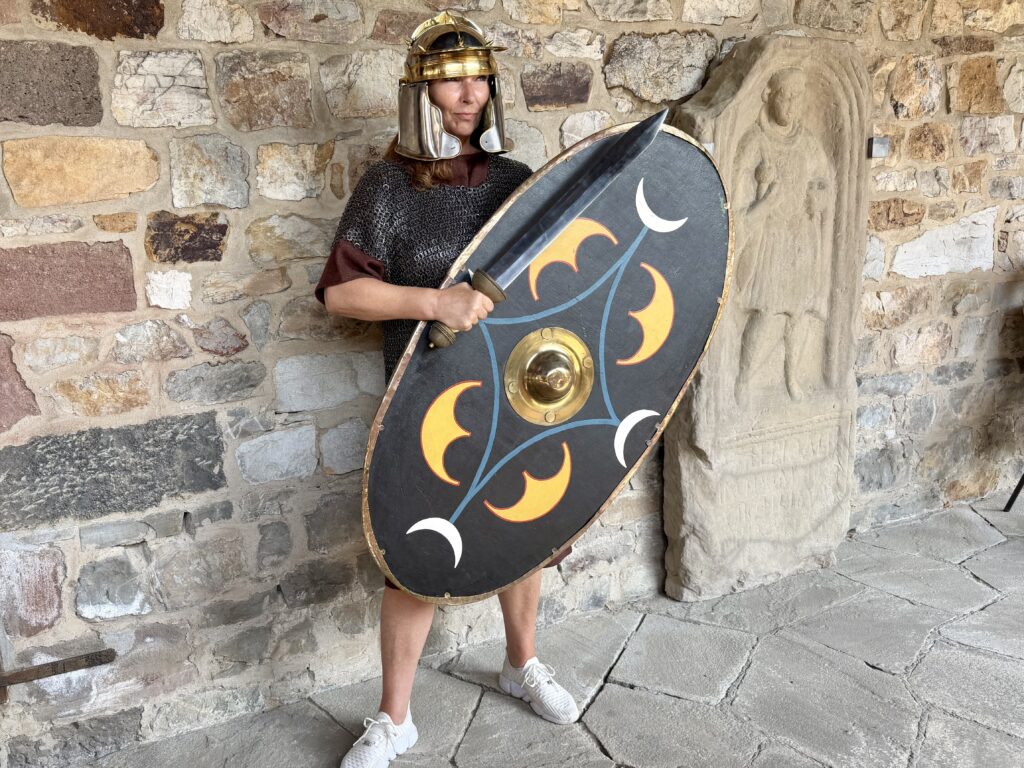
- Spend a day time-traveling. Hessenpark is an open-air museum, beloved by local families since opening in 1974. Weave in and out of historic buildings to learn how rural German families lived and worked. Then head to Saalburg, a recreated Roman fort and UNESCO World Heritage Site where kids can wield a sword and shield while wearing a helmet and chainmail vest.
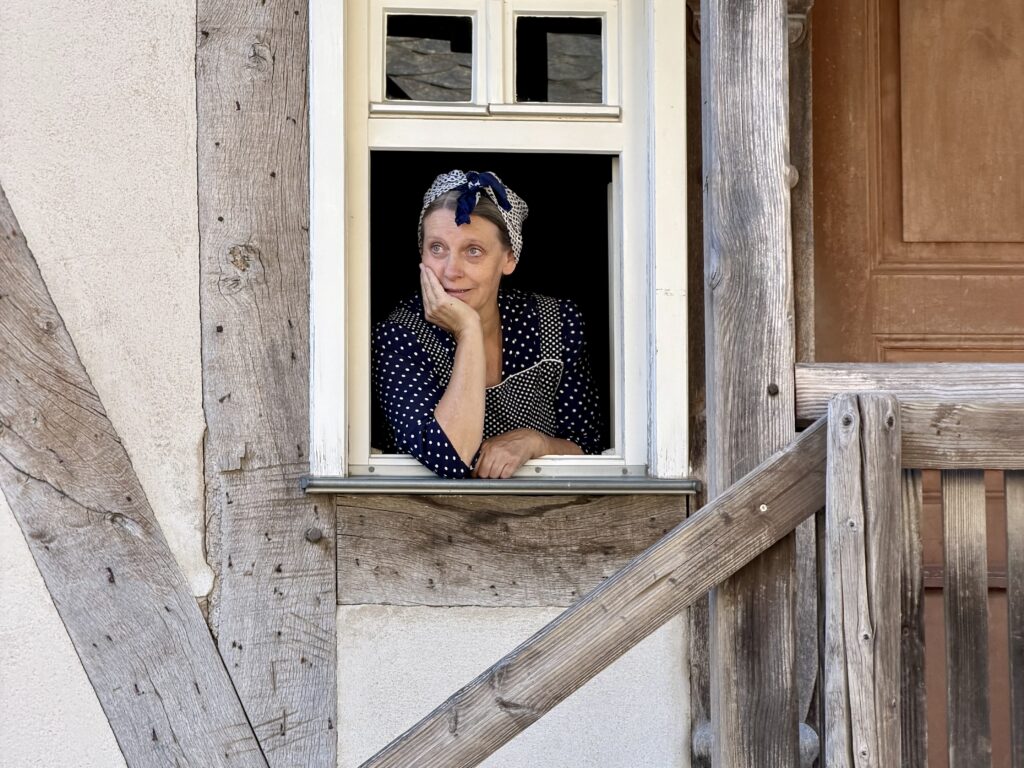
SheBuysTravel Tip: A tour is essential to appreciating Hessenpark. Our costumed guide, “historical housewife” Iris von Stephanitz, provided animated insight into life on a farm in the 1920s. During part of the tour, she disappeared into her house and popped in and out of upstairs and downstairs windows to tell relevant stories about the different rooms. It was like a storybook come to life.
Traveling Without the Kids? Things to Do in the Spa Towns in Hesse
Whether you’re traveling solo, with the kids, as a couple or with friends, you’ll want to try at least one of the historic spa treatments integral to the development of the region.
Sadly, I wasn’t able to try the most famous, a thermal soak in Wiesbaden’s Art Nouveau Kaiser-Friedrich-Therme bath. The facility closes each summer for maintenance and repairs.
Since temps during my visit hovered around 100 degrees, sweating it out while uncomfortably naked with strangers wasn’t really on my bingo card.
Try One of the Hessian Historic Spa Experiences
Breathe Deeply in an Inhalatorium
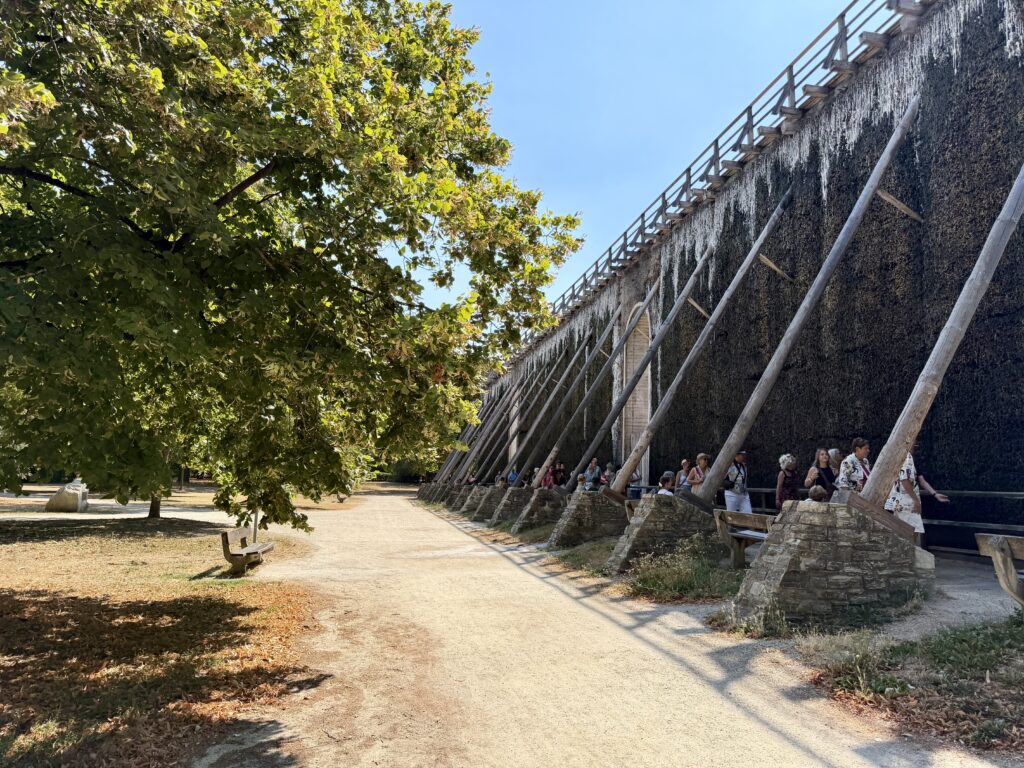
If you’re like me, the minute you smell a salty sea breeze, you feel more alive. In Bad Nauheim, you can get the simulated effect by sitting beside the spa park’s graduation tower. Over the outdoor wooden walls of the structure, mineral waters forcefully flow, generating vapor.
You sit on a bench and inhale for a recommended 15-20 minutes daily. You can pay a small admission fee and enter the tower to inhale a stronger, nebulized vapor.
I like a steam room, but don’t like the heat. The vapor-dense environment of the inhalatorium was ideal.
Drink the Spring Water
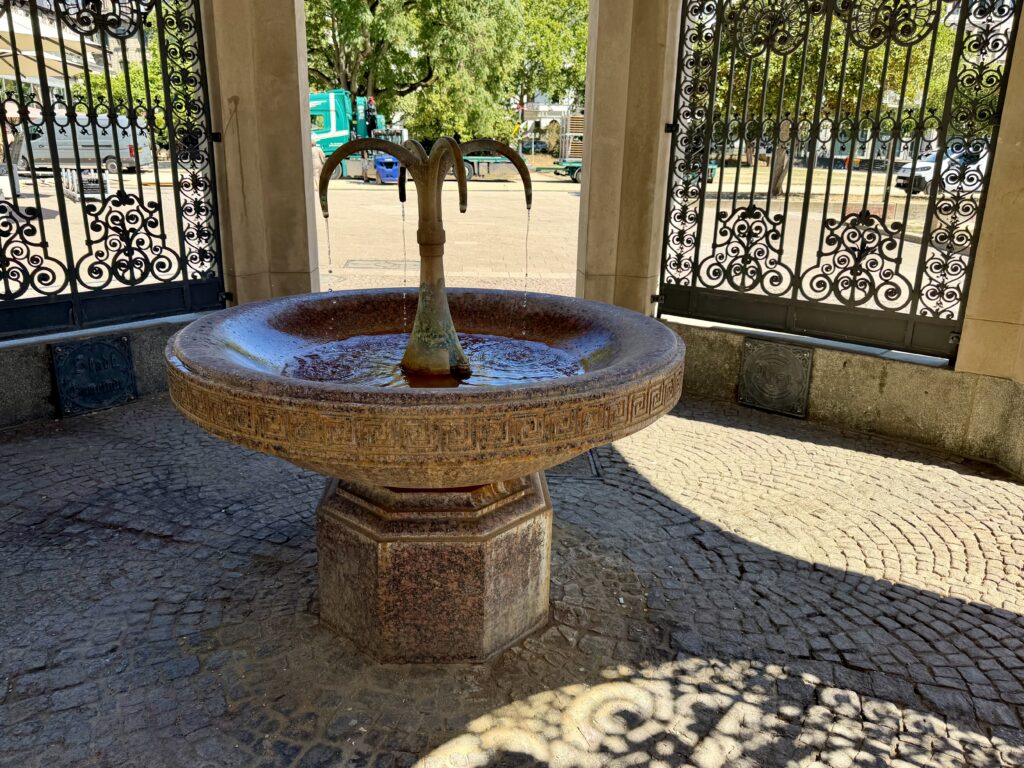
Carry a small quantity of paper cups with you to sip the mineral waters pumping through local fountains. Signs note the mineral content and temperature at each spring and the maximum daily amount you can safely ingest. Spa physicians still design cure regimens that prescribe differing amounts and fountain locations for a variety of ailments.
- In Wiesbaden, find the Kochbrunnen fountain downtown, near the Radisson Blu Schwarzer Bock Hotel
- The bubbling gold-domed fountain in Bad Nauheim looks like a prop from a Harry Potter film. Find it near the town’s South Park.
- Many of the Bad Homburg fountains are housed within charming pavilions. There are seven in the city’s Kurpark (spa park).
Book a Day Spa
Historic buildings in the region house modern spas, offering treatments like massages and facials, plus thermal soaking pools, saunas and steam rooms. Popular ones include the Badhaus in the Radisson Blu and the Kur-Royal Day Spa in Bad Homburg.
SheBuysTravel Tip: Be prepared to check your modesty at the door. Most baths and saunas are coed and textile-free, although some do offer special times for women-only visits. Consult the facility you intend to visit so you’re prepared to bare it all.
Take a Forest Hike
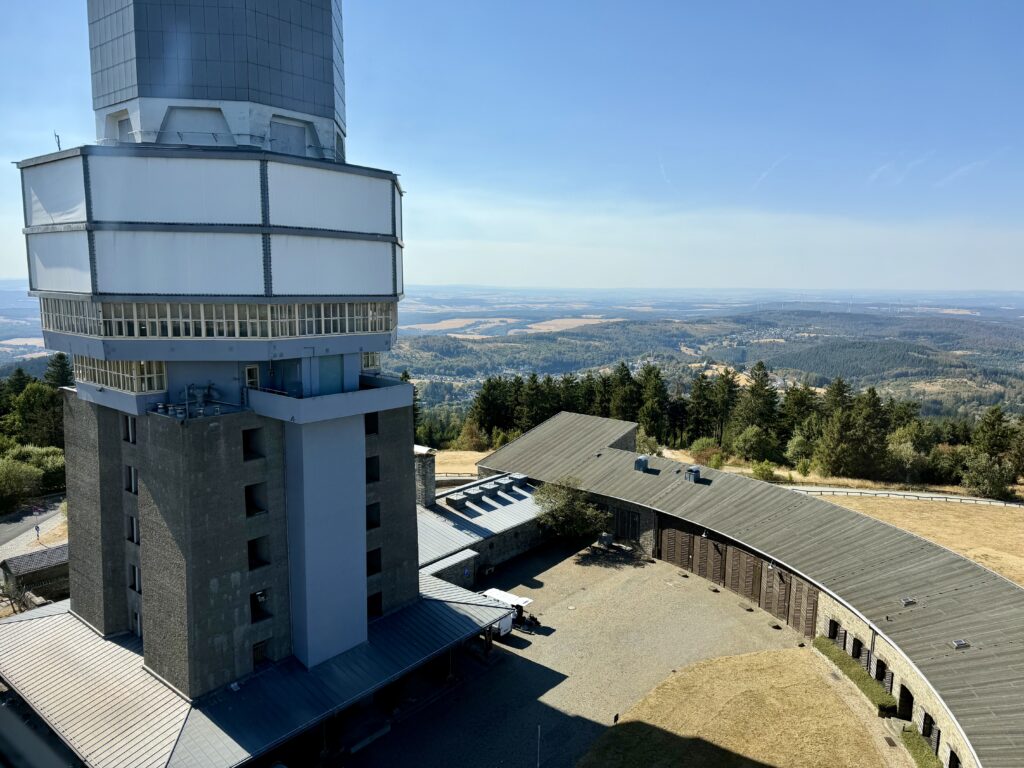
There are 210 trails in the Naturpark Taunus, a protected mountain reserve and the second largest in Hesse. I ascended via a wide gravel path with a gradual incline.
At the summit, there’s a radio station tower you can climb for 360-degree views of Frankfurt and the Rhine-Main river valley. The complex, originally constructed in 1937 as a World War II radar station, gives off strong “Stranger Things” vibes.
SheBuysTravel Tip: Skip the snack bar at the entrance to the radio tower climb and head to the Feldberghaus, the adorable alpine restaurant a few yards away. Have a cold beer and a bathroom break before descending. You earned it!
Try Your Luck in a Historic Casino
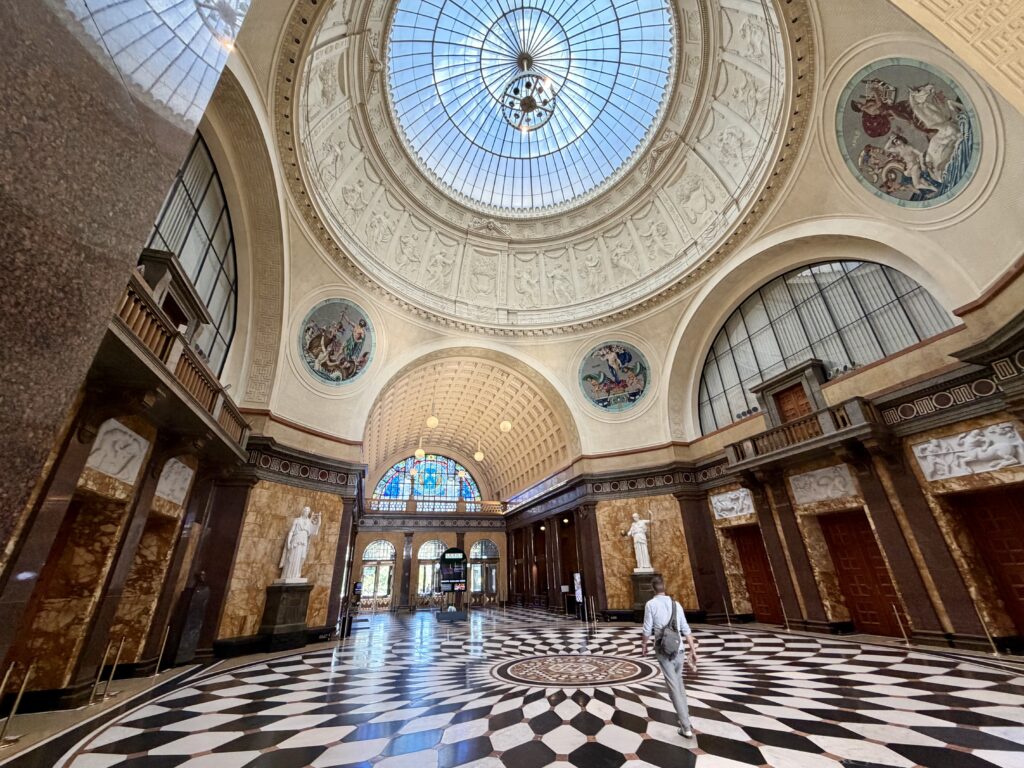
The casinos in Germany look nothing like the American ones I’ve visited that are large, loud and full of neon. Known as spielbanks, historic German casinos are intimate. They feel like a fancy parlor with museum-like murals, gleaming mahogany paneling and elegant crystal chandeliers.
I entered the Spielbank Wiesbaden eager to try my luck.
The result for me, however, was the same as I’ve experienced in Vegas and Atlantic City. I lost a quick 100 euros at the roulette table, and left before losing any more of my vacation budget.
SheBuysTravel Tip: You’ll need government ID to enter the casinos. Security runs a quick check and issues a day pass so you can go in and out without a recheck.
Schedule a Wine Tasting at Kloster Eberbach
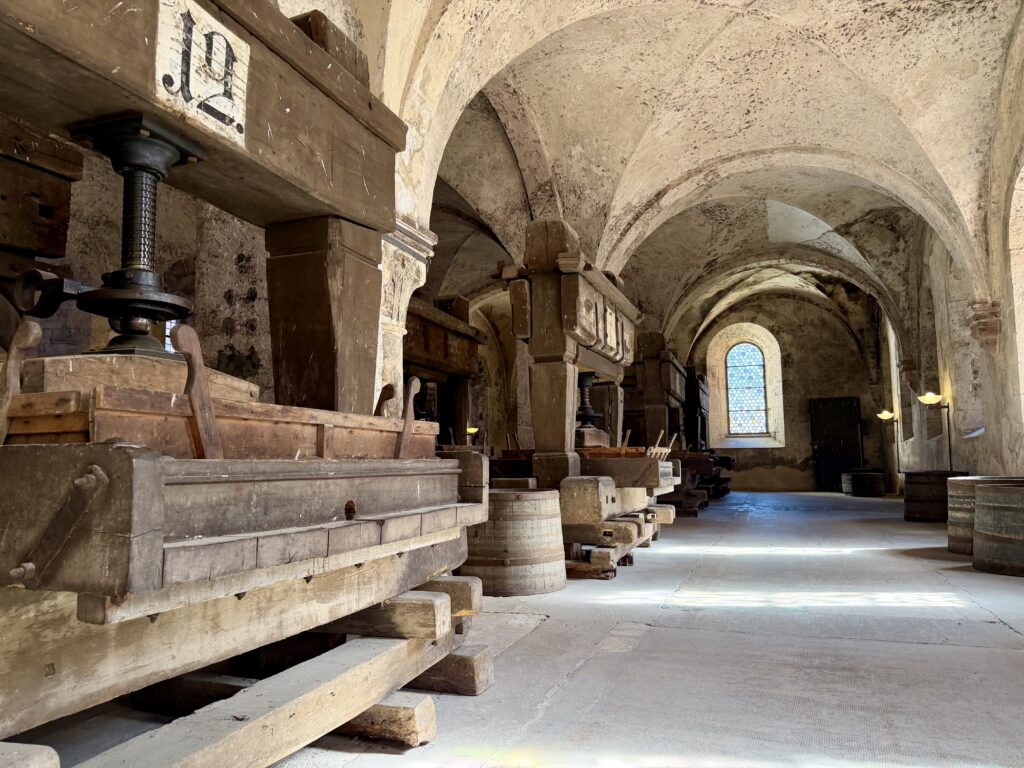
You can sip in the modern gift shop or in a dramatically candlelit, centuries-old vaulted cellar. The 1980 Sean Connery film, “The Name of the Rose,” was filmed at the former Cistercian monastery, originally constructed in the 12th century.
Food and Wine Guide for the Frankfurt-Area Spa Towns
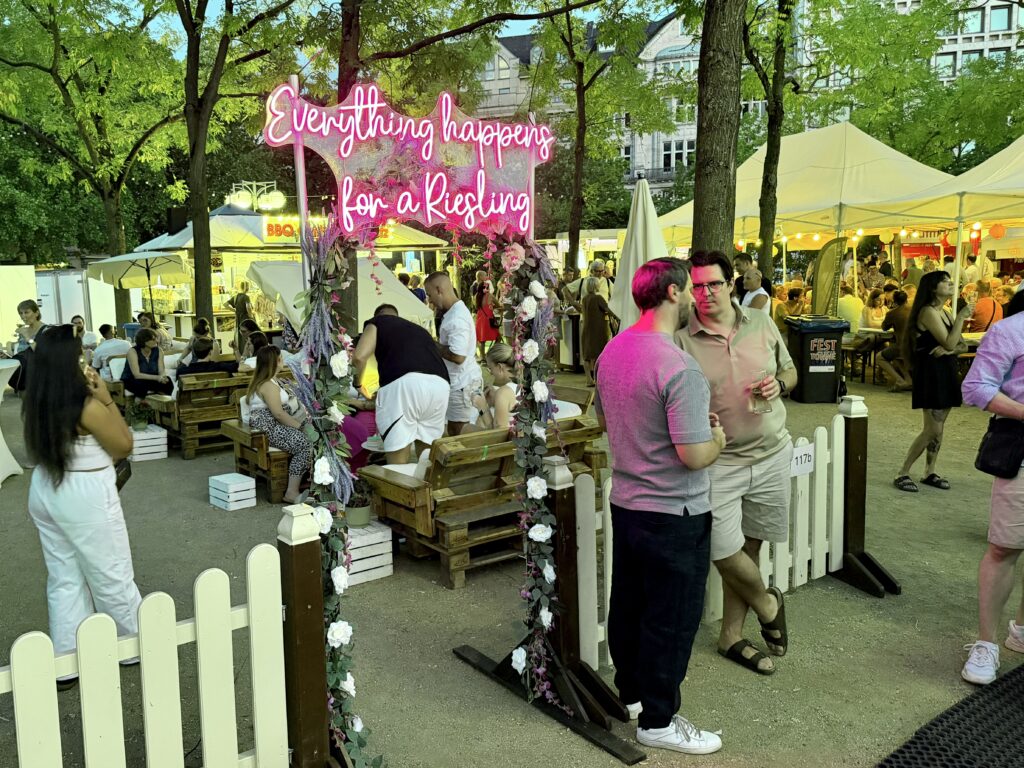
The Hessian region around Frankfurt is one of Germany’s 13 official wine regions. Known as the Rheingau, the valley is known for its Riesling, and a trip to the spa towns is a wonderful opportunity to dispel any preconceived negative notions you’ve acquired about the white wine.
I leaned into the suggestions offered by my German guides and restaurant staff and consistently found dry Riesling to be an excellent complement to the local Hessian cuisine.
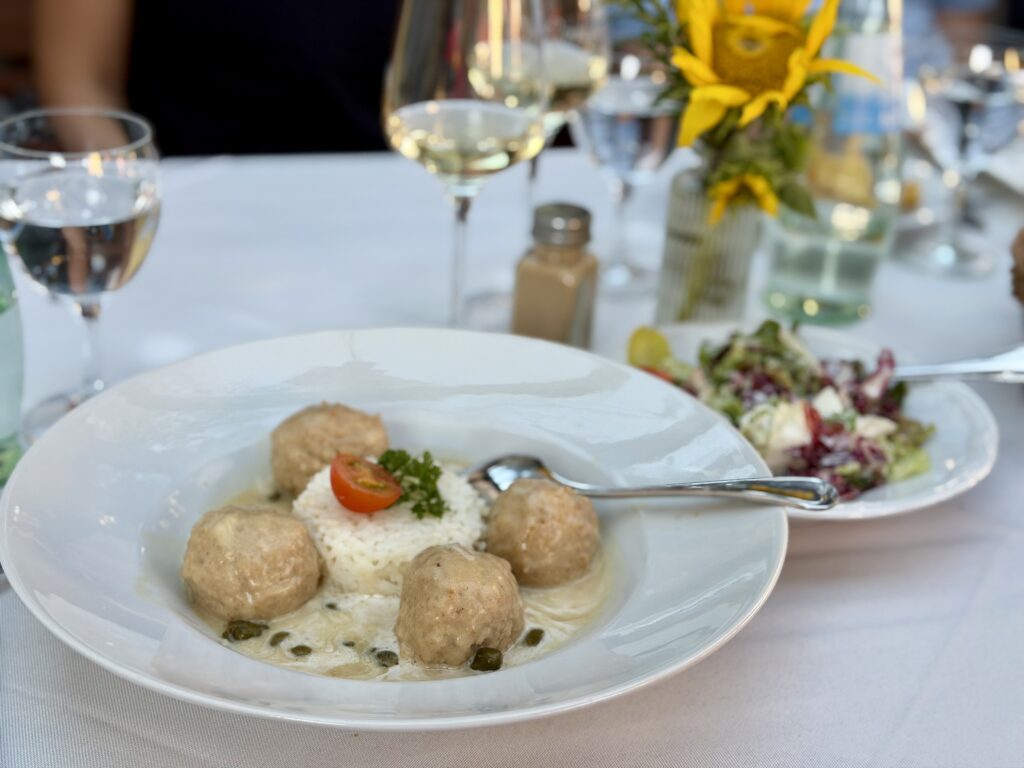
Plan to linger over meals; service is unhurried and the food’s worth waiting for. I felt the entrees were much lighter and flavors more delicate than I’d experienced in Bavaria.
Particularly lovely is a traditional green cream sauce that combines sour cream with seven herbs: borage, chervil, cress, parsley, salad burnet, sorrel and chives. It brightens boiled potatoes, schnitzel and the regional klopse meatballs.
Where to Eat in Hesse
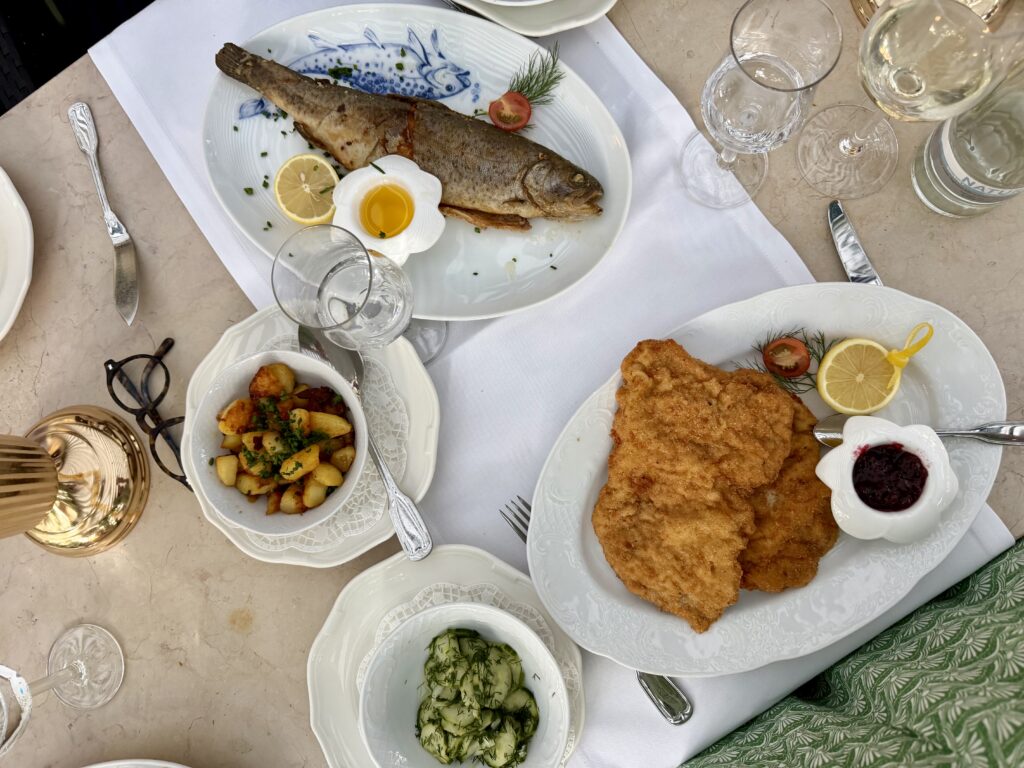
- Dine on the outdoor terrace at Webers Wikinger in the heart of Wiesbaden’s Old Town. Although grilled steaks are a specialty, I had the first of many schnitzels here, served à la Holstein-style – topped with a fried egg.
- Restaurant Schützenhof is steps from Biebrich Palace and its sprawling English landscape garden. The go-to bite is a thin-crust flammkuchen, topped with farm-fresh tomatoes. Down it with an uber-cold pils.
- I fell in love with the regional klopse meatballs at family-run Weinhaus Sinz. The restaurant/inn is alpine perfection with voluptuous geranium window boxes and servers dressed in traditional dirndls.
- Enhance your visit to the Saalburg fort with a stop in the attraction’s TABERNA restaurant. The menu includes ancient Roman cuisine. The wholegrain Roman bread flavored with honey, cumin and coriander was a knockout.
- The fish options, including a whole trout, drew raves from my dining companions at Forsthaus Rheinblick. I chose schnitzel again, since I rarely order the veal option at home in the US. Lingering on the terrace listening to the Friday evening guitarist as the sun set was a memorable trip moment.
- The charming Golfhaus Restaurant in Bad Homburg’s Kurpark overlooks a six-hole course, the oldest in Germany. Our group tried a variety of their Italian appetizers and entrees, including a risotto topped with blistered cherry tomatoes and local chanterelle mushrooms.
When’s the Best Time of Year to Visit the Spa Towns Near Frankfurt
Each of the four seasons has a particular appeal for visiting the spa towns near Frankfurt.
- Winter delivers Christmas markets and relatively mild temperatures.
- Spring flowers bloom in the city kurparks (spa parks).
- The wine harvest in fall puts the focus on Rheingau Rieslings and local comfort foods like schnitzel and boiled potatoes, generally served with an herbed cream sauce.
- Summer, when I visited, can be extremely hot and dry, ideal for trying one of the public swimming pools.
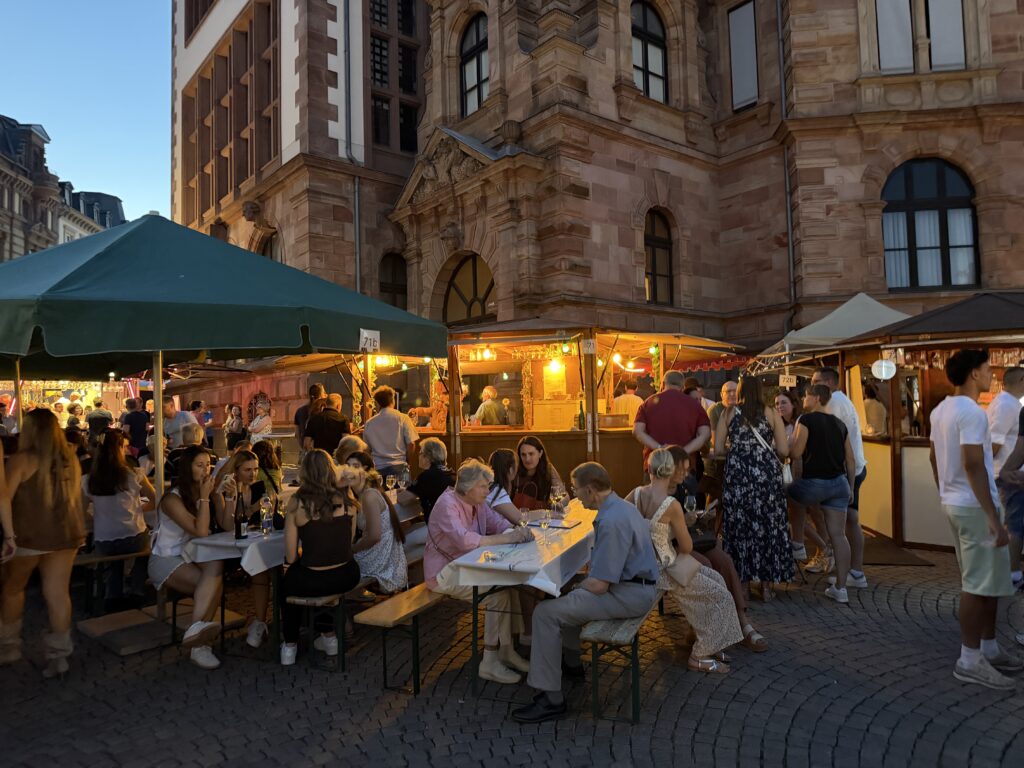
Summer is also festival season in the region. Some of the most popular include:
- Rheingau Wine Festival: This is the biggie, attracting approximately half a million visitors to Wiesbaden over the course of 10 days in August to sample wines from approximately 100 wineries.
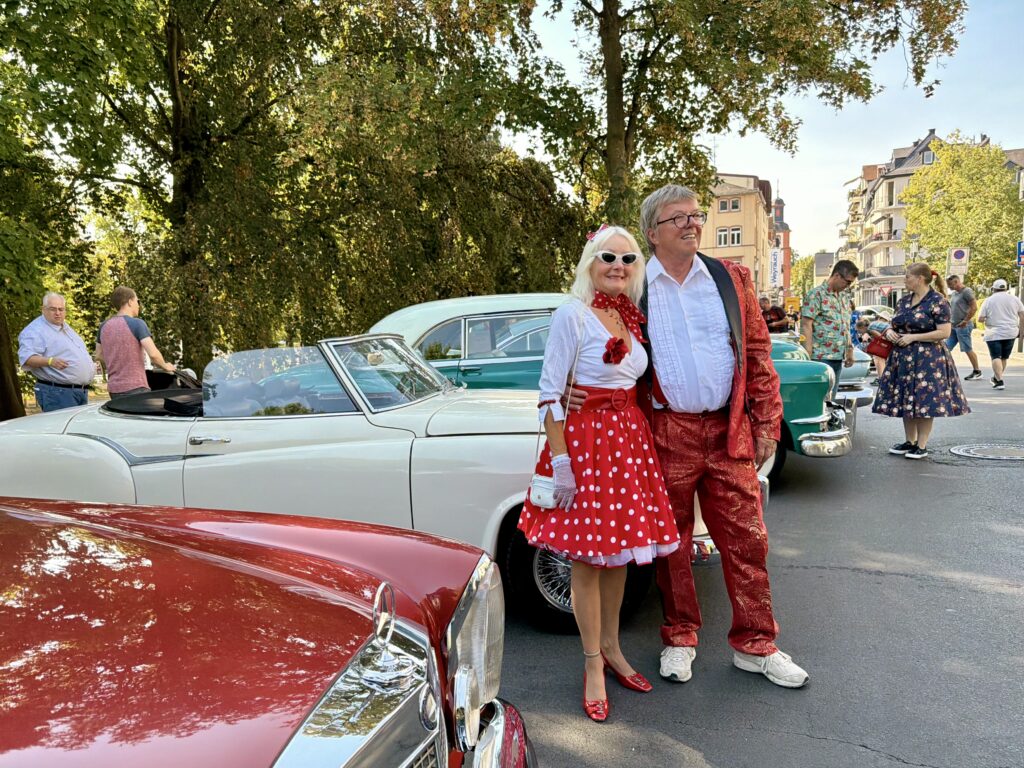
- European Elvis Festival: Bad Nauheim goes back to the ’50s for three days each August. Wear a poodle skirt and celebrate the music of the King of Rock ‘n’ Roll who lived in the town during his US military service.
- Lantern Festival: Bad Homburg transforms into a giant state fairground for four days in late August. Held annually since 1935, it’s one of the oldest festivals in the region.
Transportation Essentials
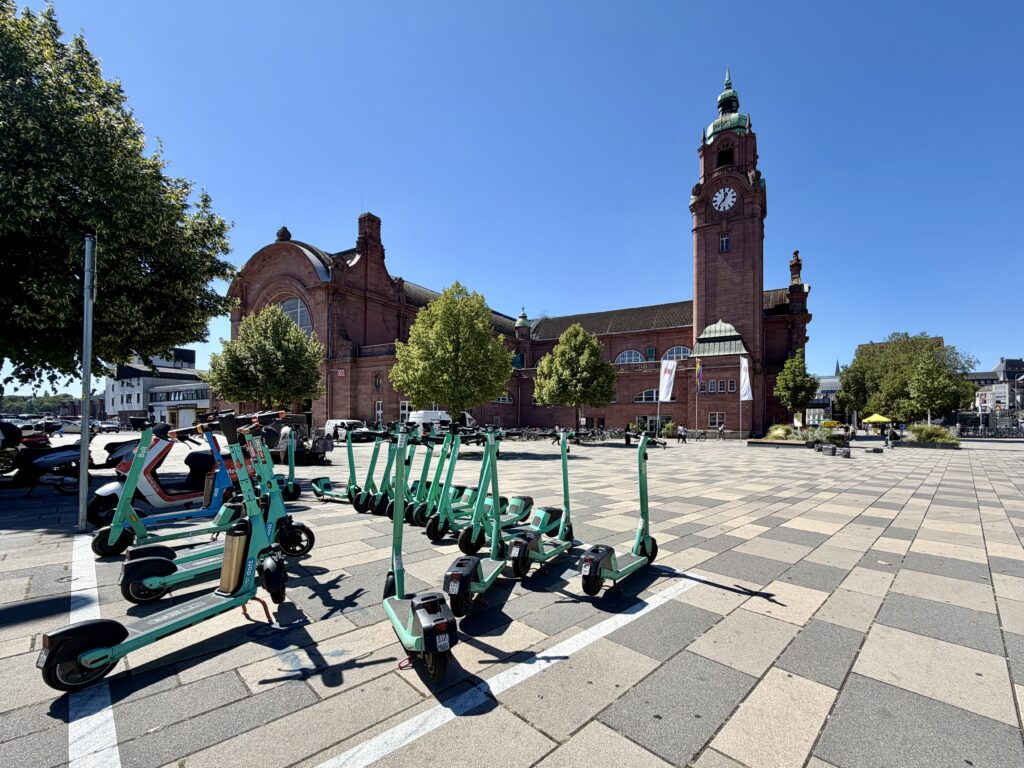
If you fly into Frankfurt, you can rent a car to explore the nearby spa cities or do what I did: take a regional train.
To get to Wiesbaden by train:
- Follow the signs to the Frankfurt Airport Regional Station (Regionalbahnhof)
- Look for the S1, S8 or S9 trains. They run frequently and the ride takes about 40 minutes.
- Purchase a ticket at one of the automated kiosks before boarding.
- Your destination is Wiesbaden’s Central Station (Hauptbahnhof). You’ll often see it abbreviated as Hbf.
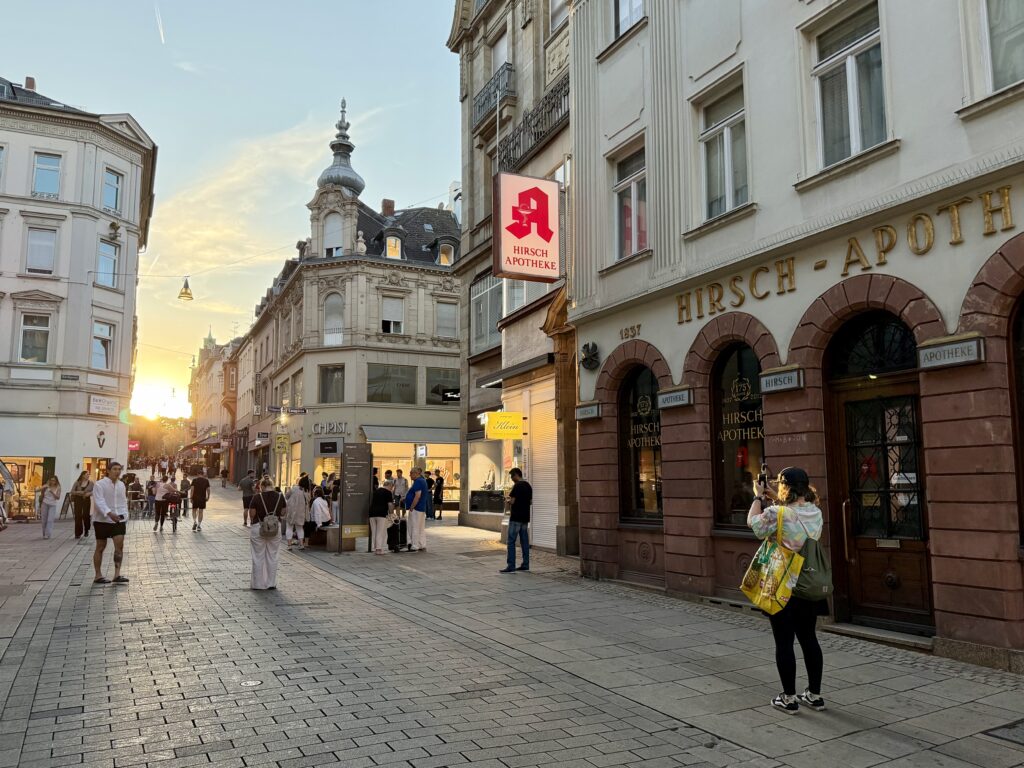
I prefer to walk when exploring a city once I’ve located a central location such as Wiesbaden’s historic district near the tourist information center. To get there, I took a local bus from the Hauptbahnhof. Based on a casual price comparison, the bus fare was about 1/3 the price of a comparable Uber.
I purchased single rides as I needed them by entering the bus at the front, asking the driver for one ticket and paying with a credit card. I tried both Amex and Mastercard and both worked without a problem.
SheBuysTravel Tip: “Is it free?” I wondered when no one checked my ticket on the train. I was also the only person I saw purchasing bus tickets. The German transportation system does not use entry and exit turnstiles like other European countries, trusting riders have purchased a fare. Random checks ensure compliance since penalties are stiff.
FAQs
Because it’s so close to the Frankfurt airport, Wiesbaden is definitely doable as a day trip. However, if you really want to explore the region, I suggest spending two nights to experience a variety of attractions.
No. A car is handy, but not necessary to reach most of the attractions. Germany’s public transportation system is excellent and the city centers of Bad Homburg, Bad Nauheim and Wiesbaden are very walkable.
The grand architecture, wide promenades and many parks are clean and well-maintained. I used normal caution in crowded spaces like the wine festival and on local buses and never felt unsafe, even walking back alone to my hotel near the Wiesbaden rail station.
The King of Rock ‘n’ Roll lived in Bad Nauheim during his US military service. The European Elvis Festival happens every summer over three days in August. Wear a poodle skirt, pose with one of the many, many Elsvi impersonators and celebrate the music of the 1950s.
Discover More on SheBuysTravel:
- Historic Heritage Germany Tour: Rich in History, Light on Crowds
- Discover Freiburg: A Feast for the Senses in Germany’s Black Forest
- Discovering Medieval Germany Solo on a River Cruise
- Experience the Fusion of History, Art, and Culture in Vienna, Austria


Leave a Reply